
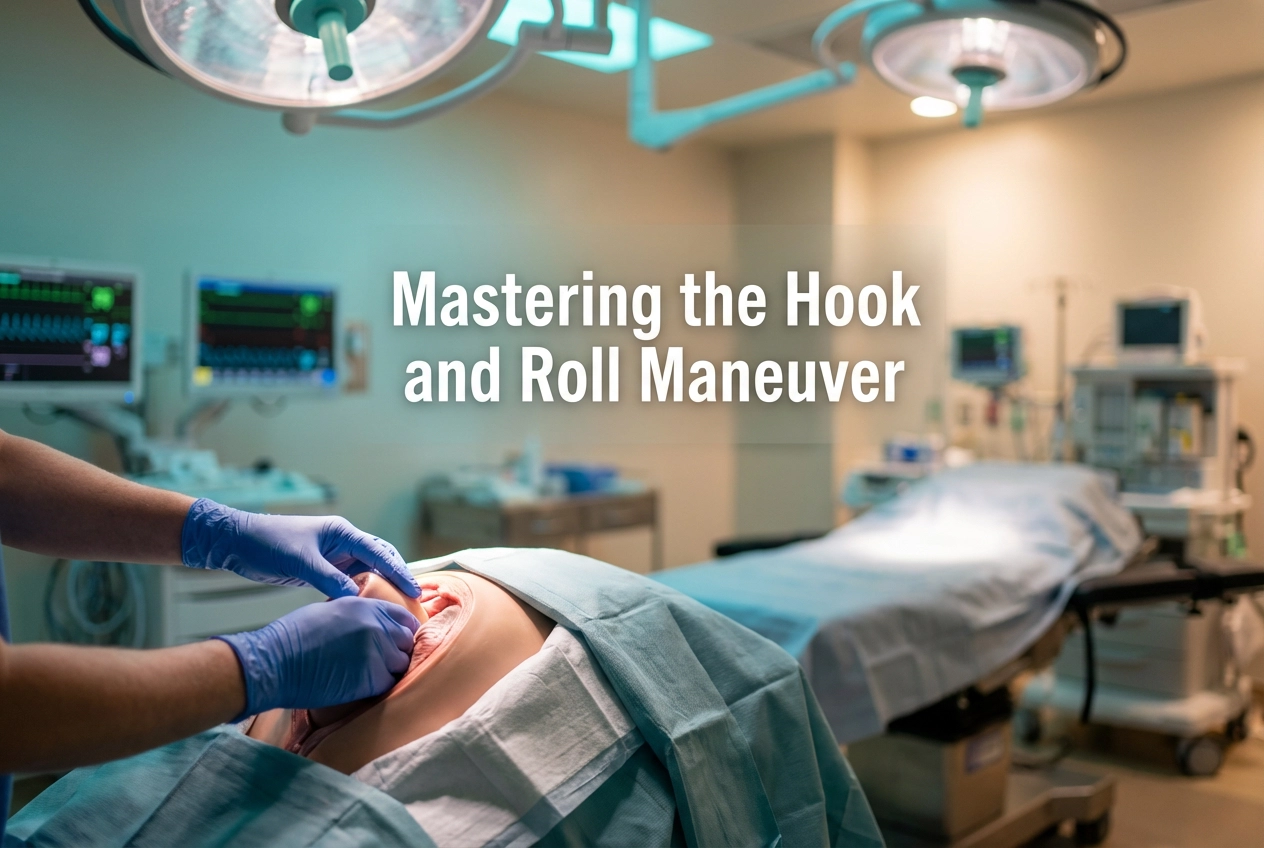
Shoulder dystocia represents a high-stakes obstetric emergency. It requires immediate and effective intervention from the delivery team. The Hook and Roll Manoeuvre offers a promising modification of existing internal techniques to manage this complication. Consequently, medical professionals seek safer ways to deliver the posterior shoulder without causing neonatal injury.
Mechanics of the Hook and Roll Maneuver
This specific technique involves hooking the posterior axilla with one finger to provide gentle traction. Then, the clinician elevates the posterior shoulder toward the vaginal opening. Simultaneously, they roll the anterior shoulder toward the fetal face. This rotation typically spans 30 to 90 degrees. Therefore, the manoeuvre combines traction with ventral rotation for a smoother delivery.
Efficacy and Neonatal Outcomes
Recent clinical data shows remarkable success with this approach. The manoeuvre resolved 98.1% of cases in a recent institutional study. Specifically, it worked in 53 out of 54 instances. Furthermore, no neonatal injuries occurred when clinicians chose it as the primary internal manoeuvre. Because of this, it serves as a reliable alternative to standard rotations. However, practitioners must still maintain gentle pressure to ensure optimal safety and success.
Frequently Asked Questions
Q1: How does the Hook and Roll manoeuvre differ from traditional rotation?
Unlike standard rotations, this manoeuvre focuses on hooking the posterior axilla while simultaneously rolling the anterior shoulder ventrally. This dual action facilitates easier disimpaction during an emergency.
Q2: Is the Hook and Roll manoeuvre safe for the neonate?
Yes, early data suggests very low rates of neonatal complications. In cases where it was the primary manoeuvre, no injuries occurred, making it a promising obstetric option.
References
- Heilman EA et al. The Hook & Roll Maneuver for Resolution of Shoulder Dystocia. Obstet Gynecol. 2026 Mar 01. doi: 10.1097/AOG.0000000000006167. PMID: 41538800.
- Royal College of Obstetricians and Gynaecologists. Shoulder Dystocia. Green-top Guideline No. 42. 2012.
- American College of Obstetricians and Gynecologists. Shoulder Dystocia. Practice Bulletin No. 178. Obstet Gynecol 2017;129:e123-33.