Centre Expands Import Gateways for Drugs & MedTech Hubs

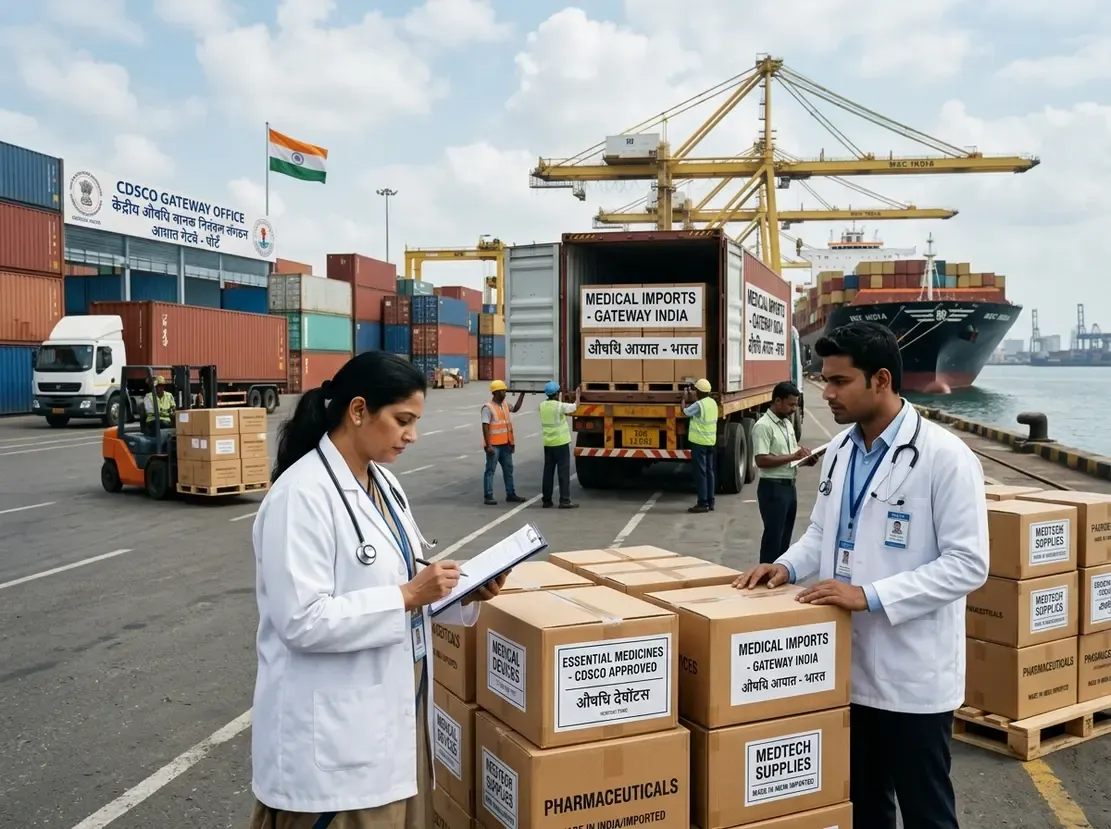
The Union Ministry of Health and Family Welfare has proposed expanding authorized import gateways for drugs and medical devices across India. This policy update introduces a draft amendment to Rule 43A of the Drugs Rules, 1945. Consequently, the government aims to enhance trade facilitation and optimize nationwide healthcare logistics. In addition, the draft notification seeks public feedback and industry suggestions before formal enactment.
Proposed New Import Gateways for Drugs and Medical Devices
Rule 43A strictly defines the designated points where international pharmaceutical consignments enter the country. Specifically, the ministry has proposed several new Inland Container Depots across multiple states. These inland hubs include Sonipat, Piyala, and Harsaru in Haryana, alongside Dadri in Uttar Pradesh. Furthermore, the notification incorporates Gandhidham and Mundra in Gujarat into the approved network. Southern hubs include Sanath Nagar and Thimmapur in Telangana, as well as Whitefield in Bengaluru. In addition, authorities have added the Bommasandra Special Economic Zone and Noida International Airport for air freight.
Streamlining Clearance and Supply Chain Logistics
Currently, imported medical consignments often travel long distances after clearing coastal customs ports. Therefore, adding inland clearance depots allows distributors to clear goods closer to their facilities. This change will drastically reduce inland transportation distances for sensitive items. As a result, distributors can lower transit costs and prevent unnecessary administrative bottlenecks. Moreover, port offices link directly with customs databases through the national ICEGATE system.
Clinical Value for Indian Healthcare Providers
Timely delivery of diagnostic kits, implants, and critical medicines directly protects patient safety. For instance, sudden shortages of advanced medical technologies can disrupt critical hospital operations. Faster customs processing ensures hospitals receive life-saving equipment without critical delays. Consequently, clinicians can maintain reliable treatment timelines for acute and specialized therapies. Ultimately, robust supply chains translate into better treatment outcomes for patients nationwide through programs such as our Certification Course In Emergency Medicine.
Frequently Asked Questions
Q1: What is the main objective of amending Rule 43A?
The proposed amendment aims to streamline clearance operations and strengthen the domestic healthcare supply chain. In addition, it reduces inland transportation distances by adding accessible regional entry points.
Q2: Which new air cargo facility is included in the proposal?
Furthermore, the proposal incorporates Noida International Airport in Uttar Pradesh for drug imports via air freight. Consequently, this addition will provide substantial cargo relief to northern pharmaceutical distribution centers.
Q3: How does this reform benefit clinicians and hospitals?
It accelerates the delivery of vital medical equipment, life-saving biologics, and essential surgical supplies. As a result, healthcare facilities can avoid stockouts and maintain unhindered patient care.
References
- Centre proposes expansion of import gateways for drugs and medical devices - ETHealthworld
- Centre proposes 10 new import gateways for drugs, medical devices - The Hindu
- India proposes wider import gateway network for medicines and medical devices - Business Standard