
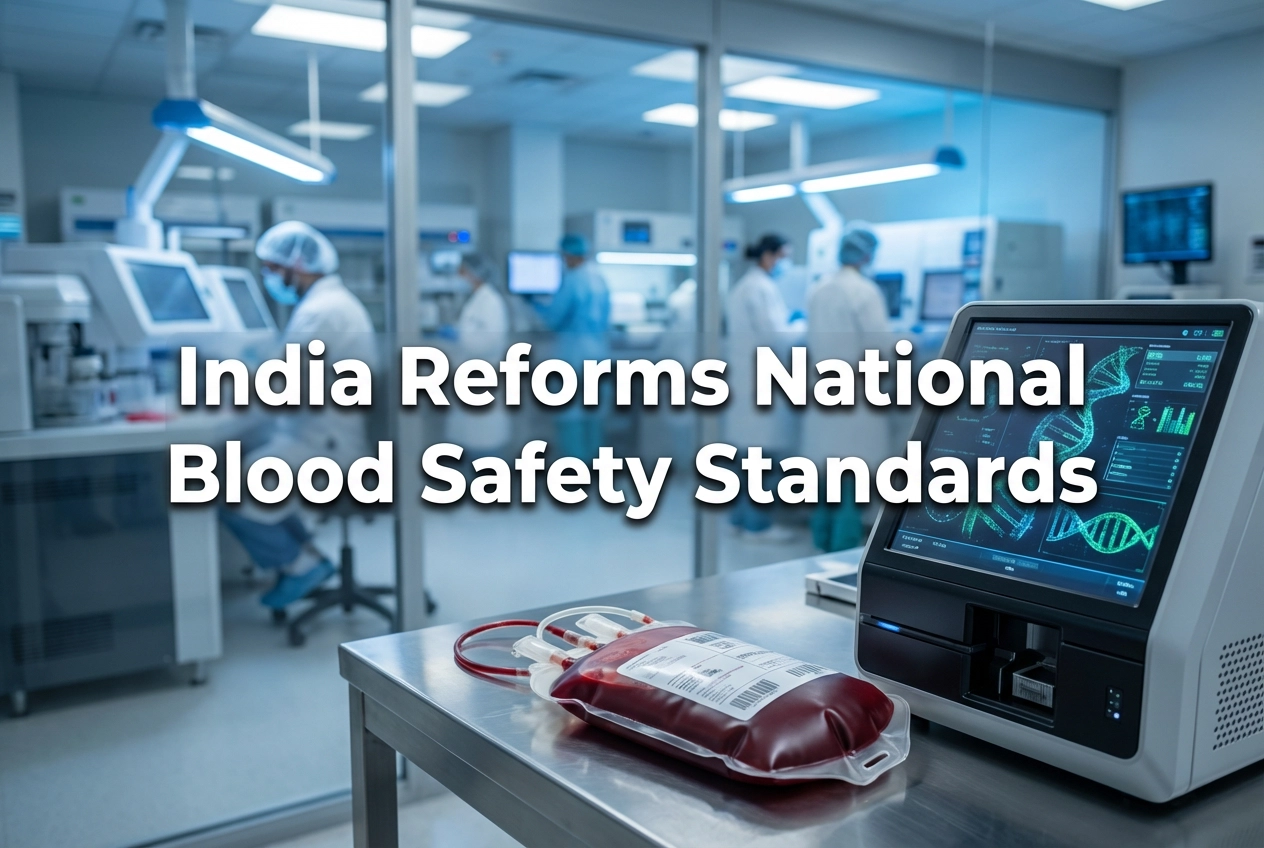
The Thalassemia Patients Advocacy Group (TPAG) recently released a crucial position paper calling for urgent Blood Safety Reforms in India. The paper, titled “Ensuring Safe Blood for All: Strengthening Blood Safety Practices,” brings together insights from clinicians, public health experts, and patient advocates. This comprehensive document underscores that safe, timely, and equitable access to blood is a fundamental public health and constitutional issue, especially for thalassemia patients who rely on regular, lifelong transfusions.
Moreover, the current system’s inconsistencies put these vulnerable patients at risk of acquiring Transfusion-Transmitted Infections (TTIs), such as HIV and Hepatitis B and C. Consequently, TPAG advocates for systemic changes to build a resilient and equitable blood safety system, making safe blood a guaranteed national standard rather than an uneven privilege.
The Critical Need for Mandatory Nucleic Acid Testing (NAT)
A major recommendation in the TPAG paper is the mandatory implementation of Nucleic Acid Testing (NAT) across all blood banks in India. NAT is a molecular technique, providing a far more effective screening method than traditional serological tests, like ELISA. Therefore, it significantly reduces the “window period” during which recent infections—including HIV, Hepatitis B, and Hepatitis C—may not be detected. While the Drugs and Cosmetics Act and Rules do not mandate NAT, it is currently practiced as an optional add-on in only some government, charitable, and private blood banks. Furthermore, experts warn that the non-uniform adoption of this gold-standard technology remains a persistent challenge in the country’s blood safety ecosystem. Patient advocates highlight that due to this vulnerability, a patient can contract a life-altering TTI while seeking life-saving care.
Reforming India’s Regulatory Framework for Blood Safety Reforms
The TPAG document flags fragmented regulation and the absence of a comprehensive national blood law as key systemic risks. Historically, blood transfusion services were regulated under the Drugs and Cosmetics Act, 1940, a framework primarily designed for pharmaceuticals, leading to uneven standards and enforcement. Consequently, the Supreme Court of India in 1996 had directed the government to establish a separate piece of legislation for blood safety.
Following years of advocacy, a potential breakthrough has emerged. Specifically, the National Blood Transfusion Bill, 2025, has been introduced in Parliament. This proposed legislation aims to establish a National Blood Transfusion Authority (NBTA) with statutory powers. Ultimately, this central authority would prescribe national standards for blood collection, processing, and transfusion, creating a uniform, safety-first framework across the country. Therefore, the enactment of this comprehensive Blood Safety Act is one of the paper’s core demands.
Other Key Recommendations from the Position Paper
Beyond regulatory and testing reforms, the TPAG position paper outlines a multi-pronged strategy for comprehensive patient care. Firstly, it recommends the immediate launch of a National Thalassemia Control Programme. This program would integrate prevention, screening, and long-term care for thalassemia patients nationwide. Secondly, the group calls for faster progress in indigenous gene therapy research, emphasizing affordability and access. Finally, the paper advocates for employment protections for thalassemia patients under existing disability frameworks, promoting social justice and dignity.
For professionals managing long-term, complex conditions like thalassemia or overseeing general transfusion protocols, enhancing expertise is vital. Those focused on blood disorders can deepen their knowledge through a dedicated Certification Course In Hematology.
Frequently Asked Questions
Q1: What is the main risk for transfusion-dependent patients in India?
The main risk is the potential for Transfusion-Transmitted Infections (TTIs) like HIV and Hepatitis B and C, which can occur due to gaps in screening protocols, non-uniform adoption of advanced testing, and fragmented regulatory oversight.
Q2: How does Nucleic Acid Testing (NAT) improve blood safety?
NAT is a molecular screening technique that detects viruses at a lower concentration than standard tests and significantly reduces the “window period” of infection. This enhances the detection of early infections, making the blood supply safer for all recipients.
Q3: Why does India need a new Blood Safety Act?
Blood Transfusion Services are currently regulated under the Drugs and Cosmetics Act, 1940, which is designed for drugs, leading to fragmented regulation and uneven quality standards. A new, dedicated act would establish a central authority (NBTA) and enforce uniform national standards, which is a major pillar of the advocated Blood Safety Reforms.
For medical professionals involved in regulatory compliance or quality assurance within blood banking, understanding the broader medical context is essential. Courses focusing on the fundamentals of medical regulation or quality assurance can be beneficial, such as the Certification Course In General Practice, offering a broad perspective on healthcare standards.
References
- TPAG releases position paper, calls for reforms to strengthen blood safety – ETHealthworld.
- NAT should be mandatory at all blood banks: Experts – Times of India.
- Blood Safety in India: Regulatory Mapping and Analysis – Vidhi Centre for Legal Policy.
- Current challenges of blood transfusions in patients with thalassemia in India and future perspectives – PubMed.
- Experts urge mandatory NAT testing for blood transfusion safety in India | Delhi News – Times of India.
- Mandatory NAT for blood banks – Rajya Sabha Debates.
- National Blood Transfusion Bill 2025: What the proposed legislation aims to change | Health News – India TV.
- The National Blood Transfusion Bill, 2025: to regulate collection, testing, processing, storage, distribution, issuance, transfusion of human blood, blood components… – Sansad.in.
Disclaimer: This article was automatically generated from publicly available sources and is provided for informational and educational purposes only. OC Academy does not exercise editorial control or claim authorship over this content. It is not a substitute for professional medical advice, diagnosis, or treatment. Always consult a qualified healthcare provider and refer to current local and national clinical guidelines.