
The Evolution of Medical Technology in India
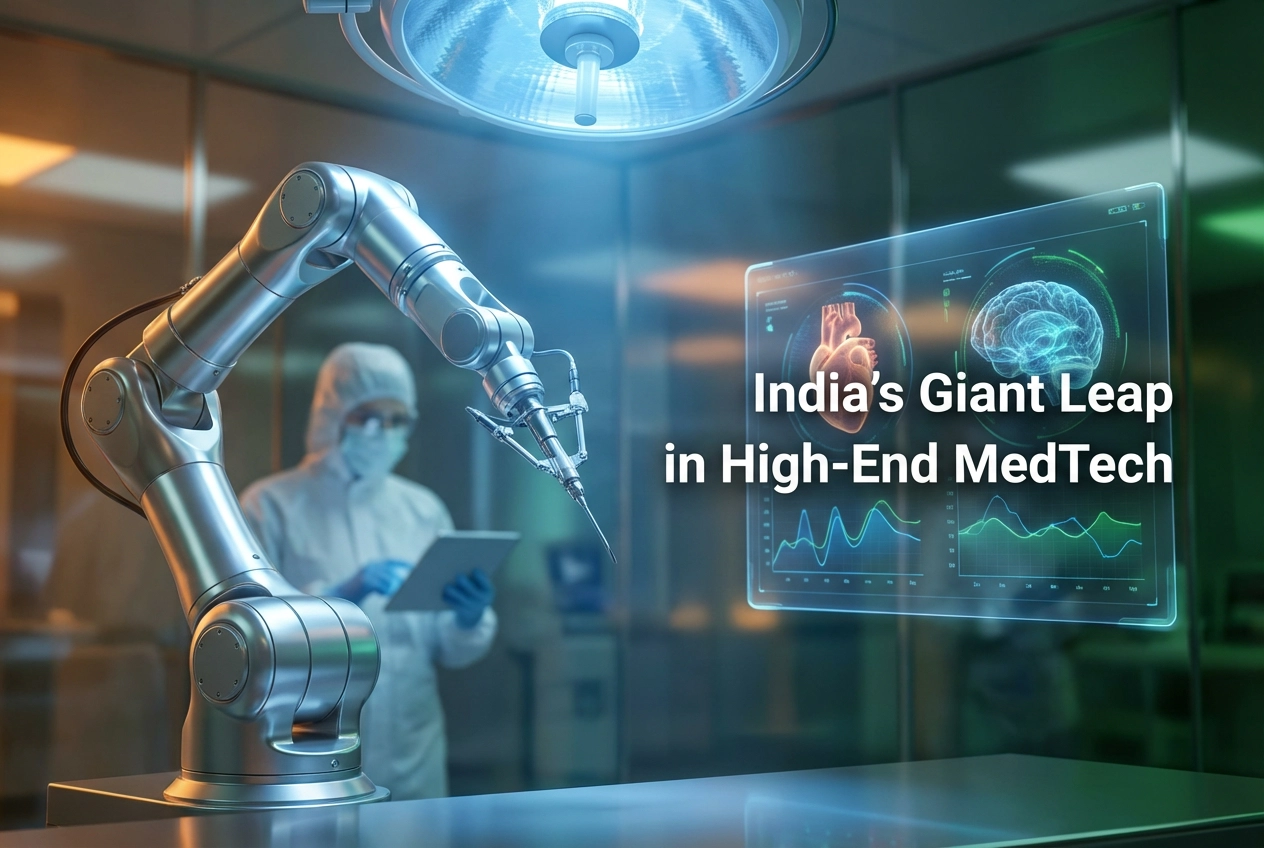
India’s medical technology landscape is currently undergoing a significant transformation. Many startups historically focused on “low-hanging fruit,” such as simple diagnostic kits. Yet, the real potential for growth lies in **India MedTech innovation** that targets complex, high-end medical devices. Experts believe that moving toward riskier, disruptive technologies will unlock long-term value for the healthcare ecosystem.
Moving Beyond Low-Risk Consumables
While the industry has grown steadily, 90% of Indian firms focus on production without dedicated R&D. Consequently, most startups target Class A and B devices. These low-risk products face heavy competition from global markets, particularly from China. However, the government is now encouraging a shift towards deeper, high-tech domains. This transition requires a stronger, interdependent link between industry and academia to strengthen product pipelines.
Government Support for India MedTech Innovation
To facilitate this shift, the government announced the Biopharma SHAKTI scheme in the recent budget. Specifically, the government dedicated Rs 1,000 crore from a Rs 10,000 crore corpus to support injectable devices. Additionally, Pfizer’s INDovation Program supports 14 startups to help them reach higher Technology Readiness Levels (TRL). For instance, RNT Health Insights developed an AI-assisted gastric cancer detection tool. This software recently received US FDA Breakthrough Device designation, which validates its clinical efficacy.
Challenges and Future Opportunities
Despite significant progress, India still imports $9 billion worth of medical devices annually. In contrast, domestic exports remain largely limited to basic items like bandages and gloves. Therefore, domestic innovators must leverage recent Free Trade Agreements to access global markets more effectively. Furthermore, protecting intellectual property remains vital for long-term success. New IP protection programs now offer financial support to help startups cover filing fees for their novel inventions.
Frequently Asked Questions
Q1: What is the Biopharma SHAKTI scheme?
The Biopharma SHAKTI scheme is a government initiative designed to support the biopharmaceutical sector, providing funding for manufacturing capacities and injectable device innovation.
Q2: Why are Indian MedTech startups shifting focus to Class C and D devices?
Startups are moving toward these higher-risk categories to avoid the saturated market of low-end consumables and to reduce India’s heavy reliance on imported high-end technology like MRI scanners. Understanding the technology behind these advanced devices often requires specialization, such as in the Radiology Speciality Courses.
Q3: How does the Pfizer INDovation Program support medical startups?
The program provides grants for clinical validation and IP filing, while also offering mentorship to help startups advance their technology from ideation to real-world deployment.
References
- India’s MedTech moonshots expanding wings — but for low hanging fruits – ETHealthworld
- Department of Pharmaceuticals, Ministry of Chemicals and Fertilizers, Government of India.
- Central Drugs Standard Control Organization (CDSCO) Guidelines on Medical Device Classification.
Disclaimer: This article was automatically generated from publicly available sources and is provided for informational and educational purposes only. OC Academy does not exercise editorial control or claim authorship over this content. It is not a substitute for professional medical advice, diagnosis, or treatment. Always consult a qualified healthcare provider and refer to current local and national clinical guidelines.