
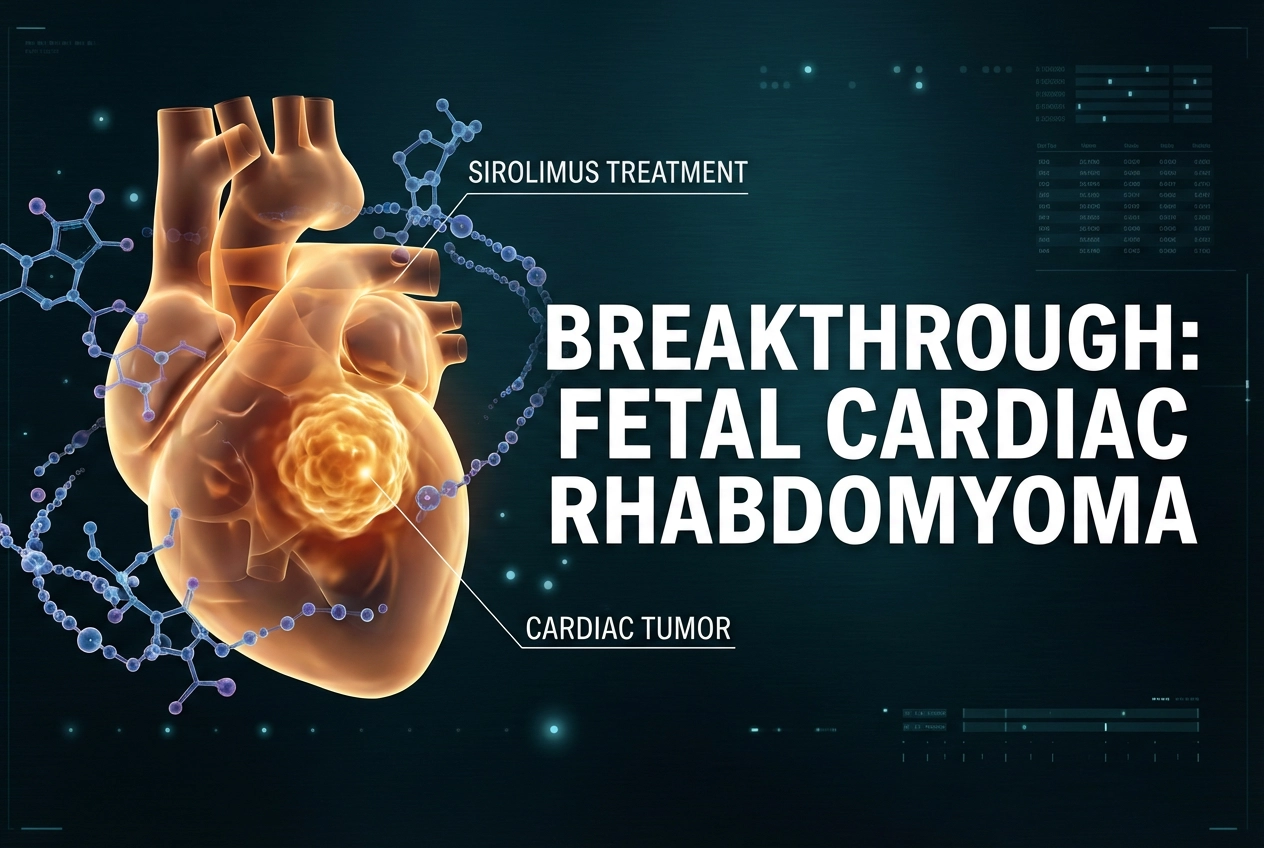
Prenatal sirolimus treatment offers a promising option for managing large fetal cardiac rhabdomyomas that threaten the baby’s life. Doctors often identify these tumors during routine pregnancy scans, which usually point to Tuberous Sclerosis Complex. While many rhabdomyomas are benign and shrink after birth, some cause severe cardiac complications. Specifically, they can obstruct blood flow or lead to fetal hydrops. Consequently, specialized centers are now evaluating how maternal medication affects fetal tumor growth.
Recent research indicates that these heart tumors grow rapidly during the middle of the pregnancy. Between 20 and 28 weeks of gestation, the tumors expand significantly. After 28 weeks, the growth rate typically slows down. However, tumors larger than 30 mm pose a high risk of heart failure. Physicians use the tumor-to-femur length (TFL) ratio to track this risk accurately. Therefore, early monitoring is vital for fetuses with multiple cardiac lesions.
Benefits of Prenatal Sirolimus Treatment
The success of the therapy depends heavily on the duration of the drug exposure. Mothers who receive prenatal sirolimus treatment for more than seven days show the most significant results. In these cases, researchers noted substantial tumor regression and the resolution of heart obstructions. Furthermore, the TFL ratio decreased, indicating a reduction in the relative tumor burden. In contrast, short-term treatment lasting seven days or less failed to change the tumor size. Thus, clinical guidelines should emphasize the need for early and sustained administration.
Notably, doctors must manage the cessation of the drug very carefully. If the mother stops the medication before delivery, the fetus may experience rebound tumor growth. This highlights the importance of continuing the therapy until birth to maintain cardiac stability. Moreover, physicians must monitor maternal drug levels to ensure safety for both the mother and the fetus.
Impact on Brain Tubers and Neurodevelopment
While the medication shows clear benefits for the heart, its impact on the brain is less certain. Prenatal MRI scans often reveal brain tubers and subependymal nodules in these high-risk fetuses. Despite the cardiac improvements, these brain lesions generally remain unchanged during sirolimus therapy. Some infants showed a mild increase in tuber size, while others showed no detectable change. Nevertheless, the small study sample prevents researchers from making definitive conclusions about neuroprotection. Future large-scale studies will help clarify if this treatment can prevent epilepsy or developmental delays.
Frequently Asked Questions
Q1: How long must the mother take sirolimus for it to be effective?
Studies show that prenatal sirolimus treatment must last for more than seven days to effectively shrink fetal heart tumors.
Q2: Can the heart tumors grow back after treatment stops?
Yes, researchers have observed a rebound effect where tumors grow again if the medication is discontinued before delivery.
Q3: Does sirolimus treatment also remove brain tubers in the fetus?
Current evidence suggests that brain tubers appear unchanged by the treatment, although the heart tumors respond very well.
References
- Vergote S et al. Impact of prenatal sirolimus on cardiac rhabdomyomas and brain tubers. Ultrasound Obstet Gynecol. 2026 Feb 12. doi: 10.1002/uog.70185. PMID: 41674351.
- Ebrahimi-Fakhari D et al. Prenatal Sirolimus Treatment for Rhabdomyomas in Tuberous Sclerosis. Pediatr Neurol. 2021;125:40-44.
- Barnes BT et al. Maternal Sirolimus Therapy for Fetal Cardiac Rhabdomyomas. N Engl J Med. 2018;378(19):1844-1845.