
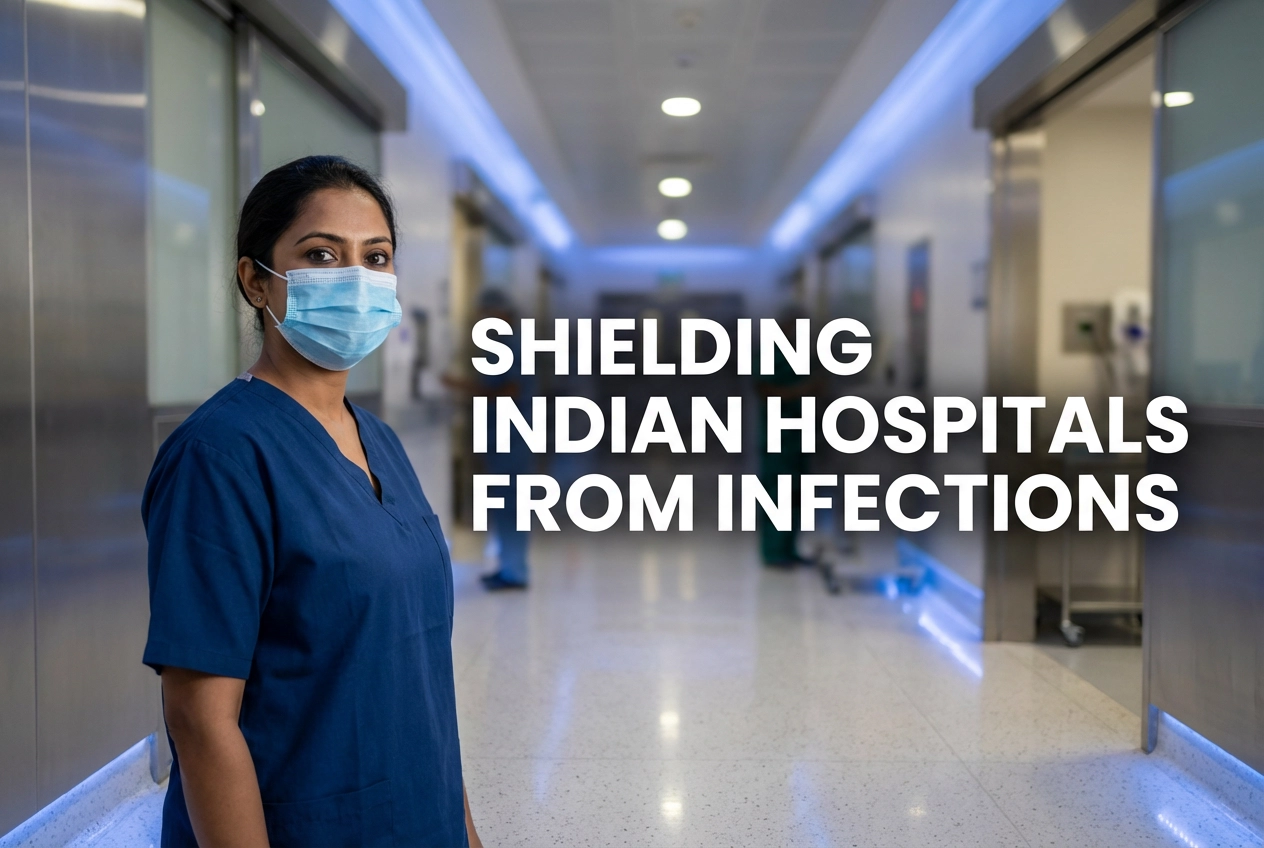
Infection Prevention, specifically the control of Hospital-Acquired Infections (HAIs), remains a critical challenge for Indian healthcare. Amidst alarming statistics, healthcare leaders recently discussed actionable strategies for the future. Consequently, their conversation, “The Future of Infection Prevention in Indian Hospitals,” delivered a sharp executive perspective. The objective is clear: by 2030, every person accessing or providing healthcare must be safe from associated infections. Furthermore, this vision aligns with the World Health Organisation’s Global Action Plan and Monitoring Framework for IPC (2024-2030). Dr. Shashikant Pawar and Dr. Prasanna Venkatesh led the insightful discussion, emphasizing the need to bridge alarming statistics with tangible policy and infrastructure reforms.
Understanding the HAI Burden in India
Therefore, it is essential to first understand the scope of the problem. Dr. Pawar shared concerning data, revealing that around two million people acquire hospital-associated infections annually. Moreover, this leads to approximately 80,000 deaths. A separate, but related, challenge is Antimicrobial Resistance (AMR). Drug-resistant infections sadly claim over 3 lakh lives in India each year. Specifically, the state of affairs is particularly dire in tertiary and quaternary care centres. Dr. Venkatesh highlighted that critically ill patients arrive at these facilities. Consequently, heightened awareness among clinicians is absolutely essential. They must collaborate closely with microbiologists and clinical pharmacologists, continuously tracking downgraded antibiotics. Shockingly, the last new class of antibiotics was developed over 40 years ago.
Infrastructure and Digital Surveillance in Infection Prevention
A constant threat remains securing the environment, one of the three primary factors contributing to HAIs. Having said that, the duty does not end with just ensuring a safe environment. Monitoring its effectiveness is equally important. Therefore, surveillance must be non-negotiable, including both real-time and passive monitoring systems. Significant strides are now being made through AI-enabled automation. For example, technology is assisting with air and water quality checks, alongside surface contamination checks. IoT (Internet of Things) is a notable example in operating theatres. It helps in monitoring key parameters like air quality, positive pressure, and sterilisation effectiveness. Furthermore, simple platforms like mobile apps and message alerts can assist with this job easily. Dr. Venkatesh believes that real-time location sensing and predictive analytics in hospitals will significantly enhance infection control in the coming days.
Fostering an Organisational Culture of Infection Prevention
The Indian healthcare sector has long battled a shortage of skilled workforce proficient in handling HAIs. Consequently, a key question arises: Should hospitals foster a culture and train the existing team, or must they hire dedicated, specially trained professionals? According to Dr. Venkatesh, infection control is not the responsibility of a single department. Instead, it must be the core mindset and working culture upon which the entire organisation is built. Every staff member must take accountability for curbing HAIs. For this to happen, transparency, clear communication, and accessible information for everyone are necessary. This approach can prevent contamination much earlier than expected. Internal communication and alerts are crucial to keeping the entire hospital informed. Moreover, this process goes a long way in nurturing a “no-blame culture” that encourages reporting and improvement.
Accreditation, Policy, and the Road Ahead
Accreditation underlines another real concern. India has approximately 70,000 hospitals, yet only about 3,000 to 4,000 are accredited. Therefore, a massive gap clearly exists. However, compared to a decade ago, this represents a significant improvement. Dr. Pawar raised a relevant question: Are accreditation and quality-related parameters incorporated into the curricula of medicine and nursing? Suprisingly, the answer was optimistic, with Dr. Venkatesh noting that they are slowly “creeping in.” Today, hospitals utilise SOPs, protocols, monitoring systems, and data collection tools. Consequently, a data-driven approach and outcome analysis are essential next steps. Strengthening the national infection control programme, leveraging AI and digital tools, improving hygiene, tackling AMR, and boosting manpower will ultimately mitigate the spread of pathogens. Those seeking to deepen their understanding of AMR can explore courses like the Postgraduate Diploma In Infectious Disease.
Frequently Asked Questions
Q1: What are the primary goals for infection control in Indian hospitals by 2030?
The main goal, aligned with the WHO’s Global Action Plan, is to ensure that by 2030, everyone accessing or providing healthcare is safe from associated infections. This requires extensive national policies, infrastructure upgrades, and a shift in organizational culture.
Q2: How are technology and AI being used to enhance infection prevention?
AI-enabled automation is making significant strides in surveillance, including air and water quality checks and service contamination monitoring. For example, IoT in operating theatres helps monitor air quality and sterilisation. Furthermore, predictive analytics and real-time location sensing are expected to enhance infection control in the future.
Q3: What is the proposed solution for the skilled workforce shortage in HAI control?
The expert consensus is that infection control must become an organization-wide mindset and culture, not just a single department’s task. Accountability, transparency, and clear internal communication among all staff members are crucial to nurturing a “no-blame culture” and curbing HAIs effectively. Professionals looking to bolster their skills in systematic control and quality assurance can find relevant training in our Certification Course In Intensive Care Medicine, which often covers critical procedural safety.
References
- India goes robust on the future of infection prevention – ETHealthworld
- World Health Organisation. Global Action Plan and Monitoring Framework for IPC (2024-2030).
- National Centre for Disease Control (NCDC) Guidelines on Infection Prevention and Control.
- Review on the Burden of Antimicrobial Resistance (AMR) in India.
Disclaimer: This article was automatically generated from publicly available sources and is provided for informational and educational purposes only. OC Academy does not exercise editorial control or claim authorship over this content. It is not a substitute for professional medical advice, diagnosis, or treatment. Always consult a qualified healthcare provider and refer to current local and national clinical guidelines.