
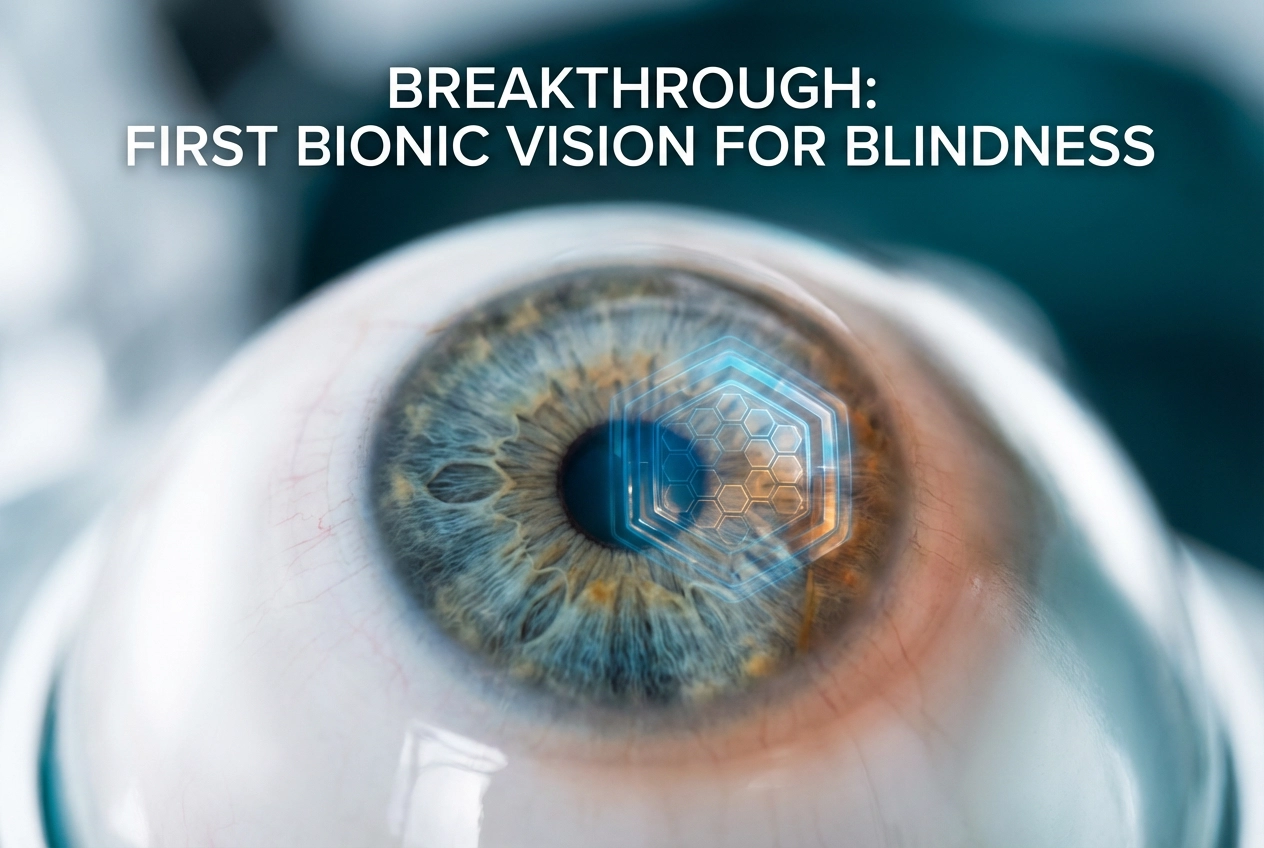
Geographic atrophy (GA) due to age-related macular degeneration (AMD) is a leading cause of irreversible blindness worldwide. Since no current therapies restore lost vision, this condition presents a major challenge for ophthalmologists. The clinical trial for the PRIMA Retinal Implant system consequently represents a significant step forward in vision restoration technology. Researchers investigated this wireless subretinal photovoltaic implant combined with glasses that project near-infrared light.
Study Design and Key Efficacy Results
The open-label, multicenter, prospective study assessed the vision of participants with GA and severe visual impairment (at least 1.2 logMAR). Furthermore, the primary goal was a clinically meaningful improvement in visual acuity (defined as ≥0.2 logMAR) from baseline at 12 months. Thirty-eight participants received the PRIMA implant. Thirty-two participants completed the 12-month follow-up assessment. Consequently, the PRIMA system provided a clinically meaningful improvement in visual acuity for 26 of the 32 participants. This equals a success rate of 81% (95% CI, 64 to 93; P<0.001).
This improvement meant patients could read at least 10 more letters on the standard vision chart. On average, the mean improvement was 0.49 logMAR. Moreover, the study also reported that a majority of the participants (69%) expressed medium-to-high satisfaction with the device. Importantly, 84% of participants used the device at home for tasks such as reading.
Understanding the PRIMA Retinal Implant System
The PRIMA system uses a tiny, wireless subretinal implant. The implant is a small 2x2mm chip containing 378 photovoltaic cells. Surgeons place this chip under the atrophic macula. The device works with special glasses that feature a camera and a miniature projector. Therefore, the camera captures an image, and a pocket processor interprets the data. The glasses then project this information as near-infrared light into the eye. The implant converts this light into electrical impulses, which the retina transmits to the brain, providing artificial vision. This wireless design is a major technological advance over older, wired retinal implants. Additionally, the system restores vision in the central scotoma while preserving the patient’s existing natural peripheral vision.
Safety Profile and Adverse Events
The study also evaluated the safety of the PRIMA implant procedure. A total of 26 serious adverse events (SAEs) occurred in 19 of the 38 participants. Consequently, the most common SAEs related to the procedure or device included vitreous hemorrhage and retinal detachment, which affected two participants each. Furthermore, elevated eye pressure and retinal breaks were also reported. Investigators classified four events as severe. These included ocular hypertension, retinal detachment, full-thickness macular hole, and proliferative vitreoretinopathy. The study eyes also experienced a larger increase in the area of atrophy compared to the nonstudy eyes (8.5 mm² vs 2.5 mm²). Furthermore, researchers attributed this increased atrophy to the subretinal surgery itself.
Frequently Asked Questions
Q1: What is the PRIMA system?
The PRIMA system is a wireless, subretinal photovoltaic implant designed to restore central vision in patients who have lost sight due to geographic atrophy from dry AMD. The system works in conjunction with special glasses that project near-infrared light onto the implant.
Q2: How much vision improvement did participants experience?
Of the participants assessed at 12 months, 81% achieved a clinically meaningful improvement in visual acuity, defined as reading at least two extra lines (≥0.2 logMAR) on a standard eye chart. On average, this was approximately 24.5 letters.
Q3: Is the PRIMA implant available in India or globally?
The PRIMA implant is currently an experimental system and is not yet commercially approved for use in India or other major markets. However, the positive clinical trial results mark a significant step towards a potential vision-restoring therapy for geographic atrophy.
References
- Holz FG et al. Subretinal Photovoltaic Implant to Restore Vision in Geographic Atrophy Due to AMD. N Engl J Med. 2026 Jan 15. doi: 10.1056/NEJMoa2501396. PMID: 41124203.
- A Photovoltaic Implant May Restore Functional Vision in Patients With Advanced AMD. American Academy of Ophthalmology. Accessed [Current Date].
- PRIMA Bionic Vision System Clinical Feasibility Research Study. University of Pittsburgh. Accessed [Current Date].
- PRIMA Retina Implant Restores Vision in AMD. Retina Vitreous Associates of Florida. Accessed [Current Date].