
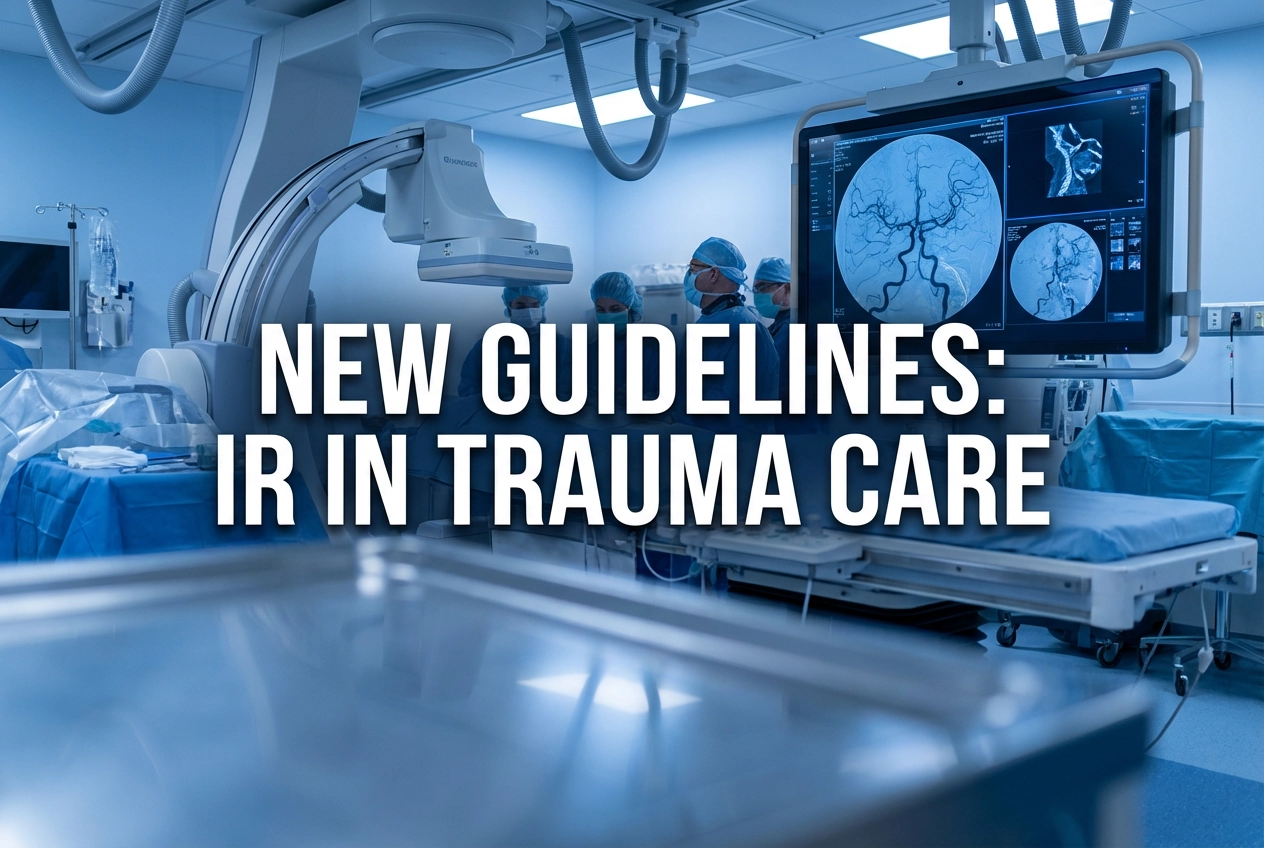
Why Every Trauma Team Needs Interventional Radiology
Trauma-related hemorrhage causes many preventable deaths globally. Consequently, interventional radiology in trauma has become a vital component of modern emergency care. The Cardiovascular and Interventional Radiological Society of Europe recently published new practice recommendations. These guidelines highlight the necessity of integrating specialists into the trauma team to ensure rapid intervention.
Importance of Interventional Radiology in Trauma
First, Level I trauma centers must provide 24/7 availability of IR services. Level II and III centers should establish structured access pathways instead. This organization ensures clinicians address non-compressible bleeding without delay. Moreover, radiologists must collaborate closely with surgeons and emergency physicians to optimize patient outcomes. Furthermore, this integration allows for immediate decision-making during critical life-saving moments.
Standardized Protocols for Hemorrhage Control
Second, whole-body contrast-enhanced CT is the gold standard for stable patients. If clinicians identify active extravasation, they should perform immediate embolization. Additionally, trauma centers need standardized protocols to manage these emergencies efficiently. Having a ready inventory of coils, plugs, and liquid embolics is crucial. Therefore, teams can execute bleeding control maneuvers as soon as the patient arrives in the suite.
Frequently Asked Questions
Q1: Which trauma centers should have 24/7 IR availability?
Level I trauma centers must maintain 24/7 IR availability to manage emergencies. Meanwhile, Level II and III centers should have structured access pathways to ensure timely care.
Q2: What is the primary diagnostic tool for stable trauma patients?
Whole-body contrast-enhanced CT is the recommended tool to identify bleeding sites quickly in stable or responsive patients.
References
- Bulum A et al. ESR Essentials: trauma team and the role of Interventional Radiology-practice recommendations by the Cardiovascular and Interventional Radiological Society of Europe. Eur Radiol. 2026 Mar 24. doi: 10.1007/s00330-026-12440-8. PMID: 41874621.
- Kessel D, et al. Quality improvement guidelines for the role of the interventional radiologist in the management of trauma. Cardiovasc Intervent Radiol. 2020;43(1):17-26.
- Singh A, et al. “Beyond saving lives”: Current perspectives of interventional radiology in trauma. World J Radiol. 2017;9(4):155-177.