
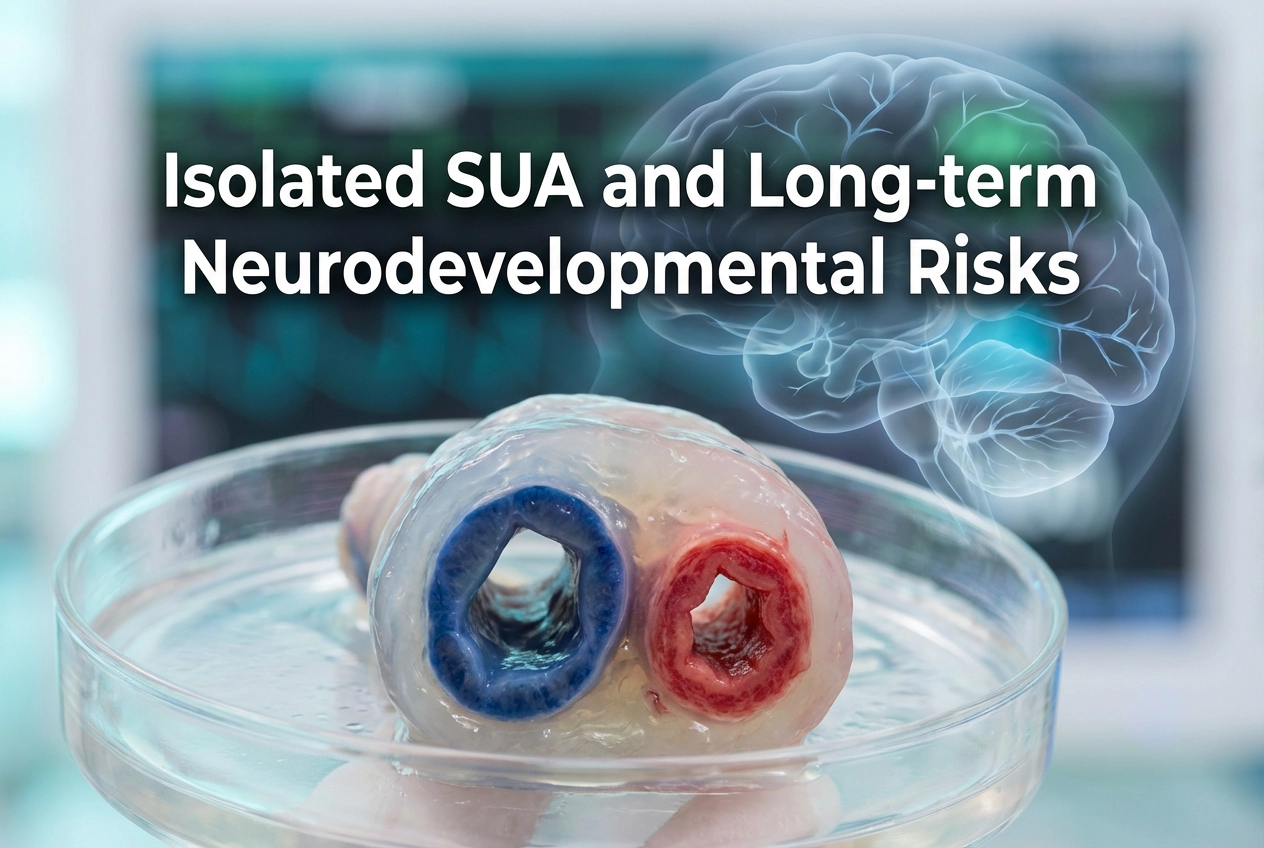
A single umbilical artery (SUA) is an abnormal finding. It means only one artery is present instead of the usual two. Doctors already know that SUA increases the chances of adverse perinatal outcomes. About 11% of fetuses with SUA also show a major anomaly, often involving the central nervous system. However, evidence connecting an isolated SUA (iSUA)—meaning no other major anomaly is present—to long-term childhood neurodevelopmental disorders (NDD) has been scarce. Therefore, a national cohort study investigated the Isolated SUA Risk for conditions like intellectual disability (ID), attention deficit hyperactivity disorder (ADHD), and autism spectrum disorder.
Understanding the Isolated SUA Risk and NDD Link
The large study linked data from the Medical Birth Registry of Norway and other national registries. Researchers included all singleton live births in Norway between 1999 and 2013. The cohort was followed up until the end of 2019. Consequently, this historical national cohort provided a robust sample size. They focused only on newborns with an iSUA diagnosis. Investigators sourced NDD data from the Norwegian National Insurance Scheme and the Norwegian Patient Registry. This comprehensive data collection strengthens the findings significantly. The study used multilevel logistic regression to calculate the odds ratios (ORs).
Key Findings on Associated Disorders
Results showed a clear association. Children born with iSUA demonstrated a higher overall risk of NDD. Specifically, the study reported elevated odds for intellectual disability (ID). Furthermore, the risk for attention deficit hyperactivity disorder (ADHD) also increased. Interestingly, the link between iSUA and neurodevelopmental disorders was generally stronger in girls than in boys. This sex-specific finding suggests different underlying mechanisms might be at play. Therefore, clinicians must consider sex when counseling parents.
The Mediating Role of Preterm Birth
The researchers also examined how gestational age and birth weight might influence the iSUA-NDD connection. They performed a causal mediation analysis. Preterm birth is a known complication of iSUA. Ultimately, the study found that preterm birth explained a significant portion of the total effect of iSUA on NDD. This suggests that iSUA primarily contributes to NDD by increasing the risk of early delivery. Consequently, interventions aimed at preventing preterm birth in iSUA pregnancies could potentially reduce the subsequent NDD risk.
Frequently Asked Questions
Q1: What is an isolated Single Umbilical Artery (iSUA)?
iSUA is a finding where the umbilical cord contains only one artery instead of the normal two, and there are no other major fetal malformations or chromosomal abnormalities detected.
Q2: Which specific neurodevelopmental disorders were linked to iSUA?
The study found a higher risk of several neurodevelopmental disorders (NDD), including intellectual disability (ID), attention deficit hyperactivity disorder (ADHD), autism spectrum disorder, and epilepsy.
References
- Ebbing C et al. Association between isolated single umbilical artery and neurodevelopmental disorders: population-based study. Ultrasound Obstet Gynecol. 2026 Jan 17. doi: 10.1002/uog.70164. PMID: 41546561.
- Ebbing C et al. Isolated single umbilical artery and the risk of adverse perinatal outcome and third stage of labor complications: A population-based study. Acta Obstet Gynecol Scand. 2020 Mar;99(3):374-380.
- Hua M et al. Single umbilical artery risk factors and pregnancy outcomes. Obstet Gynecol. 2010 Nov;116(5):1142-7.