
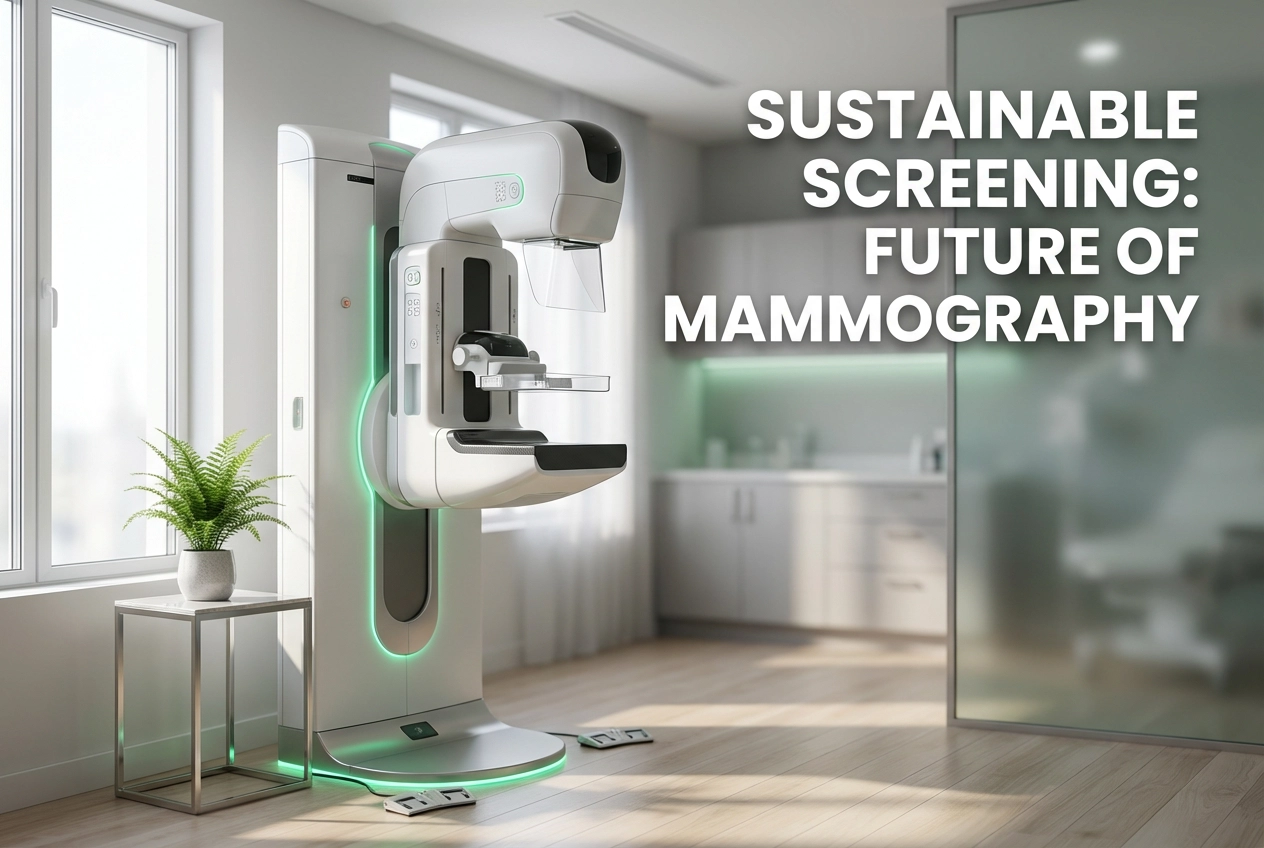
Modern radiology departments are increasingly focusing on sustainability. Mammography energy efficiency is now a critical topic for clinic managers. Although diagnostic imaging is essential, it consumes significant electricity. Understanding how standard and contrast-enhanced mammography (CEM) differ in power use can help clinics reduce their environmental footprint.
Understanding Energy Use in Breast Imaging
Researchers recently measured direct energy consumption across multiple mammography systems. They found that machine type is the primary determinant of electricity use. Interestingly, breast thickness and density do not significantly impact energy demand. Most energy consumption occurs during idle time rather than active imaging. Consequently, reducing standby power is essential for lowering operational costs.
In addition, vendor-specific differences play a major role in total consumption. Some machines require minimal standby power, which improves their overall performance. Other systems might consume more energy while idling even if they are efficient during scans. Therefore, facilities must evaluate both active and idle power profiles when assessing equipment.
Comparing DM and CEM Requirements
Clinical studies show that contrast-enhanced mammography does not require substantially more net energy than standard digital mammography. Both modalities are comparable in terms of power per examination. However, the total annual energy use depends heavily on the volume of daily exams. Higher workloads lead to better energy efficiency because the fixed standby power is spread over more patients.
Moreover, the environmental impact of radiology is gaining attention in India. As breast cancer screening programs expand, the demand for efficient imaging grows. Optimizing equipment use can help hospitals manage rising electricity costs while maintaining high-quality care. Consequently, sustainability is becoming a key factor in healthcare management.
Maximizing Mammography Energy Efficiency
To improve sustainability, clinics should optimize their appointment scheduling. Grouping patients together minimizes the time machines spend in high-power idle states. Furthermore, powering down equipment after clinical hours can drastically cut annual consumption. Managers should also consider vendor-specific energy ratings when purchasing new systems.
Simple operational changes often yield the best results for energy conservation. For example, ensuring that workstations enter sleep mode during breaks reduces unnecessary load. These small changes can significantly lower the carbon footprint of breast imaging departments in India. Ultimately, sustainable practices benefit both the environment and the hospital’s financial health.
Frequently Asked Questions
Q1: Does contrast-enhanced mammography use more power than standard digital mammography?
Research indicates that contrast-enhanced mammography (CEM) and standard digital mammography (DM) have comparable net energy requirements per exam. The primary driver of energy consumption is the machine’s standby mode rather than the specific imaging technique used.
Q2: What is the most effective way to reduce energy consumption in a mammography suite?
The most effective strategy is to minimize idle time by optimizing patient scheduling. Additionally, powering down machines and workstations at the end of the day can lead to significant energy savings without affecting clinical outcomes.
Q3: How much energy does a mammography machine typically use annually?
Annual estimates range from approximately 1660 to 2300 kWh per machine. These figures vary based on the manufacturer and the volume of examinations performed daily, with higher workloads leading to better efficiency.
References
- Rossini G et al. Energy consumption of standard and contrast-enhanced mammography: a step towards sustainable breast imaging. Eur Radiol. 2026 Feb 11. doi: 10.1007/s00330-026-12373-2. PMID: 41670667.
- McKee J. Radiologists can do much to lessen the specialty’s substantial environmental impact. Radiological Society of North America (RSNA). 2023.
- Seethamraju SM et al. Current Scenario and Regulatory Issues of Mammography- A Magic Tool for Women’s Health. J Clinical Research and Reports. 2025.