
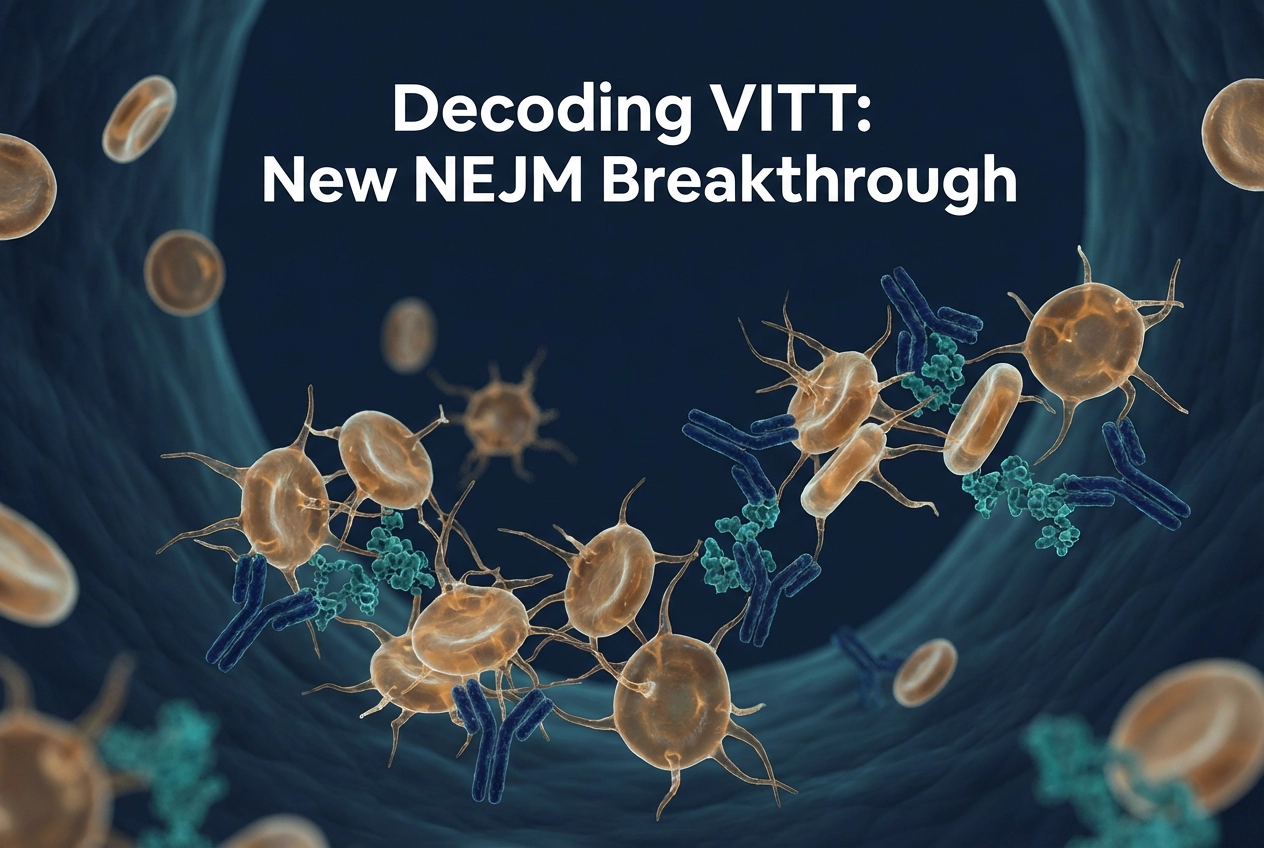
Researchers recently discovered a breakthrough regarding how vaccine-induced immune thrombocytopenia and thrombosis develops. This study clarifies the VITT immunopathogenesis by identifying a specific molecular trigger. Scientists found that rare cases of clotting after adenoviral vector vaccines occur due to an unusual antibody shift.
Understanding VITT Immunopathogenesis and Genetic Links
The study analyzed antibodies from patients who experienced VITT. Specifically, researchers identified a shared immunoglobulin light-chain allele, known as IGLV3-21*02 or *03. This genetic marker carries a critical somatic hypermutation called K31E. Furthermore, this mutation allows antibodies to transition from recognizing viral proteins to attacking the body’s own platelet factor 4 (PF4). Therefore, genetic susceptibility plays a major role in these rare events.
Role of Adenoviral Protein pVII in VITT Immunopathogenesis
The investigation pinpointed the adenoviral core protein pVII as the initial target. Initially, the immune system produces antibodies against this specific viral protein. However, the K31E mutation causes these antibodies to cross-react with PF4. Consequently, this interaction triggers platelet activation and leads to dangerous thrombotic events. Thus, the mutation acts as a bridge between a normal viral response and a pathological autoimmune reaction. Scientists now understand how the virus-induced response becomes misdirected.
Clinical Implications for Future Vaccines
Identifying this specific mechanism provides a clearer path for improving vaccine safety. Because the study links a specific genetic allele to the complication, future screening or vaccine modifications might become possible. Moreover, this discovery explains why only a tiny fraction of vaccinated individuals develop VITT. Ultimately, understanding these molecular details enhances our ability to manage similar risks in future adenoviral vector platforms. Doctors can now better appreciate the complex interplay between viral antigens and human genetics.
Frequently Asked Questions
Q1: What is the primary cause of VITT according to this study?
VITT occurs when a specific somatic hypermutation in antibodies targeting the adenoviral core protein pVII causes them to mistakenly attack platelet factor 4 (PF4).
Q2: Who is most at risk for developing these specific antibodies?
Individuals carrying the immunoglobulin light-chain allele IGLV3-21*02 or *03 are more susceptible to this antibody shift after exposure to adenoviral antigens.
References
- Wang JJ et al. Adenoviral Inciting Antigen and Somatic Hypermutation in VITT. N Engl J Med. 2026 Feb 12. doi: 10.1056/NEJMoa2514824. PMID: 41671482.
- Greinacher A, et al. Thrombotic Thrombocytopenia after ChAdOx1 nCov-19 Vaccination. N Engl J Med. 2021;384(22):2092-2101.