Merlin CT AI Report Errors: What Every Doctor Must Know
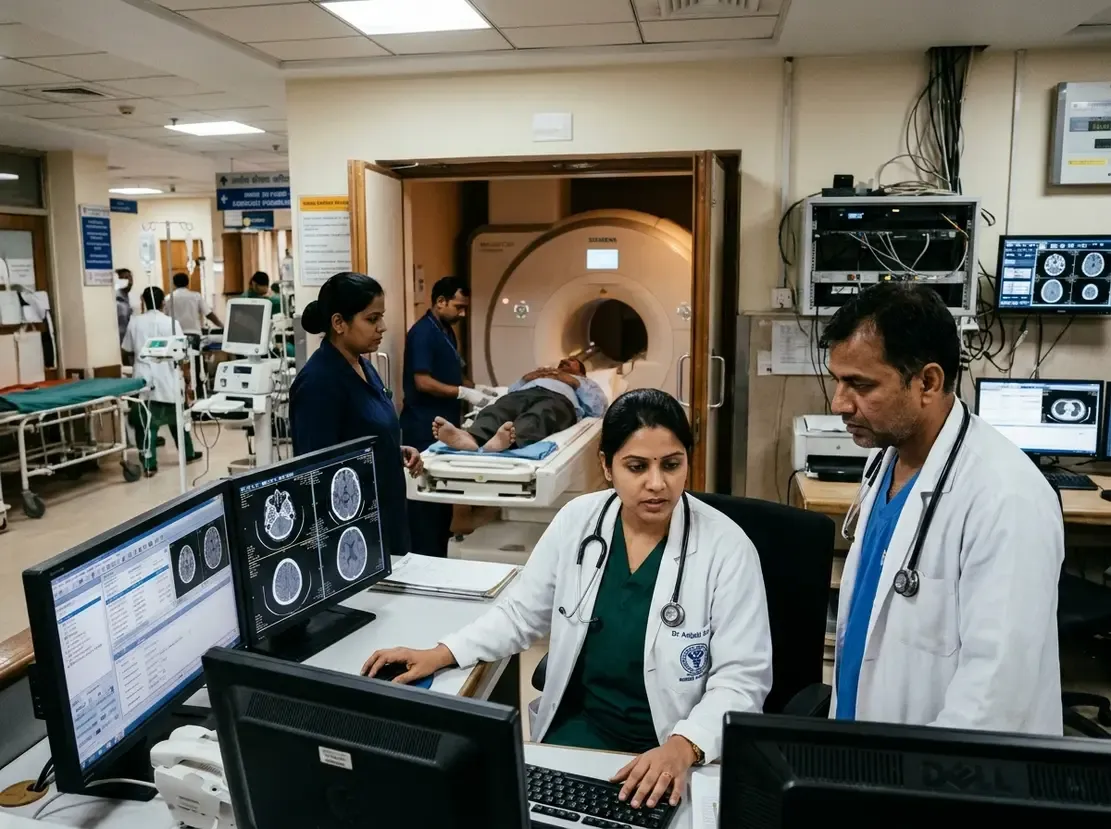
Artificial intelligence continues to transform medical imaging interpretation at a rapid pace. However, clinicians increasingly encounter subtle AI radiology report errors during routine diagnostic workflows. A groundbreaking investigation examined report generation by Merlin, an advanced 3D vision-language model. Although these models show immense diagnostic promise, automated narratives frequently contain clinically meaningful inaccuracies. Consequently, radiologists must understand these failure modes before integrating automated platforms into daily clinical practice.
Evaluating AI Radiology Report Errors in Abdominal CT
Researchers recently evaluated the clinical accuracy of automated narrative generation in volumetric abdominal imaging. Merlin processes three-dimensional cross-sectional slices by linking volumetric imaging features with extensive clinical text. Furthermore, developers trained the model on thousands of comprehensive electronic health records and scan datasets. Nevertheless, automated report production exposed substantial vulnerabilities in complex multi-organ evaluations. The study revealed that the model often generated fluent descriptions that concealed diagnostic mistakes. In addition, standard computational linguistic metrics failed to reflect the true severity of clinical misclassifications. Therefore, linguistic fluency does not ensure diagnostic safety.
Diagnostic Discrepancies and Pattern Hallucinations
The investigation categorized specific patterns of diagnostic discordance produced during machine interpretation. Most alarmingly, the foundation model produced distinct factual hallucinations across several abdominal organ systems. For example, generated drafts occasionally described normal postoperative findings in patients with severe pathological disruptions. Conversely, the model omitted critical acute conditions like subtle appendiceal inflammation, bowel perforation, and localized ischemia. These acute surgical diagnoses require immediate intervention to prevent severe patient morbidity. Additionally, investigators identified recurring errors in organ laterality and anatomic landmark attribution. Because language models optimize word probabilities rather than physiological truths, critical diagnostic features disappear. Thus, unvetted outputs carry substantial liability in emergency settings.
Implications for Radiology Workflows in India
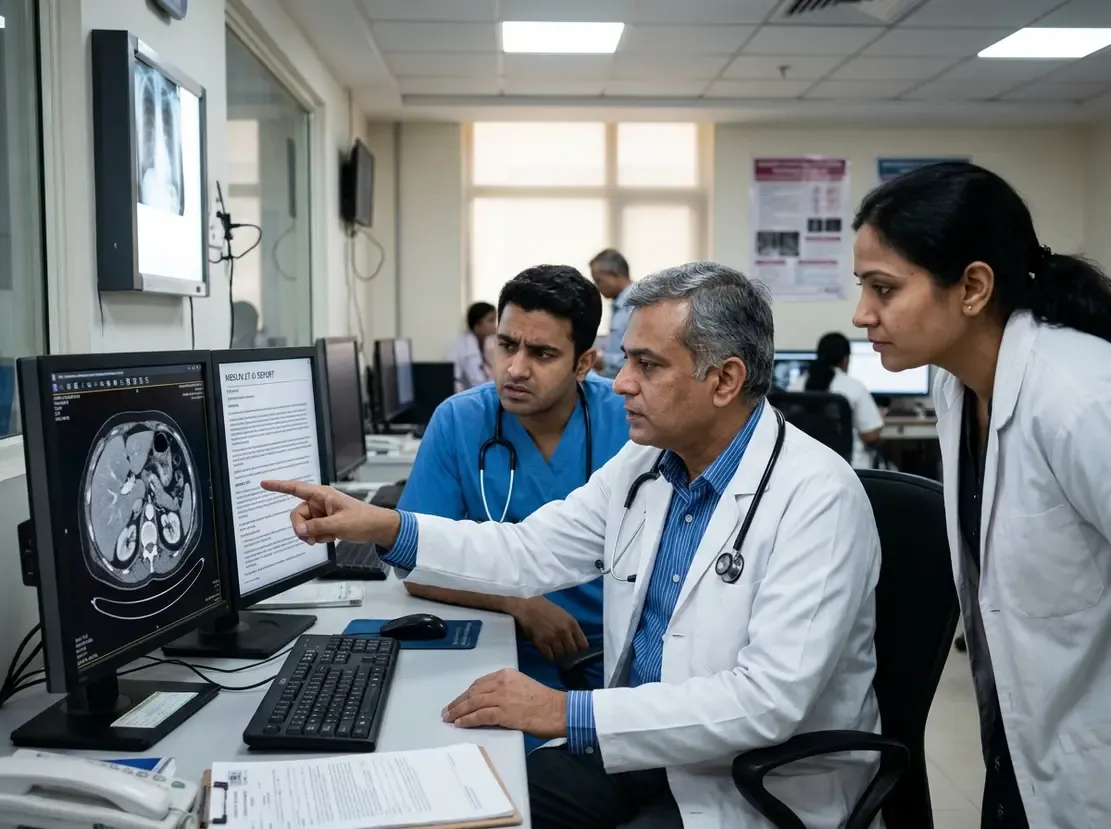
In India, clinical imaging facilities experience immense patient caseloads alongside a scarcity of subspecialty radiologists. Consequently, many diagnostic centers eagerly explore autonomous platforms to accelerate scan turnaround times. However, premature deployment of unmonitored reporting tools creates severe clinical hazards for vulnerable patient groups. Junior clinicians and emergency room doctors face significant risks from automation bias. Specifically, non-radiologists might accept convincing AI text drafts without cross-referencing raw volumetric CT slices. Therefore, Indian healthcare institutions must implement stringent human-in-the-loop validation frameworks. Expert radiologists must scrutinize every computer-generated paragraph before releasing final signed reports. Ultimately, artificial intelligence should augment radiologist perception rather than replace human judgment entirely, supported by ongoing professional development through structured radiology speciality courses.
Frequently Asked Questions
Q1: What is the Merlin foundation model in radiology?
Merlin is a specialized 3D vision-language foundation model designed for volumetric abdominal computed tomography scans. Furthermore, it learns shared representations from cross-sectional imaging data, electronic diagnosis codes, and radiologist reports.
Q2: What are the most common AI radiology report errors observed in 3D CT analysis?
Common errors include hallucinating normal structures, missing acute abnormalities like bowel ischemia, and confusing anatomical laterality. In addition, models often generate fluent, grammatically correct prose that masks incorrect clinical interpretations.
Q3: Why should Indian diagnostic centers avoid fully autonomous AI report generation?
Indian diagnostic centers must protect patient safety against unverified automated impressions. Consequently, healthcare facilities require credentialed radiologists to verify every AI narrative against the primary imaging dataset.
References
- Lo PA et al. Clinical Errors Within Radiology Reports Generated Using the Merlin Abdominal CT Vision-Language Foundation Model. AJR Am J Roentgenol. 2026 Nov 25. doi: 10.2214/AJR.26.36057. PMID: 43084268.
- Blankemeier L, Kumar A, Cohen JP, et al. Merlin: a computed tomography vision-language foundation model and dataset. Nature. 2026. doi: 10.1038/s41586-026-10181-8. PMID: 41781626.
- Han DH, Hwang EJ, Yoon SH, Kim H, Lee T. Decoupling Visual Parsing and Diagnostic Reasoning for Vision-Language Models (GPT-4o and GPT-5): Analysis Using Thoracic Imaging Quiz Cases. AJR Am J Roentgenol. 2026;226(4):e2534116. doi: 10.2214/AJR.25.34116. PMID: 41499708.