
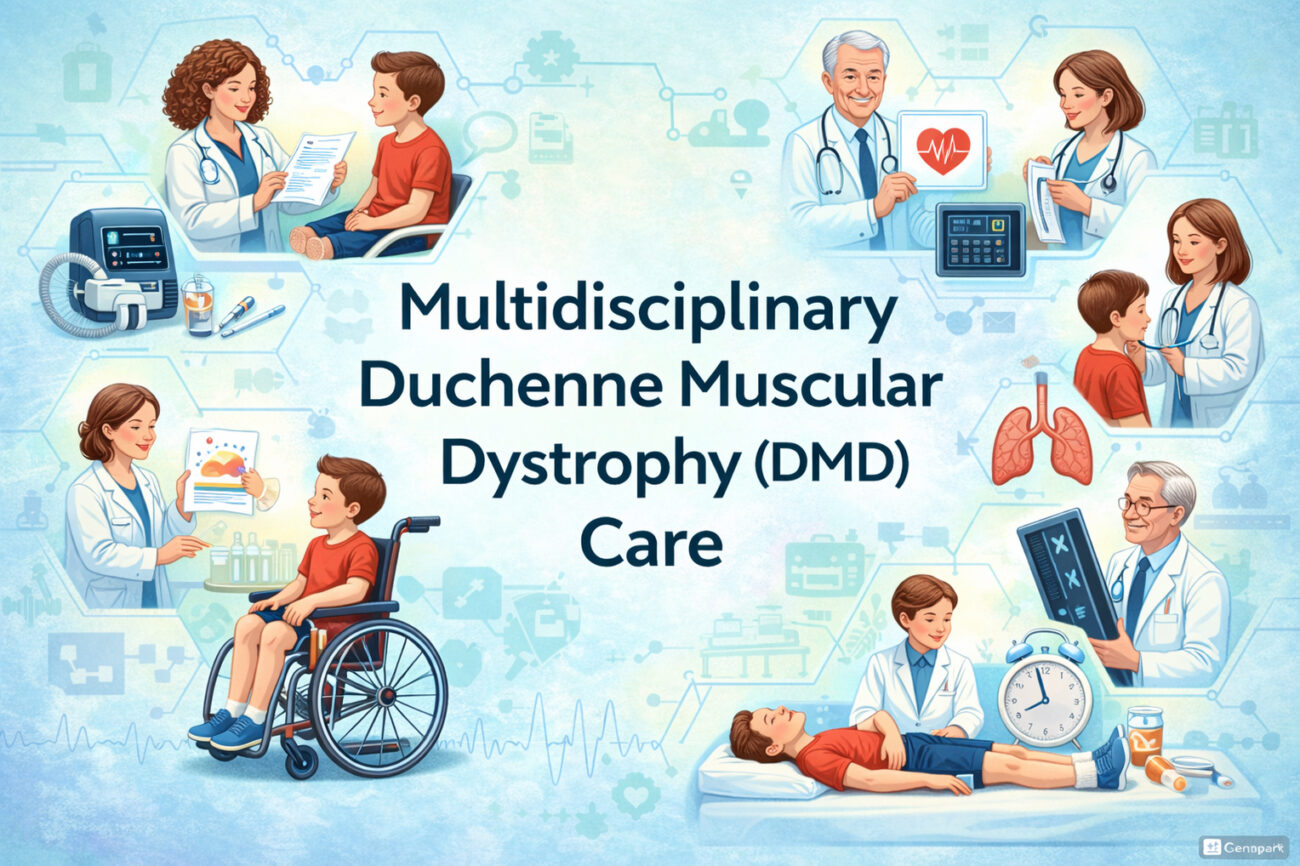
In pediatric neurology, managing Duchenne Muscular Dystrophy (DMD) is often described as a marathon rather than a sprint. DMD is a progressive, X-linked recessive disorder caused by the absence of dystrophin—the “cellular glue” that protects muscle fibers from damage during contraction. Historically, care was fragmented and reactive. However, modern standards have shifted toward a proactive, multidisciplinary care model. For the junior resident, your role is not just to prescribe steroids, but to act as the “primary care captain,” coordinating a small army of specialists. Consequently, this holistic approach has successfully pushed the average life expectancy from the late teens into the third and even fourth decades.
The Multidisciplinary Team (MDT): The Core Pillars
The hallmark of excellent DMD care is the seamless integration of various specialties. Because dystrophin is missing in skeletal, cardiac, and smooth muscle, the disease affects nearly every organ system. Therefore, the resident must ensure the patient rotates through the following pillars of care:
| Specialty | Core Focus | Key Intervention |
| Neuromuscular | Diagnosis & Steroid management | Prednisolone/Deflazacort titration |
| Cardiology | Monitoring for Cardiomyopathy | Annual Echo/MRI + ACE inhibitors |
| Pulmonology | Respiratory muscle strength | Sleep studies, Cough Assist, BiPAP |
| Physiotherapy | Contracture prevention | Daily stretching, night splints |
| Orthopedics | Bone health & Scoliosis | Vitamin D, surgery for spinal curvature |
| Nutrition | Weight & Bone density | Managing steroid-induced obesity |
Pharmacotherapy: The Steroid Mainstay
Glucocorticoids remain the only pharmacological intervention proven to increase muscle strength and prolong the time a child remains ambulatory. Specifically, steroids like Prednisolone or Deflazacort stabilize the muscle membrane and reduce inflammation. However, the resident must navigate a “double-edged sword.” While steroids delay the need for a wheelchair by several years, they also carry a heavy burden of side effects, including weight gain, cushingoid features, and stunted growth. Consequently, the clinician must balance the “functional gain” against the “quality of life” cost. Furthermore, newer “dissociative” steroids are being developed to provide the anti-inflammatory benefits without the metabolic baggage.
Cardiopulmonary Vigilance: The “Silent” Progression
As skeletal muscle weakness progresses, the focus shifts to the heart and lungs—the most common causes of mortality in DMD.
- Cardiac Care: Unlike skeletal muscle, cardiac damage often remains asymptomatic until it is advanced. Therefore, current guidelines mandate starting ACE inhibitors or Beta-blockers early, often by age 10, even if the echocardiogram appears normal.
- Respiratory Care: When a child’s Forced Vital Capacity (FVC) drops below 50%, they are at high risk for nocturnal hypoventilation. Initially, the resident might only see “morning headaches” or “daytime sleepiness.” However, these are red flags for respiratory failure. Consequently, the timely introduction of non-invasive ventilation (BiPAP) is a life-saving transition.
Maintaining Mobility and Bone Health
Physical therapy is the unsung hero of DMD management. The resident must emphasize to parents that “stretching is the medicine.” Specifically, focusing on the Achilles tendons and iliotibial bands prevents the painful contractures that lead to “toe-walking.” Furthermore, because steroids and lack of weight-bearing activity weaken the bones, these boys are at high risk for vertebral fractures. Therefore, the MDT must include a low threshold for starting bisphosphonates if bone density drops significantly.
Clinical Pearl: Always check a child’s Gower’s sign during the physical exam. It is the classic maneuver where a child uses their hands to “climb up” their own legs to stand, signifying proximal muscle weakness.
Clinical Scenario: The Transition Phase
Consider 12-year-old Arjun, who has been on Deflazacort since age 5. Recently, he has started using his power wheelchair for longer distances and complains of a “heavy chest” at night. Initially, the resident might focus on his losing ambulation. However, the MDT approach prompts a broader look. A stat Echo reveals a drop in Ejection Fraction to 40%, and a sleep study shows significant nocturnal desaturations. Consequently, the team adds an ACE inhibitor and initiates nocturnal BiPAP. By addressing the “unseen” cardiac and respiratory issues, the resident significantly reduces Arjun’s risk of acute heart failure and improves his daytime energy.
Psychosocial Support and Transitions
We often forget that DMD is a “family diagnosis.” The psychological toll on the child—and the siblings—is immense. As these boys enter adolescence, they face the reality of their physical limitations while their peers gain independence. Therefore, the resident must facilitate access to mental health professionals who specialize in chronic illness. Additionally, as the patient approaches age 18, the “transition of care” from pediatric to adult specialists must be planned years in advance. In the Indian context, where adult neuromuscular centers are rare, this transition requires the resident to be particularly resourceful in finding supportive adult providers.
Frequently Asked Questions
Q1: At what age should a child with DMD start steroids?
Guidelines generally recommend starting steroids when the child enters the “plateau phase” of the disease, typically between ages 4 and 6, before a significant decline in motor function occurs.
Q2: Why is weight management so critical in DMD?
Excess weight puts an enormous strain on already weakened muscles and a struggling heart. Furthermore, obesity makes it much harder for caregivers to assist with transfers and complicates respiratory function.
Q3: Can a child with DMD still receive routine vaccinations?
Yes, but with a major caveat: Live vaccines (like MMR or Varicella) should generally be avoided while a child is on high-dose immunosuppressive steroids. Always check the current steroid dose before clearing a child for a live vaccine.