
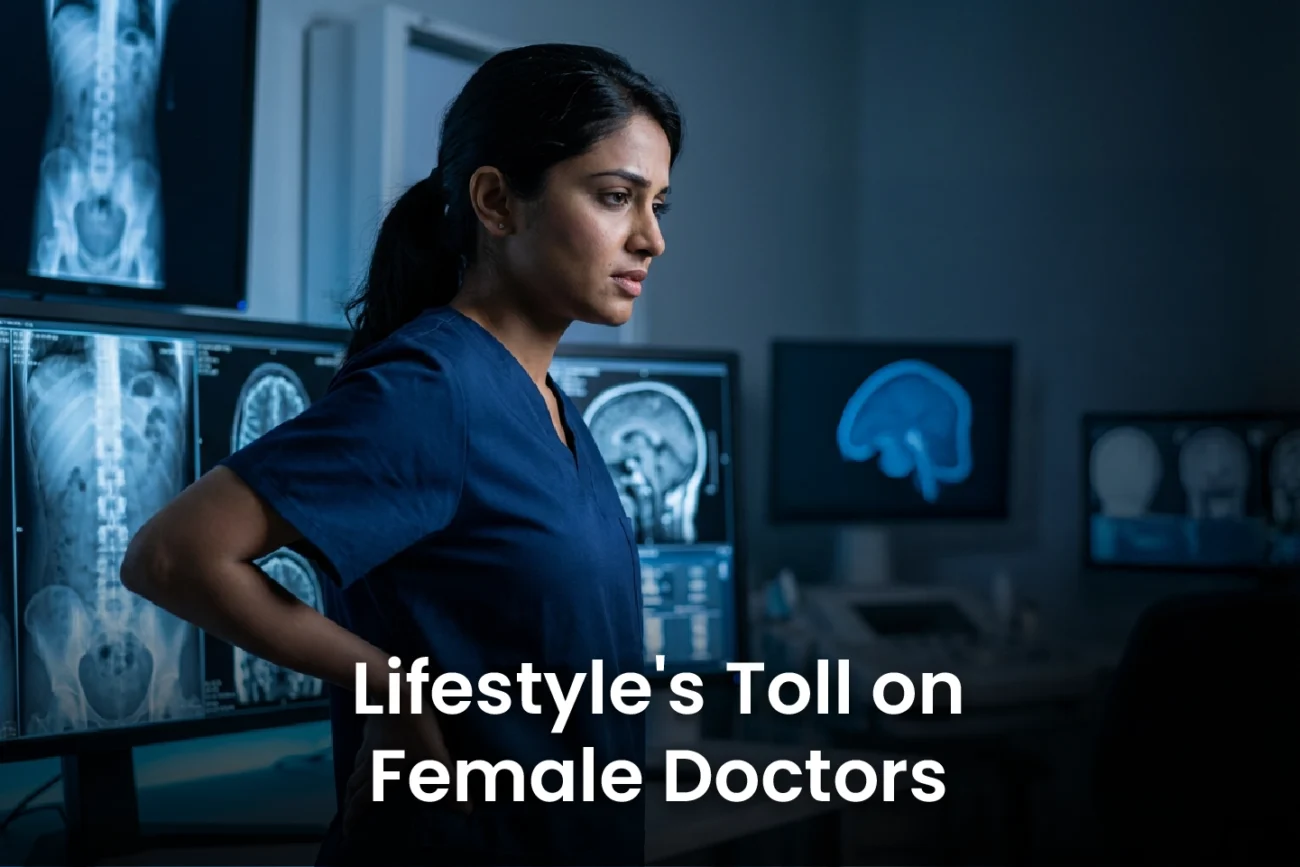
Musculoskeletal disorders (MSDs) represent a significant occupational health challenge for medical professionals worldwide, especially for those in specialties requiring prolonged static postures like radiology. The high prevalence of these issues, particularly among residents, suggests an urgent need for targeted wellness interventions. Interestingly, new research highlights a distinct gender-specific relationship between everyday lifestyle habits and the risk of developing MSDs.
High MSD Prevalence and Gender Disparity
A recent large-scale study on radiology residents found a concerning rate of MSD prevalence, demonstrating that more than two-thirds of female residents reported symptoms. Specifically, females had a noticeably higher prevalence of MSDs (69.6%) compared to their male counterparts (61.5%). The researchers identified significant differences in key lifestyle factors, including smoking, alcohol consumption, exercise, and sleep quality, between male and female doctors. Therefore, understanding these underlying factors is key to effective prevention.
Gendered Association with Musculoskeletal Disorders
However, the most crucial finding relates to the varying impact of lifestyle clusters on MSD risk based on gender. For both male and female residents, belonging to a “healthy” lifestyle cluster was associated with a lower risk of MSDs. This cluster is characterized by good sleep, regular exercise, and no smoking or drinking. Conversely, a cluster defined by physical inactivity or an overall unhealthy pattern significantly increased the risk of MSDs. Critically, this increased risk applied only to female residents. This suggests that while a healthy lifestyle protects everyone, an inactive or unhealthy lifestyle disproportionately increases MSD vulnerability in female residents.
Implications for Indian Healthcare Professionals
The findings hold direct clinical relevance for medical professionals in India. For instance, studies on doctors and nursing officers in India also report high MSD prevalence, often over 70%, with the lower back and neck being the most common sites of pain. Furthermore, this domestic research also indicated higher odds of MSDs across multiple body regions for female healthcare workers. Common risk factors cited include prolonged static postures, high patient load, and insufficient breaks. Consequently, the sedentary nature of workstation-based diagnostic radiology reporting, a common practice for Indian radiologists, places this group at high risk for repetitive stress injuries.
Frequently Asked Questions
Q1: What are the most common Musculoskeletal Disorders among resident doctors?
Resident doctors frequently report pain in the lower back and neck, with a high prevalence of MSDs in the shoulder and wrist as well. These issues are often work-related, stemming from prolonged, awkward, or static postures.
Q2: Does a healthy lifestyle protect against MSDs for all doctors?
Yes. Therefore, engaging in a “healthy” lifestyle cluster—which includes sufficient sleep, regular physical exercise, and avoiding smoking—was found to be protective against MSDs for both male and female residents.
Q3: Why are female doctors at a disproportionately higher risk of MSDs?
The study suggested that an inactive or unhealthy lifestyle cluster significantly increased the risk of MSDs for female residents, but not for males, indicating a gender-specific vulnerability to the detrimental effects of poor lifestyle habits on musculoskeletal health.
References
- Shen L et al. Gender differences in the association between lifestyle behaviors and musculoskeletal disorders among radiology residents in China. Eur Radiol. 2025 Dec 15. doi: 10.1007/s00330-025-12173-0. PMID: 41398109.
- Singh P et al. Musculoskeletal disorders among doctors and nursing officers: an occupational hazard of overstrained healthcare delivery system in western Rajasthan, India. J Family Med Prim Care. 2023 May 4.
- Ghadge A et al. Musculoskeletal Disorders among Resident Doctors: An Occupational Hazard in Tertiary Care Hospitals, Gujarat, India: A Cross-Sectional Study. J Family Med Prim Care. 2025 Sep 30.
- Kawthalkar AS et al. Non-radiation occupational hazards and health issues faced by radiologists – A cross-sectional study of Indian radiologists. Indian J Radiol Imaging. 2019;29(1):61-66.