
Advancing Neonatal Imaging Without Radiation
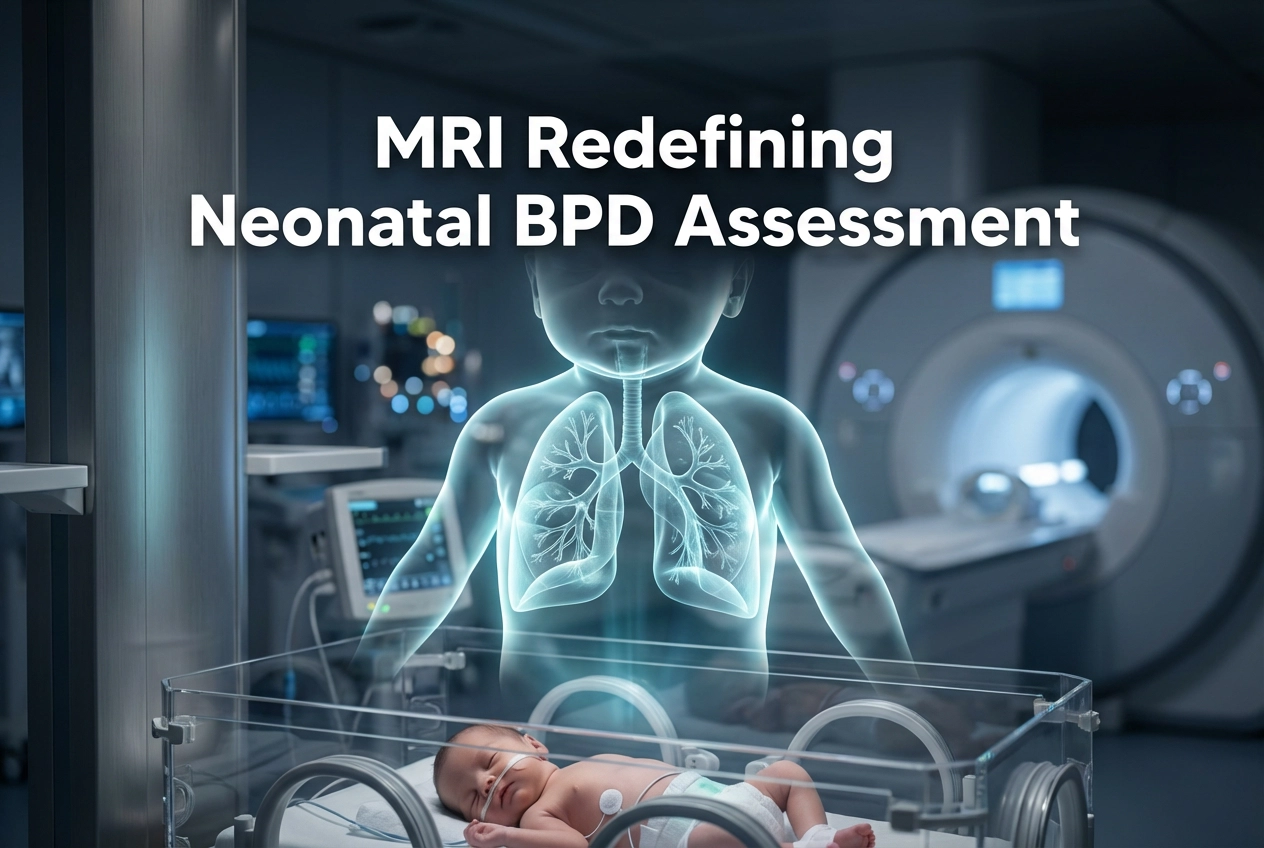
Advancements in pediatric imaging now allow for safer diagnostic procedures in fragile infants. Specifically, neonatal chest MRI has emerged as a promising tool for monitoring lung health in preterm babies. This method provides a radiation-free alternative to conventional computed tomography (CT) scans. Since infants with bronchopulmonary dysplasia (BPD) require frequent monitoring, reducing cumulative radiation exposure is crucial for long-term safety. Moreover, recent technological developments now enable these scans to be performed on standard clinical equipment.
Advantages of Neonatal Chest MRI
Recent studies highlight the effectiveness of using standard 1.5-Tesla scanners for lung evaluation in newborns. Researchers utilized a dedicated neonatal chest coil to improve image quality significantly. This specialized setup allowed for free-breathing sequences, which simplifies the imaging process for medical staff. Consequently, clinicians can achieve high-quality results without the need for heavy sedation or anesthesia. This approach is especially beneficial for preterm infants who are highly sensitive to medical interventions. Furthermore, the use of silent scanning sequences reduces stress for the infant during the procedure.
Comparing MRI and CT Findings
A pilot study compared MRI results with traditional chest CT scores in several infants. Interestingly, the MRI findings correlated strongly with CT data regarding lung tissue density and bronchopathy. The MRI protocol specifically identified both hypo-intense and hyper-intense lung regions with high precision. Additionally, the feed-and-swaddle technique proved successful for obtaining clear images without motion artifacts. Therefore, this technology might soon become the standard for assessing chronic lung disease in neonatal intensive care units. Such progress ensures that infants receive the most accurate diagnosis with the least amount of risk.
Frequently Asked Questions
Q1: Why is neonatal chest MRI preferred over CT for BPD?
MRI does not use ionizing radiation, which is significantly safer for infants who require repeated imaging for chronic lung disease assessment.
Q2: Can a standard 1.5T MRI scanner be used for these infants?
Yes, research demonstrates that a standard 1.5-Tesla scanner equipped with a specialized neonatal coil provides sufficient image quality for BPD evaluation.
Q3: Does the infant need sedation for a neonatal chest MRI?
No, the study utilized a feed-and-swaddle technique along with free-breathing sequences, allowing infants to be scanned safely without sedation.
References
- Wisse JJ et al. Assessing the feasibility of neonatal chest MRI for bronchopulmonary dysplasia using a standard 1.5-Tesla scanner. Eur Radiol. 2026 Mar 24. doi: 10.1007/s00330-026-12452-4. PMID: 41874623.
- Walkup LL, et al. Magnetic resonance imaging of chronic lung disease of prematurity. Pediatric Radiology. 2022;52(4):710-721.
- Higano NS, et al. Neonatal Pulmonary Magnetic Resonance Imaging of Bronchopulmonary Dysplasia Predicts Short-term Clinical Outcomes. American Journal of Respiratory and Critical Care Medicine. 2021;204(4):450-458.