Medical Colleges Fail Disability Mandate: What NMC Found
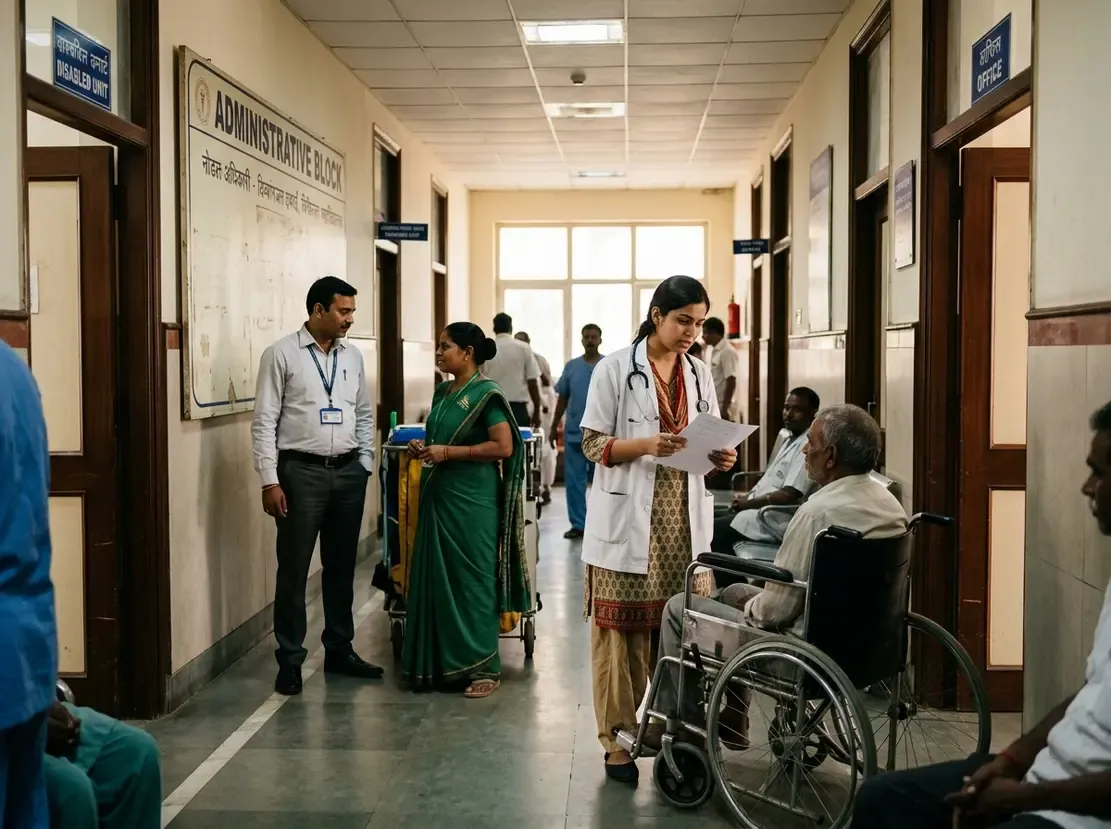
Recently, the National Medical Commission revealed widespread institutional lapses across the country. Nearly half of Indian medical colleges have failed to implement the NMC disability unit directive. Specifically, an affidavit submitted to the Supreme Court showed that 355 out of 798 medical colleges remain non-compliant. Furthermore, several institutions appointed inappropriate personnel to lead these critical accessibility cells.
Scope of the NMC Disability Unit Directive
Under statutory guidelines, each college must establish an Enabling Unit for students with benchmark disabilities. Consequently, this unit acts as a dedicated single point of contact for reasonable accommodations. The directive requires colleges to support students during classroom teaching, clinical rotations, and internships. Moreover, the unit must coordinate with assessment boards and ensure barrier-free infrastructure. In addition, institutions must maintain meticulous documentation of all accommodation requests. However, the regulatory circular does not explicitly mandate a senior clinical doctor as the nodal officer. As a result, many colleges interpreted the rules loosely.
Controversial Appointments and Administrative Failures
Rather than selecting experienced medical educators, several colleges named administrative clerks or residents as coordinators. For example, Maharashtra Government Medical College in Nandurbar assigned a sanitation inspector to lead its unit. Similarly, other medical colleges designated floating resident doctors and junior tutors as points of contact. Disability rights advocates immediately condemned these administrative choices. Specifically, Dr. Satendra Singh emphasized that non-teaching staff lack academic authority. Therefore, such personnel cannot make clinical rotation modifications or modify duty schedules. Furthermore, temporary residents cannot adequately evaluate the operating room accommodations that a wheelchair user needs. Hence, these arbitrary appointments undermine the core purpose of the legal mandate.
Judicial Scrutiny and Supreme Court Mandates
The compliance audit arose directly from ongoing proceedings in the Supreme Court case of Anmol versus Union of India. On August 4, 2026, the court instructed the NMC to enforce college-wide compliance through principals and deans. In addition, the bench warned that recalcitrant colleges would face strict punitive measures. The NMC subsequently set a compliance deadline of September 10 and issued multiple reminders. By September 28, only 443 colleges demonstrated full compliance. Meanwhile, 283 institutions completely ignored the directive and failed to respond. Consequently, the commission plans to issue show-cause notices to these defaulting institutions. Moving forward, authorities must enforce accountability to build an accessible medical education system.
Frequently Asked Questions
Q1: What is the primary role of an Enabling Unit in a medical college?
An Enabling Unit serves as a central point of contact for students with benchmark disabilities. Specifically, it facilitates reasonable accommodations, ensures barrier-free infrastructure, coordinates clinical training adjustments, and protects student rights under the RPwD Act.
Q2: Why are appointments of sanitation inspectors or junior clerks problematic?
Clerks and sanitation inspectors lack academic and administrative authority over medical training. Consequently, they cannot approve curriculum adjustments, modify operation theatre rotations, or grant clinical duty dispensations for disabled trainees.
Q3: What legal mandate prompted the NMC compliance report?
The Supreme Court ordered this compliance review during the Anmol versus Union of India hearing. Therefore, the court directed the NMC to ensure that every medical college establishes a functional unit without delay.
References
- Nearly half of India’s medical colleges fail to comply with NMC disability-unitdirective - ETHealthworld
- National Medical Commission. Constitution of Enabling Units for Persons with Benchmark Disabilities (PwBD) in Medical Colleges. Circular dated July 27, 2026.
- Supreme Court of India. Anmol v. Union of India & Ors. Civil Writ Petition No. 24293 of 2024; orders dated August 4, 2026.