
NMC Overhauls PG Medical Eligibility for PwBD Aspirants
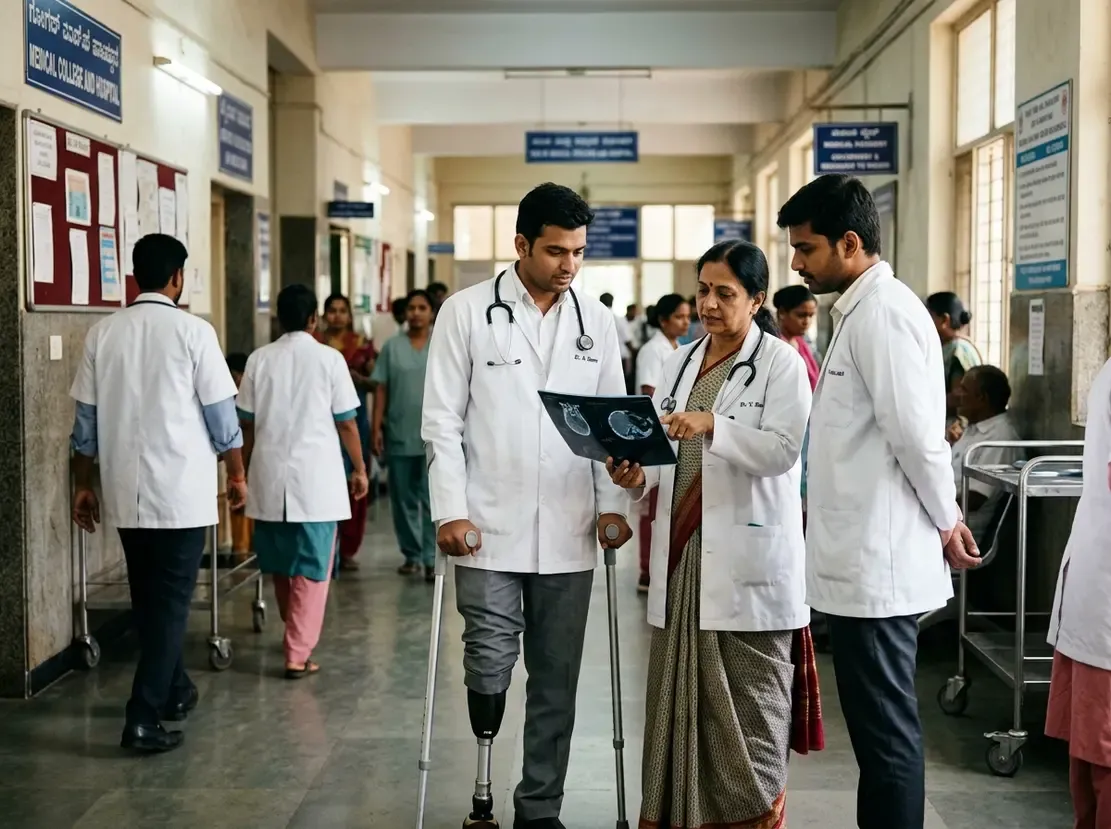
Recently, the National Medical Commission (NMC) has issued comprehensive new guidelines regarding postgraduate medical eligibility for candidates with benchmark disabilities. Under this framework, a recorded disability percentage will no longer serve as the sole deciding factor for MD, MS, and DNB admissions. Instead, designated medical boards must evaluate functional competency, reasonable accommodation, and patient safety.
Shifting Paradigms in Postgraduate Medical Eligibility
Previously, regulatory bodies often relied on quantitative scores to determine an applicant's clinical fitness. Consequently, doctors with valid benchmark disability certificates faced arbitrary rejections during counselling rounds. The updated regulations require candidates to hold at least 40% benchmark disability and a valid Unique Disability Identity (UDID) card. However, the Medical Assessment Board will independently test whether an applicant can perform core clinical competencies. Therefore, evaluators can no longer reject an aspirant merely because of an impairment percentage. Furthermore, the commission directs boards to consider assistive technology before issuing any disqualification. Medical boards may ultimately declare candidates eligible, eligible with reasonable accommodation, or ineligible.
Discipline-Specific Functional Competency Requirements
The revised guidelines establish distinct evaluation criteria tailored to specific postgraduate specialities. For instance, surgical branches demand fine motor skills, bimanual dexterity, depth perception, and physical endurance. Specialties such as Orthopaedics, Obstetrics, and General Surgery require clinicians to make rapid, high-stakes decisions during emergencies. In contrast, non-surgical clinical specialities focus on history-taking, diagnostic evaluations, and patient documentation. Additionally, medical institutions must provide reasonable accommodations such as modified surgical instruments and accessible workstations. For developmental conditions like autism spectrum disorder, evaluators must assess communication skills, structured learning, and adaptive functioning. As a result, candidate evaluations remain transparent, objective, and centered on actual clinical practice.
Advocacy Concerns Regarding Ableist Criteria
Although many educators welcome the shift toward competency, disability rights advocates have raised serious concerns. Dr. Satendra Singh of Doctors with Disabilities highlighted several problematic stipulations within the newly notified guidelines. Specifically, he criticized the mandatory requirement of optimum use of both upper limbs. Moreover, the current framework fails to formally recognize Indian sign language for clinical communication. Advocates argue that such blanket mandates treat anatomical traits as direct proxies for medical competence. Thus, rigid requirements risk excluding qualified doctors who could practice safely with assistive technology. Instead of blanket disqualifications, rights groups demand individualized and evidence-based functional assessments across all disciplines.
Frequently Asked Questions
Q1: Does a UDID card guarantee admission to PG medical courses?
A valid UDID card confirms benchmark disability status of at least 40 percent. However, it does not automatically guarantee eligibility for a specific postgraduate seat. Medical Assessment Boards must independently evaluate whether the candidate can perform course-specific functional skills.
Q2: What decisions can the Medical Assessment Board make?
The board can classify candidates into three distinct operational categories. Specifically, they can declare an applicant eligible, eligible with reasonable accommodation, or ineligible. Furthermore, the board must evaluate assistive devices and patient safety prior to reaching a final verdict.
Q3: Which clinical branches face the strictest functional assessments?
Surgical branches and procedure-heavy disciplines face the most rigorous functional scrutiny. For example, General Surgery and Orthopaedics demand bimanual dexterity, depth perception, and sustained physical endurance. Consequently, candidates must demonstrate essential procedural competency to guarantee patient safety.
References
- Disability percentage alone cannot decide PG medical eligibility: NMC - ETHealthworld
- National Medical Commission. Guidelines on Assessment of Persons with Benchmark Disabilities (PwBD) for Admission to the Post Graduate Medical Courses, 2026.
- Rights of Persons with Disabilities Act, 2016, Ministry of Social Justice and Empowerment, Government of India.


