
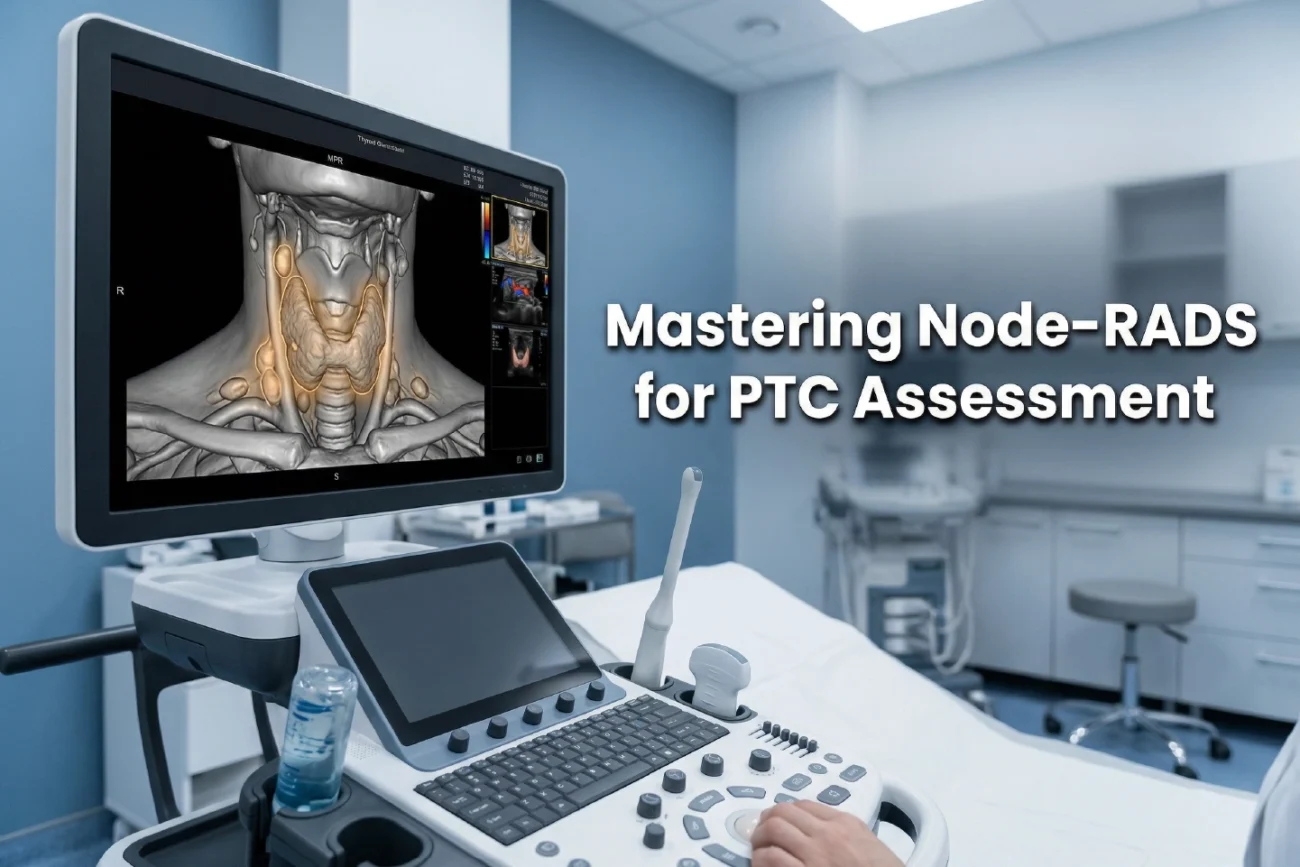
Modern radiology requires standardized reporting systems to improve surgical outcomes for oncology patients. Therefore, experts are now refining Node-RADS for PTC assessment to detect cervical lymph node metastases more accurately. This retrospective study examined 227 patients with papillary thyroid carcinoma. Specifically, researchers evaluated contrast-enhanced CT scans to assign standardized scores. They focused on both central and lateral neck compartments. Results indicated that the standard system offers moderate to good performance. However, modified versions provide even better diagnostic clarity for complex cases.
Advancing Node-RADS for PTC Assessment
Standardized reporting reduces interobserver variability among radiologists significantly. Consequently, the study found excellent agreement between different readers during the validation process. For central lymph node metastases, the original system performed well at a threshold of 1. In contrast, lateral metastases required a threshold of 2 for optimal results. These findings suggest that doctors should tailor thresholds based on the specific neck compartment. Furthermore, the integration of specific imaging features enhances the tool\’s overall clinical utility. This approach ensures that surgeons receive more reliable data before entering the operating room.
Innovative Models for Improved Accuracy
The researchers developed the Hyper-Enhancement Node-RADS (HE-Node-RADS) model to push diagnostic boundaries. This version adds a hyper-enhancement feature to the standard scoring algorithm. Specifically, it significantly outperformed the original system for lateral lymph node detection. Additionally, they created a Nomogram-Augmented Node-RADS (NA-Node-RADS) for central assessment. This model incorporates clinical factors like age, sex, and primary tumor size. It also analyzes texture, border, and shape of the nodes. Consequently, NA-Node-RADS showed superior predictive power for central metastases. This refined approach facilitates highly individualized clinical decision-making for patients with thyroid cancer.
Frequently Asked Questions
Q1: What is the primary benefit of using Node-RADS for PTC assessment?
It provides a standardized and reproducible way for radiologists to risk-stratify cervical lymph nodes. This reduces reporting errors and helps surgeons plan more precise neck dissections.
Q2: How does HE-Node-RADS improve lateral lymph node evaluation?
It incorporates specific hyper-enhancement features that make the identification of metastatic lateral nodes more precise. This model showed significantly better performance than the original Node-RADS system.
Q3: Why is NA-Node-RADS useful for central lymph node metastasis?
It combines imaging data with clinical variables like age and tumor size. Consequently, it offers a more comprehensive risk estimation for central compartment nodes compared to imaging alone.
References
- Wang Y et al. Enhancing Node-RADS for preoperative assessment of cervical lymph node metastases in papillary thyroid carcinoma: validation and modification. Eur Radiol. 2026 Feb 27. doi: 10.1007/s00330-026-12403-z. PMID: 41748926.
- Elsholtz FJ et al. Node-RADS: a reporting and data system for regional lymph node assessment in cancer. Eur Radiol. 2021.
- Hoang JK et al. Imaging of Cervical Lymph Nodes in Thyroid Cancer. Otolaryngol Clin North Am. 2021.
“