Node-RADS Outperforms Advanced CT Scans in Gastric Cancer
The Challenge of Preoperative Lymph Node Staging
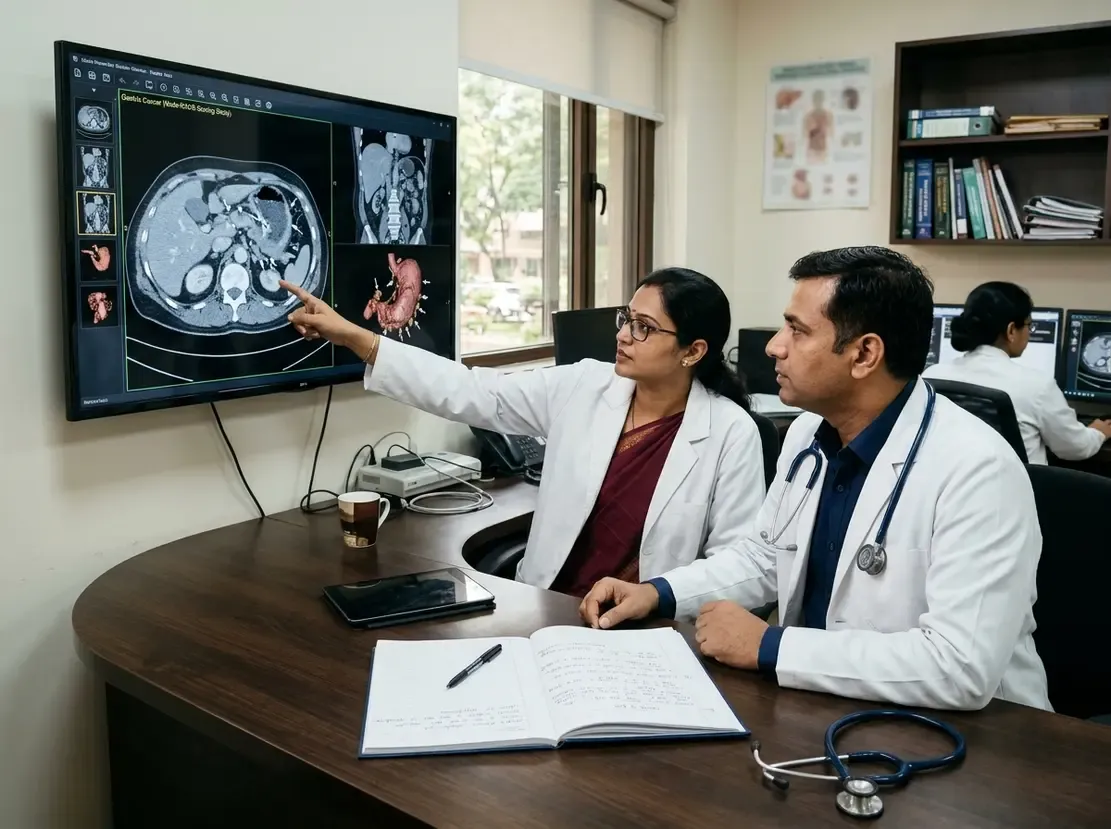
Accurate preoperative nodal assessment remains vital for surgical planning and prognosis in oncology. Consequently, evaluating Node-RADS in gastric cancer has gained significant clinical attention among oncologists and radiologists. Traditional computed tomography relies primarily on short-axis diameter measurements. However, size criteria alone frequently fail to detect micro-metastases or differentiate reactive hyperplasia from malignancy.
Evaluating Node-RADS in Gastric Cancer Against Advanced DECT
Dual-energy computed tomography provides quantitative tissue characterization through iodine concentration and effective atomic number. Therefore, researchers conducted a clinical trial comparing Node-RADS scores against spectral quantitative parameters. The study evaluated 151 pathologically confirmed regional lymph nodes from 115 consecutive patients. Furthermore, radiologists independently assigned Node-RADS scores using established morphological and size criteria, areas heavily emphasized in professional Gastro Intestinal Radiology training.
Superior Diagnostic Accuracy of Node-RADS
The study results revealed that Node-RADS achieved outstanding diagnostic performance. Specifically, a Node-RADS cutoff score of three or higher yielded an area under the curve of 0.859. In contrast, standard short diameter measurement achieved an area under the curve of only 0.780. Moreover, delayed-phase iodine concentration was the only quantitative parameter that showed an association with nodal metastasis. Combining Node-RADS with delayed iodine metrics slightly increased performance, but Node-RADS alone demonstrated primary clinical superiority.
Practical Clinical Implications for Oncology Teams
These findings offer immense practical utility for surgical oncologists and multidisciplinary cancer boards. First, clinicians can reliably implement Node-RADS on standard contrast-enhanced scans without requiring specialized spectral hardware. Additionally, standardized reporting reduces interobserver variability across imaging centers. Thus, adopting this structured framework helps clinicians tailor radical lymphadenectomy and guide neoadjuvant treatment decisions effectively, aligning with standards taught in structured clinical oncology programs.
Frequently Asked Questions
Q1: What is the Node-RADS scoring system?
Node-RADS is a standardized reporting system. It assesses cancer spread to lymph nodes using anatomical size and imaging characteristics.
Q2: Why did Node-RADS outperform dual-energy CT parameters?
Node-RADS combines both morphological architecture and dimensional thresholds. Consequently, this holistic evaluation identifies metastatic infiltration more effectively than isolated attenuation numbers.
Q3: What cutoff score indicates regional nodal metastasis in gastric cancer?
A Node-RADS score of three or higher demonstrated high diagnostic accuracy. Therefore, clinicians consider scores of three or above as suspicious for metastatic involvement.
References
- Yao DX et al. Node-RADS outperforms dual-energy CT-derived quantifications for distinguishing metastatic from non-metastatic regional lymph nodes in resectable gastric cancer. Eur Radiol. 2026 Nov 01. doi: 10.1007/s00330-026-12993-8. PMID: 42967258.
- Li J, Dong D, Fang M, et al. Dual-energy CT-based deep learning radiomics can improve lymph node metastasis risk prediction for gastric cancer. Eur Radiol. 2020;30(4):2334-2344.
- Elsholtz FHJ, Hamm B, Lerchbaumer MH. Node Reporting and Data System (Node-RADS): a comprehensive overview and clinical validation. Rofo. 2023;195(6):482-492.