
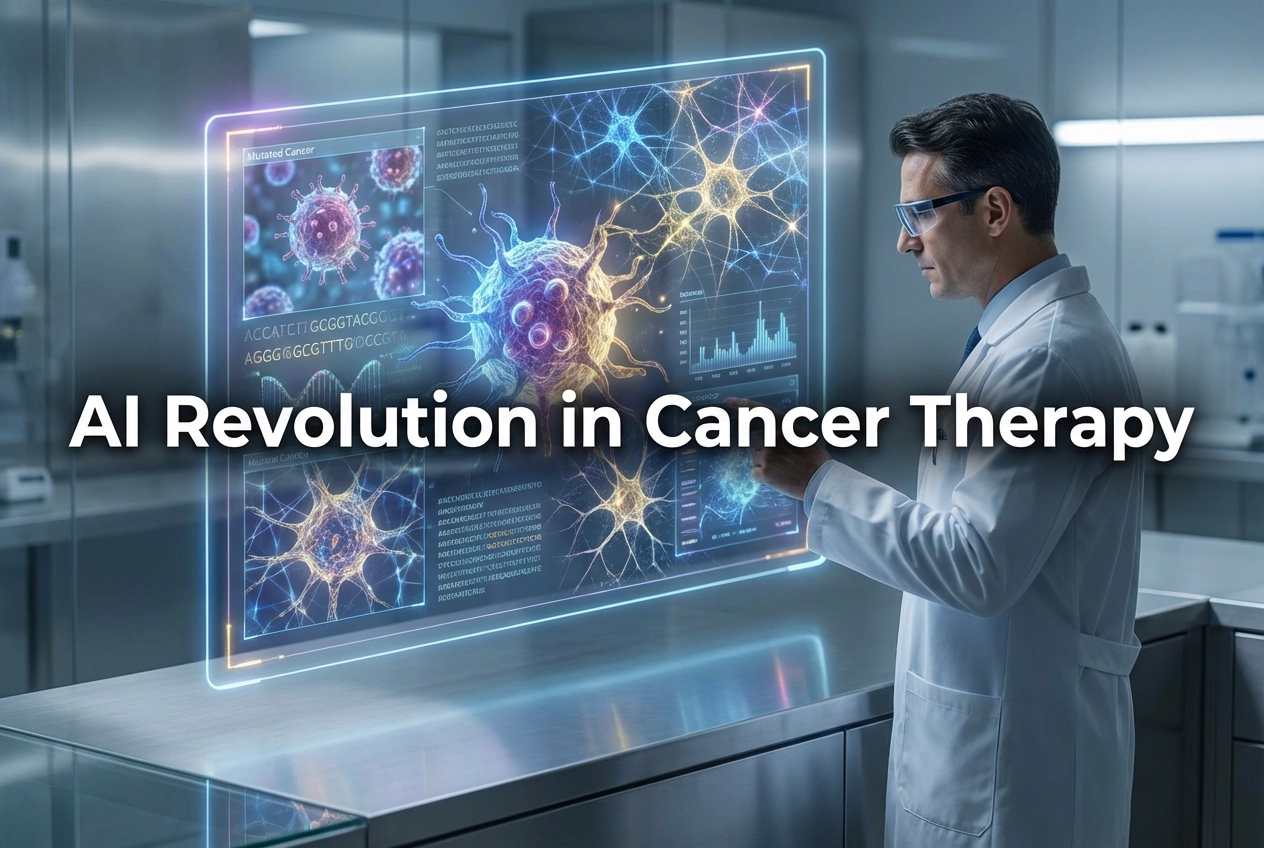
Indian scientists have developed a groundbreaking AI-based cancer prediction framework named ‘OncoMark’. This novel system shifts the focus from traditional tumour staging to a deeper, molecular-level understanding of the disease, essentially “reading the mind of cancer.” Researchers from Ashoka University and S N Bose National Centre for Basic Sciences created OncoMark to examine the six (later expanded to ten) ‘hallmarks of cancer’—the internal biological processes a normal cell employs to turn malignant. These hallmarks detail how cancer cells proliferate, evade the immune system, and resist treatment.
Moving Beyond Traditional Staging
Historically, oncology relies heavily on staging systems like the TNM (Tumour, Node, Metastasis) system. This method assesses a tumour based on its size and spread. However, traditional staging often fails to capture the intricate molecular story, explaining why two patients with the same stage can face vastly different outcomes. Consequently, cancer’s internal biological processes are rarely measured in current diagnostic procedures. For instance, a cancer cell “messes around with its death timer,” turning off the natural process by which a normal cell grows old and dies. Similarly, it turns off the growth suppressor to multiply uncontrollably.
How OncoMark Decodes Cancer’s Hallmarks
OncoMark uses a neural multi-task learning-based framework to estimate hallmark activity using gene expression data from tumour biopsies. The AI model was trained on a massive dataset, which included genetic data from 3.1 million cancer cells across 14 types. Therefore, the framework learned how hallmark processes, such as immune evasion and metastasis, promote tumour growth and resistance to treatment. Furthermore, researchers used synthetic “pseudo-biopsies” to model various hallmark-driven tumour states. In internal testing, OncoMark achieved over 99% accuracy in detecting hallmark activity and maintained above 96% accuracy across five independent validation cohorts of patient samples. This high-precision tool can calculate the probability of each hallmark’s activity, providing a detailed molecular profile for the tumour. This molecular insight is crucial for predicting a cell’s potential to proliferate and metastasise with near-perfect accuracy.
The Future of AI Cancer Prediction and Diagnosis
This powerful technology offers doctors significantly more insight into a tumour’s molecular personality. Oncologists can use the detailed molecular profile to select drugs that specifically target a tumour’s active hallmarks, strengthening the approach to personalised cancer treatments. Moreover, the framework can help identify aggressive cancers that may appear less harmful under standard staging, thus supporting earlier, more aggressive intervention when necessary. The team is currently working to integrate the OncoMark model into clinical workflows. Additionally, they plan to expand their research to include uncommon cancers and blood cancers, which often exhibit characteristics different from solid tumours.
Frequently Asked Questions
Q1: What is the primary difference between OncoMark and traditional cancer staging?
OncoMark analyzes the ‘hallmarks of cancer’—the 10 internal biological programs (molecular personality) that drive malignant behavior. In contrast, traditional staging (TNM system) primarily looks at external factors like tumor size, location, and physical spread (metastasis).
Q2: Who developed the OncoMark AI framework?
The framework was developed by a team of Indian researchers from the S N Bose National Centre for Basic Sciences in Kolkata and Ashoka University in Sonipat, Haryana.
Q3: What level of accuracy did OncoMark demonstrate in its validation studies?
OncoMark achieved over 99% accuracy in internal testing and maintained a minimum accuracy score of 96% when tested on five independent, real-world patient datasets.
References
- Researchers develop AI-based framework ‘OncoMark’ for predicting behaviour ofcancer cell – ETHealthworld
- OncoMark: Indian Scientists Develop AI Tool To Decode Cancer With 99% Accuracy – MedSurge India
- Indian scientists tap AI for personalised cancer therapy – The Hans India
- AI unlocks cancer’s secrets for personalized therapy – Department Of Science & Technology
- New AI-based framework could change understanding of cancer, alter treatment strategies – Tribune India
Disclaimer: This article was automatically generated from publicly available sources and is provided for informational and educational purposes only. OC Academy does not exercise editorial control or claim authorship over this content. It is not a substitute for professional medical advice, diagnosis, or treatment. Always consult a qualified healthcare provider and refer to current local and national clinical guidelines.