
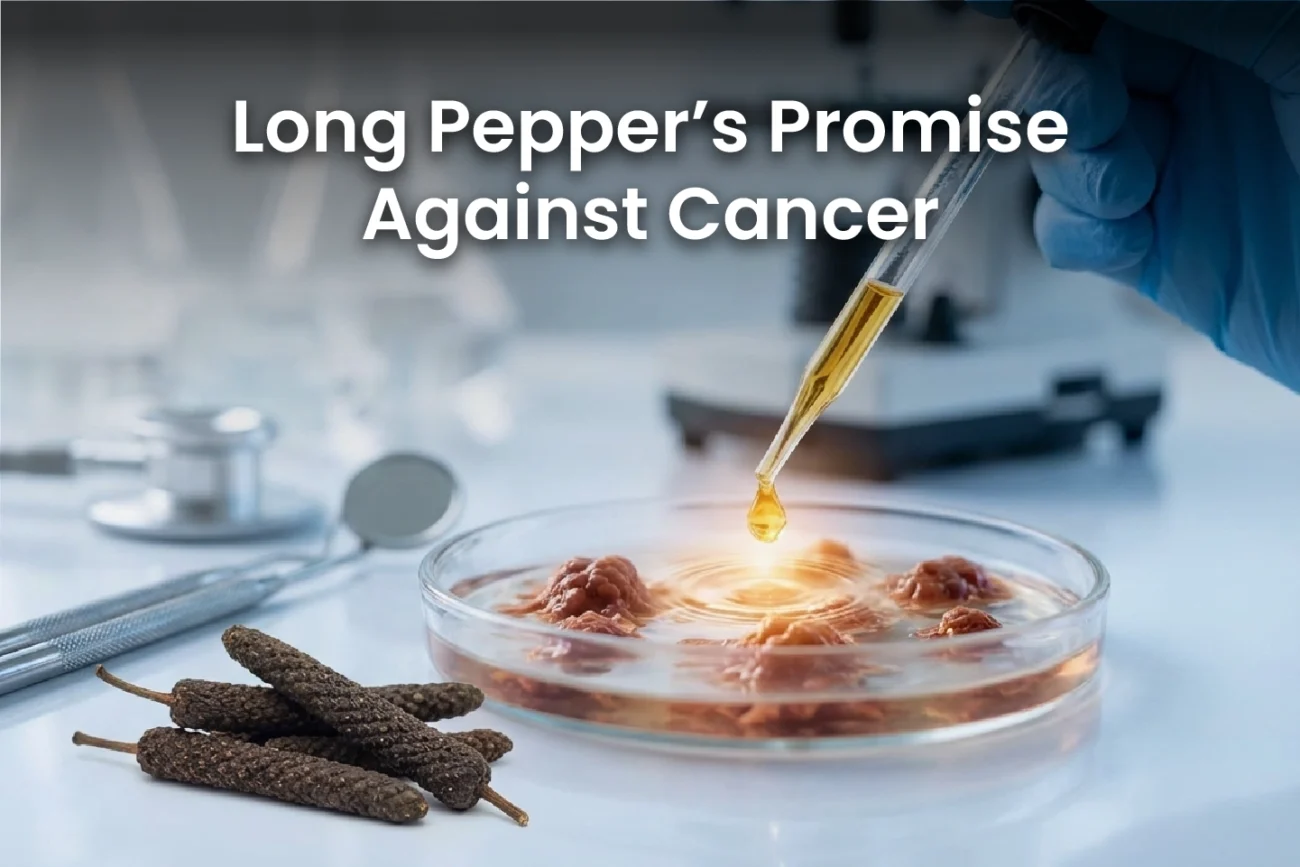
The National Institute of Technology (NIT), Rourkela, recently announced a significant finding in cancer research. Researchers discovered that piperlongumine, a potent anti-cancer compound found in long pepper (Piper longum or pippali), holds strong potential as a cost-effective treatment against colon cancer. This breakthrough offers hope, especially for low and middle-income countries struggling with the prohibitive cost of conventional cancer care.
Colon cancer remains a major global health challenge. The World Health Organisation (WHO) reported nearly 1.9 million new cases and 9,00,00 deaths worldwide in 2022. Conventional chemotherapy, while effective, is often expensive and causes severe side effects like fatigue, hair loss, and a weakened immune system. Furthermore, cancer cells frequently develop resistance to chemotherapy drugs over time. Consequently, oncologists continually seek new, more tolerable, and affordable therapeutic options. Professionals looking to deepen their understanding of managing malignancies can explore advanced training options in Oncology Speciality Courses.
Understanding Piperlongumine Cancer Mechanisms
Scientists focused their laboratory experiments on piperlongumine, the key alkaloid in long pepper. Significantly, the compound selectively targets and eliminates colon cancer cells while leaving healthy cells unharmed. The mechanism involves triggering oxidative stress specifically inside the cancerous cells. This process causes the cancer cells to self-destruct, a form of programmed cell death known as apoptosis. Piperlongumine’s selective toxicity is a crucial advantage for developing targeted therapies.
Moreover, studies show piperlongumine’s anti-cancer effects extend beyond colon cancer. Researchers confirm its activity against various malignancies, including breast, liver, lung, and thyroid cancers. The compound achieves its effect through several cellular pathways, including the JNK and MEK/ERK pathways. Furthermore, it depletes glutathione stores in cancer cells, which are crucial for antioxidant protection, thereby enhancing the lethal effect of Reactive Oxygen Species (ROS).
Potential for Combination Therapy with Oxaliplatin
The NIT Rourkela team plans to investigate piperlongumine’s use alongside established chemotherapy drugs, specifically oxaliplatin. This research aims to restore drug responsiveness in advanced and chemo-resistant colorectal cancer. Earlier research strongly supports this approach. For example, studies demonstrate a synergistic anti-cancer effect when piperlongumine is combined with oxaliplatin in colorectal cancer cell lines. This combination enhances the generation of ROS, leading to increased mitochondrial dysfunction and apoptosis. Significantly, this combination therapy may help overcome existing drug resistance and could even mitigate the side effects of oxaliplatin, such as body weight loss.
Because long pepper is readily available and inexpensive in India, this natural compound presents a sustainable, affordable, and promising alternative therapy for colon cancer treatment. For specialized knowledge on novel cancer treatments, consider the Postgraduate Diploma In Cancer And Therapeutics.
Frequently Asked Questions
Q1: What is piperlongumine and where does it come from?
Piperlongumine is a bioactive alkaloid and potent anti-cancer compound isolated from long pepper, which is known locally in India as pippali or thippili. Long pepper (Piper longum) has a long history of use in traditional medicine.
Q2: How does piperlongumine selectively kill colon cancer cells?
The compound works by selectively inducing oxidative stress in cancer cells. This stress is caused by generating excessive Reactive Oxygen Species (ROS), which disrupts mitochondrial function and triggers apoptosis, or programmed cell death, in the malignant cells. Healthy cells remain unaffected.
Q3: What is the next step for this research?
Researchers plan to study the synergistic effects of piperlongumine when used in combination with conventional chemotherapy drugs, such as oxaliplatin. The goal is to develop a protocol to restore responsiveness and improve outcomes for patients with advanced or chemo-resistant colorectal cancer. This area of study often requires an understanding of Certification Course In Clinical Oncology.
References
- Long pepper shows promise in fight against colon cancer – ETHealthworld.
- The promising potential of piperlongumine as an emerging therapeutics for cancer.
- Piperlongumine enhances ROS accumulation in cancer cells by targeting…
- Piperlongumine Triggers Reactive Oxygen Species Driven Mitochondrial Dysfunction Leading to Apoptosis in Human Colon Cancer Cells.
- The synergistic effects of oxaliplatin and piperlongumine on colorectal cancer are mediated by oxidative stress.
Disclaimer: This article was automatically generated from publicly available sources and is provided for informational and educational purposes only. OC Academy does not exercise editorial control or claim authorship over this content. It is not a substitute for professional medical advice, diagnosis, or treatment. Always consult a qualified healthcare provider and refer to current local and national clinical guidelines.