
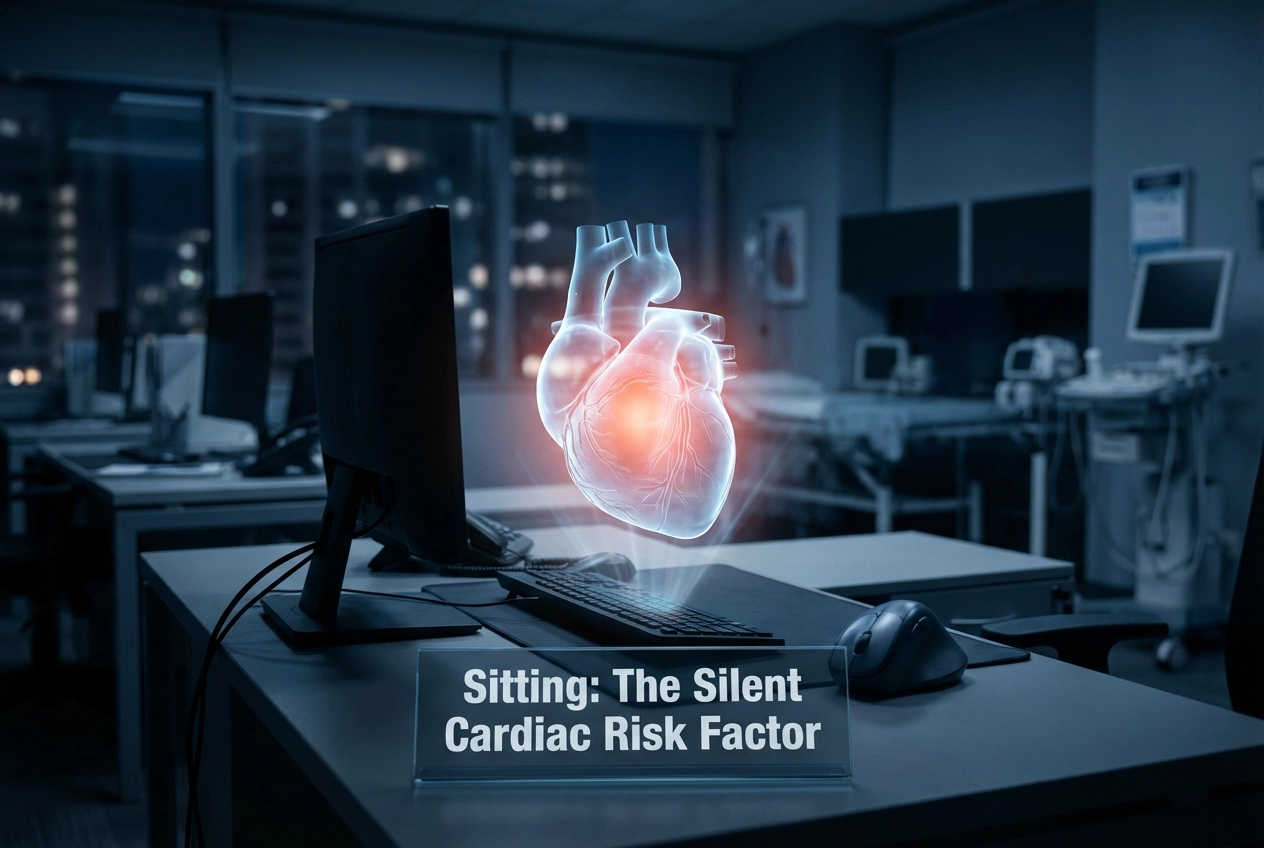
Prolonged sitting is not just a concern for posture or weight; emerging research confirms it acts as an independent cardiovascular risk factor, especially for professionals over 40. Millions of working adults spend eight hours or more seated, making this unavoidable sedentary behavior a significant concern for heart health. Therefore, medical experts now compare uninterrupted sitting to a silent public health crisis.
Why Prolonged Sitting is a Deep Vein Thrombosis Risk
The human body is designed for continuous movement. When we sit for extended periods, blood flow in the legs slows down substantially. This happens because the natural muscle pump in the lower limbs, which normally pushes blood back to the heart, is disabled. Consequently, blood can pool in the leg veins, increasing pressure and reducing oxygen delivery to tissues. This sluggish blood flow significantly raises the risk of deep vein thrombosis (DVT). In fact, research shows that desk workers face a 2.8-fold higher likelihood of developing serious vein problems compared to those in active professions. Furthermore, studies found that a significant percentage of patients admitted with blood clots were due to sitting at work for long, unbroken periods.
The Metabolic Impact and Risk Amplification After 40
Prolonged sedentary behavior negatively impacts metabolic health, which is closely tied to heart disease. Extended inactivity reduces insulin sensitivity, impairs fat metabolism, and increases chronic inflammation—all major contributors to cardiovascular disease. Moreover, for individuals over 40, these effects are amplified by natural physiological changes like reduced vascular elasticity and muscle mass decline. Even professionals who meet their daily exercise targets may find uninterrupted sitting blunts many of the protective benefits of physical activity. Midlife brings compounded factors like high work stress and irregular meals, quietly accelerating cardiovascular strain. Professionals looking to mitigate long-term cardiac risks should consider advanced training in preventative cardiovascular medicine.
Simple, Effective Strategies to Break the Prolonged Sitting Cycle
Protecting your heart at work does not require drastic changes. Medical advice emphasizes that the real danger lies in uninterrupted sitting, not sitting itself. Therefore, implementing short “movement snacks” every 30 to 60 minutes is the most powerful preventive strategy. Even brief activity breaks improve circulation, stabilize blood pressure, and significantly reduce clotting tendency. Simple desk-friendly fixes include: standing up, stretching calf and thigh muscles, performing seated ankle circles, or using the stairs. Additionally, staying properly hydrated is critical, as adequate water intake helps maintain blood volume and further reduces the tendency for blood clotting.
Frequently Asked Questions
Q1: Why is prolonged sitting especially risky for professionals over 40?
A1: Midlife brings physiological changes like reduced vascular elasticity and muscle mass decline. This makes circulation less efficient and amplifies the negative effects of inactivity, compounding existing factors like work stress, irregular meals, and the presence of early arterial narrowing.
Q2: Can daily exercise offset the harm of a sedentary desk job?
A2: No. Research indicates that uninterrupted sitting is an independent risk factor. Even individuals who exercise regularly face metabolic dysfunction, increased clotting risk, and impaired circulation from long, unbroken periods of sitting. You must break up the sitting itself. Understanding the underlying physiology related to chronic disease management is crucial, perhaps through a course like the International Post Graduate Program In Cardiology or related specialities.
Q3: What are the simplest, most effective desk-friendly movements?
A3: The most effective strategy is to stand up and move every 30 to 60 minutes. Simple movements include walking during phone calls, performing seated ankle rotations, stretching your calves, and prioritizing hydration to maintain blood volume.
References
- Sitting Is the New Smoking? The Hidden Cardiac Risks of Desk Jobs After 40 – ETHealthworld
- How Desk Jobs Harm Your Veins: The Hidden Health Crisis Affecting Millions
- Office workers prone to blood clots | CBC News
- Metabolic Effects of Breaking Prolonged Sitting With Standing or Light Walking in Older South Asians and White Europeans: A Randomized Acute Study – PubMed Central
Disclaimer: This article was automatically generated from publicly available sources and is provided for informational and educational purposes only. OC Academy does not exercise editorial control or claim authorship over this content. It is not a substitute for professional medical advice, diagnosis, or treatment. Always consult a qualified healthcare provider and refer to current local and national clinical guidelines.