
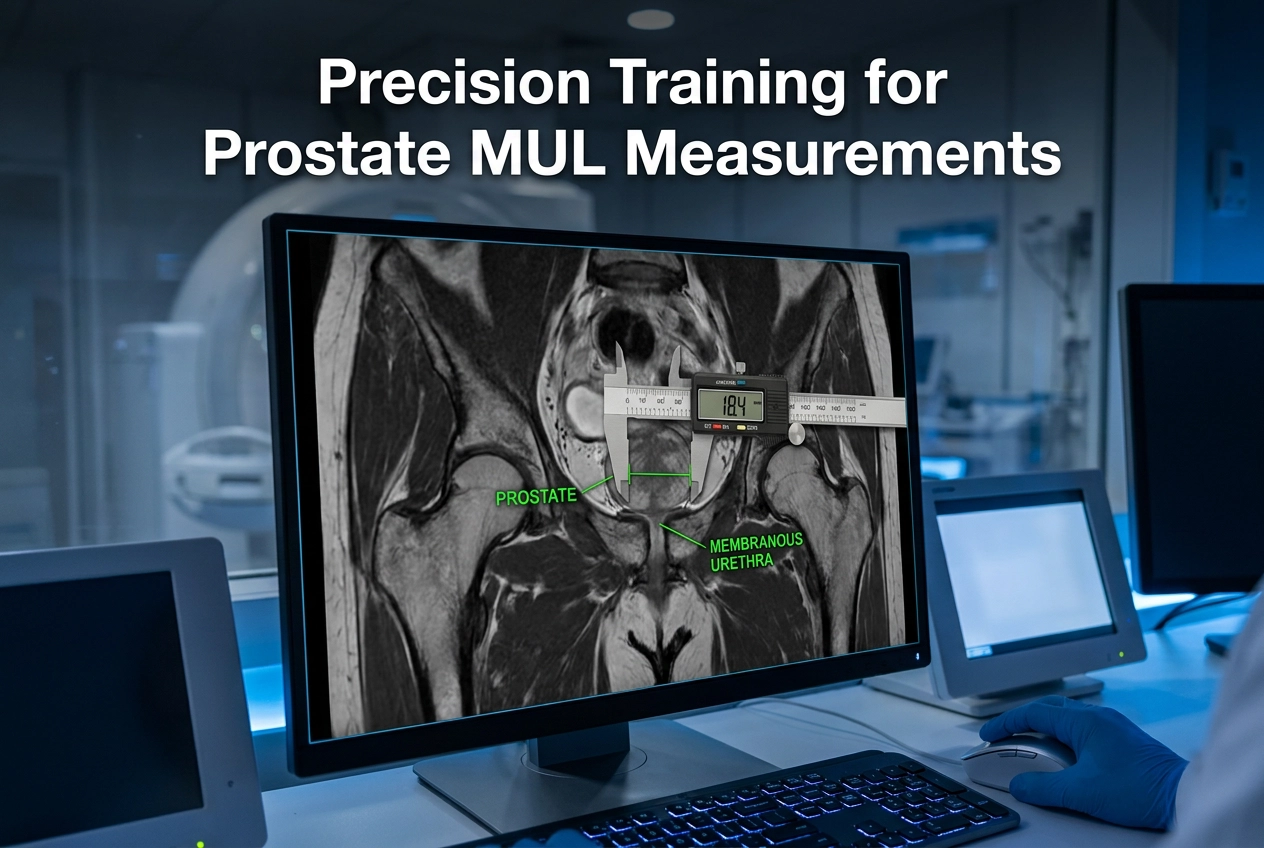
Accurate Prostate MRI MUL measurements are essential for predicting urinary continence recovery after radical prostatectomy. Clinicians rely on these measurements to counsel patients effectively about surgical outcomes. Consequently, a new study evaluated how different training methods impact the diagnostic performance of readers. The study compared three online training approaches. These included written instructions, a one-month self-study program, and a one-day expert-led session. Notably, both the self-study and expert-led groups received case-based feedback. This specific feedback proved vital for improving measurement accuracy.
Standardizing Prostate MRI MUL measurements
All participants demonstrated significant improvements in measurement performance and confidence after training. Specifically, the groups with interactive feedback showed the highest interreader agreement. Furthermore, these participants felt more certain about their diagnostic assessments. Therefore, structured training platforms offer superior benefits compared to simple written guides. Interestingly, the study found that intensive self-study was as effective as expert-led training. This suggests that radiologists can successfully master these skills through well-designed online platforms. Moreover, improving these skills leads to better preoperative planning and personalized patient care. Consequently, hospitals should consider implementing standardized training modules for their diagnostic teams.
Frequently Asked Questions
Q1: Why are Prostate MRI MUL measurements clinically significant?
A1: These measurements help predict how quickly a patient will regain urinary continence after prostate cancer surgery.
Q2: Which training method is best for improving measurement consistency?
A2: Programs providing case-based feedback, such as self-study platforms or expert-led sessions, result in higher accuracy and interreader agreement.
Q3: Does reader confidence correlate with actual measurement accuracy?
A3: Yes, the study showed that structured training simultaneously increases both the reader’s confidence and their actual diagnostic performance.
References
- Goedegebuure EP et al. Improving membranous urethral length measurements on prostate MRI: a comparison of online training methods. Eur Radiol. 2026 Mar 31. doi: 10.1007/s00330-026-12468-w. PMID: 41915072.
- Mungovan SF et al. Preoperative Membranous Urethral Length Measurement and Continence Recovery Following Radical Prostatectomy: A Systematic Review and Meta-analysis. Eur Urol. 2017;71(3):368-378.
- Schoots IG et al. Membranous urethral length measurement on preoperative MRI to predict incontinence after radical prostatectomy: a literature review towards a proposal for measurement standardization. Eur Radiol. 2023;33(5):3295-3302.