Are Relaxed Follow-Up Rules for Lung Nodules Safe?
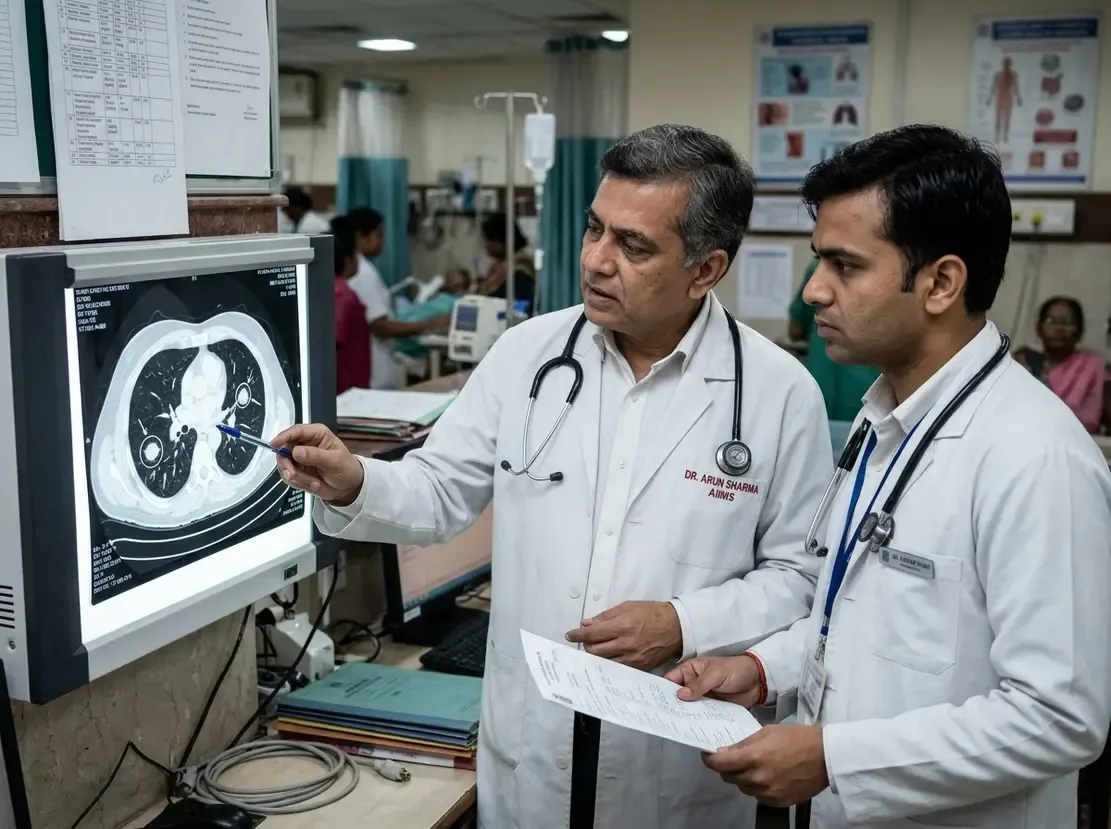
Clinicians frequently detect small incidental lung lesions during chest CT imaging. Therefore, selecting an appropriate schedule for pulmonary nodule follow-up represents a critical clinical priority. International guidelines have progressively recommended less intensive surveillance intervals to curb costs and radiation exposure. However, investigators had not previously evaluated these relaxed recommendations in large comparative effectiveness trials.
Comparing Surveillance Intensity in Practice
To address this knowledge gap, researchers conducted a pragmatic cluster-randomized trial across 24 health systems. In total, the study enrolled 34,686 adult patients with newly detected pulmonary nodules measuring 15 mm or smaller. Additionally, the trial compared protocols modeled after current relaxed guidelines against prior, more frequent monitoring schedules. Investigators randomly assigned clusters to either the less intensive or more intensive surveillance pathway. Consequently, the investigators assessed real-world adherence and diagnostic outcomes across diverse clinical settings. Furthermore, the pragmatic design mirrored standard clinical workflows rather than strictly enforced protocol visits.
Key Outcomes in Pulmonary Nodule Follow-Up
During 27 months of surveillance, clinicians diagnosed lung cancer in approximately 1.4% to 1.5% of participants. Specifically, cancer occurred in 273 participants within the less intensive cohort and 231 participants within the more intensive cohort. However, significant differences emerged regarding tumor size at the time of diagnosis. Among patients with available tumor data, 36.3% in the less intensive group had lesions larger than 20 mm. In contrast, only 27.7% of patients in the more intensive group presented with lesions exceeding 20 mm. Consequently, less intensive pulmonary nodule follow-up showed an adjusted 7 percentage point increase in larger tumors at diagnosis. This increase exceeded the prespecified noninferiority threshold of 5 percentage points, although it lacked statistical significance.
Clinical Implications for Practice
These findings carry substantial relevance for clinicians worldwide, including physicians managing incidental nodules in India. Notably, small malignant lesions can expand rapidly during routine observation intervals. Therefore, clinicians must exercise caution before assuming that small nodules are universally indolent. Furthermore, delayed detection of growing lesions may adversely affect surgical resectability and long-term staging. Clinicians should thoroughly evaluate individual patient risk factors, including smoking history and radiological features. Thus, personalized risk stratification remains essential when applying standardized surveillance guidelines.
Frequently Asked Questions
Q1: Why did recent guidelines reduce the frequency of nodule surveillance?
Guidelines introduced less frequent scans to reduce unnecessary radiation exposure, healthcare costs, and patient anxiety from benign findings.
Q2: What did this randomized trial reveal about less intensive monitoring?
The trial found that less intensive follow-up led to a higher proportion of lung cancers exceeding 20 mm at diagnosis.
Q3: How should clinicians approach small pulmonary nodules in daily practice?
Clinicians should consider nodule morphology, smoking history, and patient risk rather than relying solely on relaxed surveillance intervals.
References
- Gould MK et al. Less Versus More Intensive Strategies for Follow-up of Small Pulmonary Nodules : A Cluster Randomized Pragmatic Clinical Trial. Ann Intern Med. 2026 Nov 24. doi: 10.7326/ANNALS-25-05646. PMID: 43071962.
- MacMahon H, Naidich DP, Goo JM, et al. Guidelines for Management of Incidental Pulmonary Nodules Detected on CT Images: From the Fleischner Society 2017. Radiology. 2017;284(1):228-243.
- American College of Radiology. Lung-RADS Assessment Categories Version 2022. Reston, VA: American College of Radiology; 2022.