
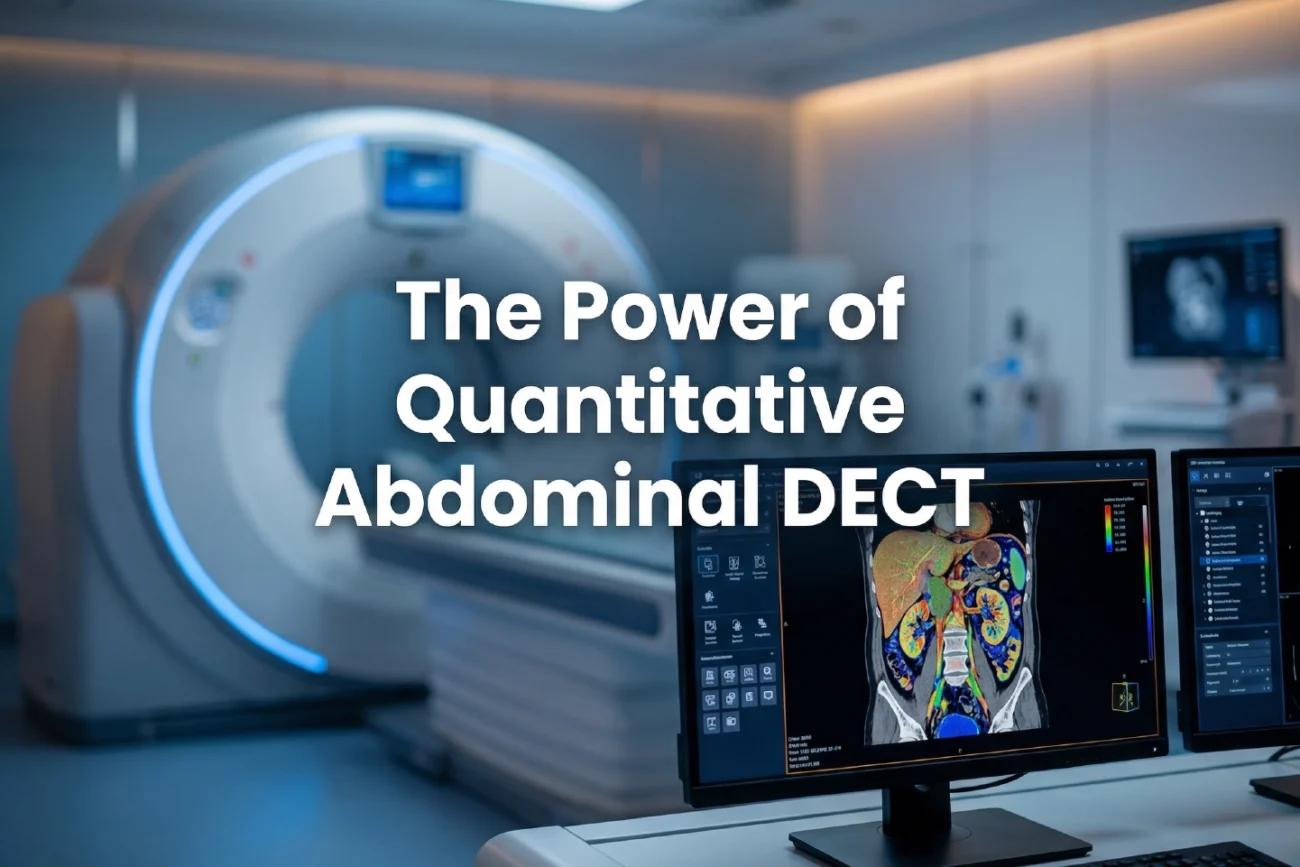
Radiologists are witnessing a significant shift in diagnostic imaging technology. Quantitative Dual-Energy CT offers precise insights into tissue composition and material density. Unlike traditional CT, this technology uses two different radiation beam energies simultaneously. Consequently, clinicians can distinguish between materials like iodine, calcium, and uric acid with high accuracy. This capability improves patient outcomes across various clinical scenarios.
Principles of Quantitative Dual-Energy CT
The foundation of this technology lies in material decomposition. Therefore, the scanner identifies specific substances based on their energy attenuation patterns. Moreover, these datasets allow for the creation of virtual monochromatic images. These images reduce artifacts while enhancing contrast resolution. Clinicians also utilize iodine maps to quantify vascularity in abdominal tumors. However, implementing these parameters requires standardized protocols to ensure consistent results across different platforms.
Clinical Benefits in Abdominal Imaging
Dual-energy imaging provides several advantages for diagnosing liver and kidney diseases. Specifically, it helps in characterizing renal stones by identifying their chemical makeup. This information guides treatment decisions effectively. Furthermore, quantitative assessments of liver fat and iron content are now possible. In addition, radiologists can differentiate between hemorrhagic and enhancing lesions in the adrenal glands. This noninvasive approach reduces the need for follow-up biopsies.
The Future of Imaging Biomarkers
Artificial intelligence is currently integrating with DECT to refine radiomics analysis. As a result, new imaging biomarkers are emerging for personalized medicine. These tools will likely predict treatment responses in oncology patients. Furthermore, automated software can now calculate material volumes with minimal human intervention. This evolution supports the transition toward more data-driven radiology practices in India and worldwide.
Frequently Asked Questions
Q1: What are the main advantages of DECT over conventional CT?
DECT provides material-specific datasets and quantitative parameters. It allows for the identification of tissue composition, which conventional CT cannot achieve. Consequently, it improves diagnostic accuracy for tumors and stones.
Q2: How does DECT help in characterising renal stones?
It uses material decomposition to differentiate between uric acid and non-uric acid stones. This distinction is vital because uric acid stones often respond well to medical dissolution therapy instead of surgery.
References
- García-Figueiras R et al. Quantitative Dual-Energy CT in Abdominal Imaging: Technical Considerations and Emerging Clinical Applications. Radiographics. 2026 Mar undefined. doi: 10.1148/rg.250074. PMID: 41746823.
- Agrawal A, et al. Dual Energy CT: Technical Principles and Applications in the Abdomen. Indian J Radiol Imaging. 2021.
- Patino M, et al. Material Decomposition Applications in Dual-Energy CT. AJR Am J Roentgenol. 2016.