
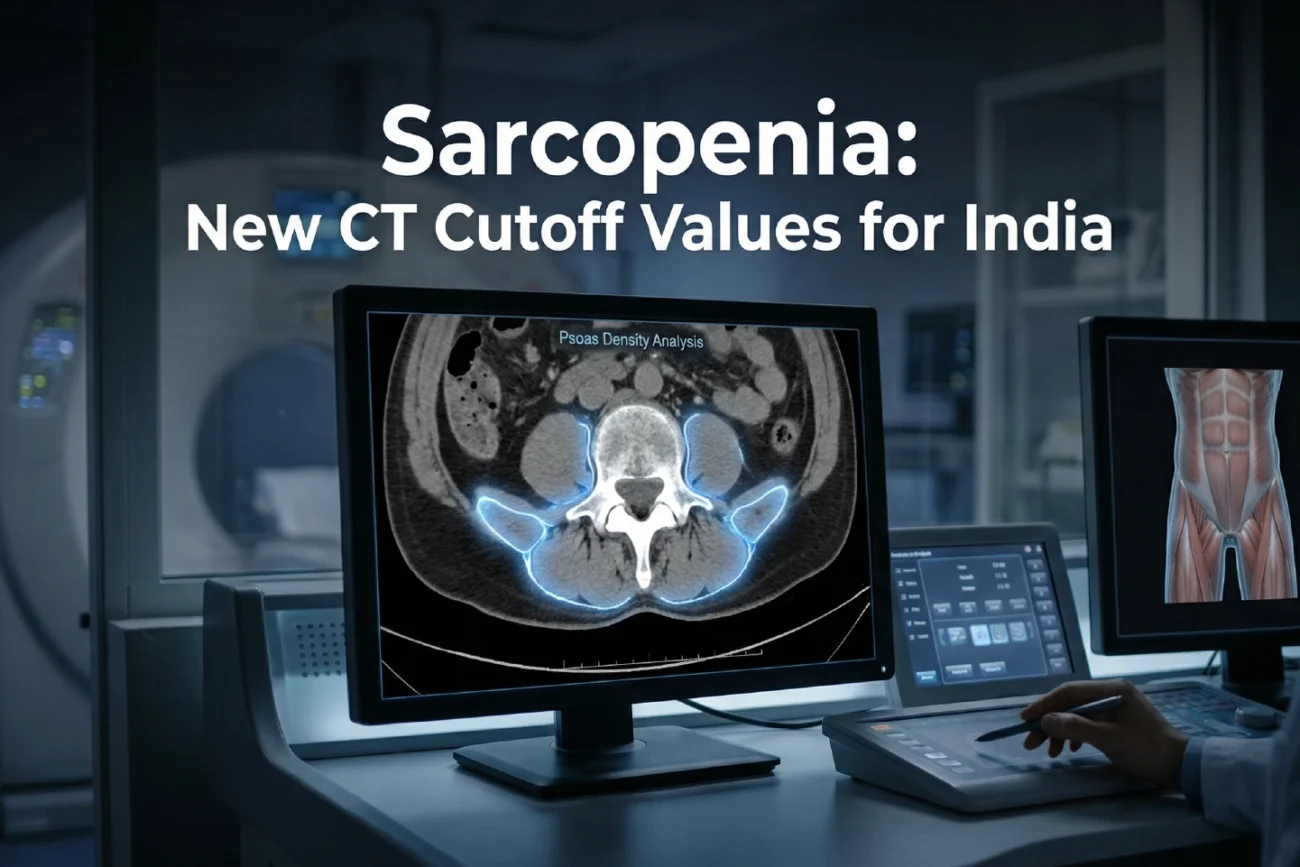
Importance of Sarcopenia CT Cutoff Values
Clinicians often struggle to identify muscle loss accurately in young patients. This study establishes sex-specific sarcopenia CT cutoff values based on skeletal muscle index (SMI) and psoas muscle thickness per height (PMTH). By using CT scans from a healthy Caucasian cohort, researchers followed the European Working Group on Sarcopenia in Older People (EWGSOP) recommendations. Furthermore, these findings help bridge the gap in objective muscle mass measurement for early diagnosis.
Correctly identifying muscle depletion is vital for patient prognosis. However, many current diagnostic tools lack standardized thresholds for younger populations. Therefore, establishing these sarcopenia CT cutoff values provides a clear benchmark for clinical practice. This objective approach ensures that physicians can identify high-risk individuals before manifest sarcopenia occurs. Consequently, early intervention becomes more feasible and effective for various patient groups.
Study Methodology and Results
The researchers evaluated CT scans from 350 healthy individuals with a mean age of 32 years. For women, the cutoff for PMTH was 15.7 mm/m and for SMI was 33.2 cm²/m². In contrast, men showed higher thresholds of 20.2 mm/m and 44.0 cm²/m² respectively. Moreover, the study reported low intra-rater and inter-rater variability. This consistency indicates that the measurement method remains highly reliable across different observers. These metrics offer a practical way to assess muscle health during routine abdominal imaging.
Frequently Asked Questions
Q1: Why are sex-specific cutoff values necessary for sarcopenia?
Men and women naturally possess different muscle mass distributions and baseline volumes. Therefore, sex-specific values prevent misdiagnosis and ensure accurate risk assessment in clinical settings.
Q2: What parameters were used to measure muscle mass in this study?
The study utilized the Skeletal Muscle Index (SMI) measured at the L3 vertebral level and Psoas Muscle Thickness per Height (PMTH) at the umbilicus.
Q3: How do these values help in clinical practice?
These thresholds allow doctors to objectively identify patients with low muscle mass. Consequently, clinicians can identify individuals at high risk for sarcopenia using existing CT data.
References
- Wotschel N et al. CT-based muscle mass cutoff values for Caucasians according to the European Working Group on Sarcopenia recommendations. Eur Radiol. 2026 Mar 12. doi: 10.1007/s00330-026-12396-9. PMID: 41817706.
- Cruz-Jentoft AJ et al. Sarcopenia: revised European consensus on definition and diagnosis. Age Ageing. 2019;48(1):16-31.
- Galindo-Cortés M et al. Skeletal Muscle Index and Sarcopenia in Clinical Practice. Nutrients. 2022;14(10):2057.