
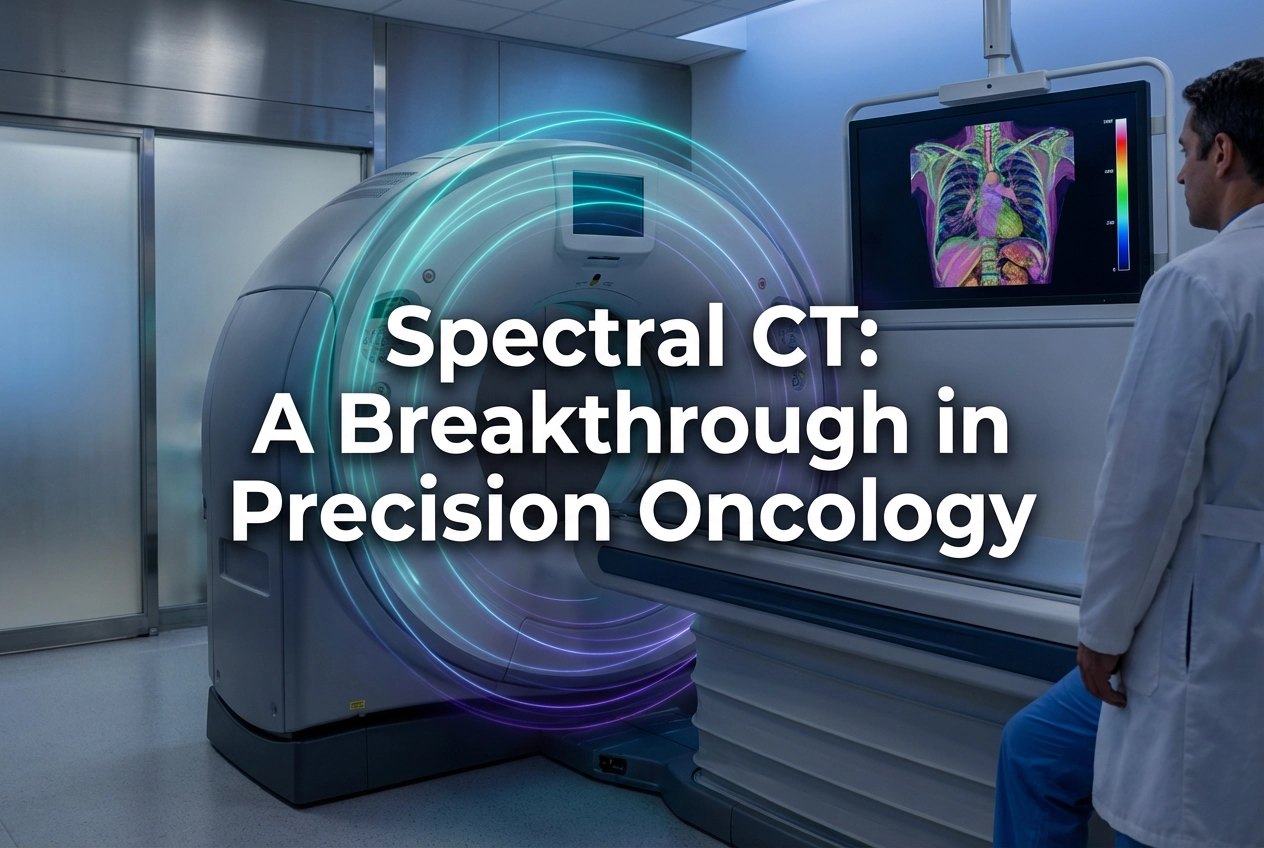
ACTREC Boosts Early Cancer Detection with Spectral CT
The Advanced Centre for Treatment, Research and Education in Cancer (ACTREC) recently deployed next-generation Spectral CT imaging. This unit of the Tata Memorial Centre aims to enhance early cancer detection and diagnostic precision. Consequently, these advancements help manage the growing cancer burden across India more effectively. Therefore, tertiary care centers can now deliver faster and more accurate results for complex cases. Clinicians interested in advanced imaging techniques in cancer diagnosis should explore our Certification Course In Clinical Imaging.
Addressing the Cancer Burden in India
India is currently witnessing a rising incidence of multi-system diseases. This trend places immense pressure on medical facilities to provide rapid diagnoses. Furthermore, diagnostic delays often lead to treatment setbacks for patients. Notably, repeat imaging increases radiation exposure and patient anxiety. However, the introduction of the Spectral CT 7500 platform addresses these challenges by streamlining the diagnostic pathway. Specifically, it reduces the time needed for comprehensive assessments.
Clinical Advantages of Spectral CT Imaging
The new Spectral CT 7500 allows clinicians to capture detailed information during routine scans. It enables deeper disease characterization from a single exam without increasing the radiation dose. Additionally, the platform supports full-body scans in approximately two seconds. This speed is crucial for high-volume oncology settings where efficiency is paramount. Clinical studies suggest that detector-based spectral CT leads to 36 percent fewer follow-up procedures. Therefore, patients experience shorter treatment pathways and fewer unnecessary investigations. For those focused on managing cancer treatments, the Certification Course In Clinical Oncology offers vital complementary knowledge.
Broadening Diagnostic Horizons
Beyond oncology, this technology supports cardiology, neurology, and emergency care. Rapid clinical assessment is critical for positive patient outcomes in these fields. Moreover, integrating spectral imaging into routine practice allows for more informed treatment decisions. Ultimately, this deployment strengthens the healthcare infrastructure at ACTREC. It ensures that patients receive world-class diagnostic care in a timely manner. Professionals looking to advance their expertise in neurological diagnostics might be interested in the Neurology Speciality Courses.
Frequently Asked Questions
Q1: How does Spectral CT imaging improve cancer diagnosis?
Spectral CT imaging provides detailed spectral data that allows for better tissue characterization. This helps clinicians differentiate between malignant and benign structures more accurately than traditional CT scans.
Q2: Does Spectral CT increase radiation exposure for the patient?
No, the Spectral CT 7500 captures spectral information during routine scans without increasing the radiation dose. It is designed to provide more data while maintaining patient safety.
Q3: What are the primary benefits of the Spectral CT 7500?
The primary benefits include faster scan times, a significant reduction in follow-up diagnostic procedures, and improved workflow efficiency in high-volume medical centers.
References
- ACTREC, TMC Strengthens Early Cancer Detection with Spectral CT Deployment – ETHealthworld
- Philips Healthcare. Spectral CT 7500: Always-on spectral imaging for every patient.
- Clinical Impact of Detector-Based Spectral CT in Oncology Imaging.
Disclaimer: This article was automatically generated from publicly available sources and is provided for informational and educational purposes only. OC Academy does not exercise editorial control or claim authorship over this content. It is not a substitute for professional medical advice, diagnosis, or treatment. Always consult a qualified healthcare provider and refer to current local and national clinical guidelines.