Is Deepinder Goyal’s New Temple Device Scientifically Sound?
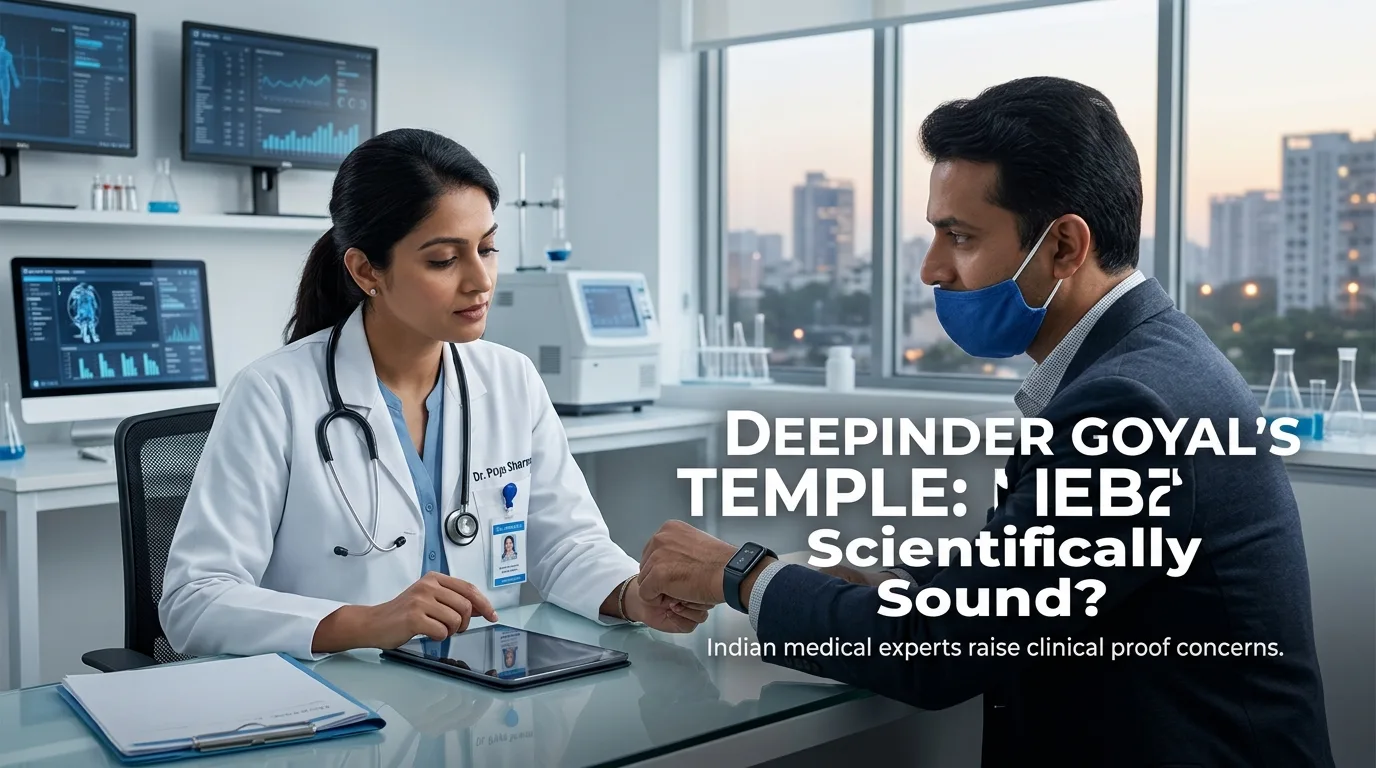
Recently, former Eternal CEO Deepinder Goyal announced plans to launch the Temple wearable device. This forehead-worn wellness device aims to monitor the body’s real-time metabolic state. However, the premium product has already triggered intense debate among medical experts in India. Specifically, clinicians raise serious concerns regarding its clinical evidence, proprietary biomarker, and lack of regulatory approvals.
Scientific Claims Behind the Temple Wearable Device
According to Goyal, the device tracks cerebral blood flow continuously to estimate metabolic rates. Consequently, his engineering team claims to have discovered a unique biological marker called entropy. This metric supposedly measures the direct physiological cost of being alive in real time. Furthermore, the company asserts that this score responds dynamically to stress, sleep, exercise, and meditation. Currently, existing fitness rings and smartwatches rely on heart rate as a proxy. In contrast, the developer claims this new sensor measures metabolic efficiency directly, a topic often explored in metabolic disorder care.
Medical Skepticism and Regulatory Hurdles
However, the Indian medical community remains highly skeptical of these claims. For instance, prominent radiologists and neurologists point out that the technology lacks peer-reviewed scientific validation. Specifically, a radiologist at AIIMS Delhi criticized the sensor, labeling it a fancy toy with zero clinical standing. Therefore, physicians urge consumers to approach such metrics with extreme caution. In addition, the wellness wearable has not undergone any medical regulatory approvals. Although Goyal plans to publish peer-reviewed studies in the future, doctors demand transparent data today, a rigor required for those pursuing professional speciality courses in radiology.
Market Positioning and Pricing
Moreover, the startup is not targeting mass-market consumers. Instead, the device will retail for approximately one thousand dollars. Therefore, it primarily targets high-performing individuals such as athletes, corporate executives, and business founders. Subsequently, some healthcare advocates argue that high costs will limit any widespread public health utility. Nevertheless, the developer views commercial success as a secondary outcome of personal health experimentation.
Frequently Asked Questions
Q1: What is the primary function of the Temple wearable device?
The Temple wearable device is designed to be worn on the forehead to continuously track cerebral blood flow and estimate metabolic rate in real time, rather than relying on heart rate as a proxy.
Q2: Has the Temple wearable device received medical regulatory clearance?
No, the device has not yet undergone medical regulatory approval or received validation from independent scientists, and it is currently being positioned as a wellness device.
Q3: How much will the Temple wearable device cost, and who is the target audience?
The device is expected to retail for approximately one thousand dollars and is primarily aimed at high-performing individuals such as athletes, founders, and corporate executives.
References
- After Zomato, Deepinder Goyal bets on health tech and aerospace – ETHealthworld
- AIIMS doctor questions the scientific basis of Deepinder Goyal’s temple device, cites lack of clinical proof – The Times of India
- Deepinder Goyal’s Temple claims discovery of biomarker that calculates cost of being alive – Docthub News
Disclaimer: This article was automatically generated from publicly available sources and is provided for informational and educational purposes only. OC Academy does not exercise editorial control or claim authorship over this content. It is not a substitute for professional medical advice, diagnosis, or treatment. Always consult a qualified healthcare provider and refer to current local and national clinical guidelines.