Tuberculosis Today: A Step-by-Step Practical Care Guide
Tuberculosis remains one of the world's most fatal infectious diseases. Consequently, healthcare providers must master early tuberculosis diagnosis and treatment to save lives. Timely clinical intervention dramatically curtails community transmission and improves long-term outcomes. Furthermore, proactive screening identifies silent infections before active pathology destroys lung architecture. Clinicians should maintain high suspicion in high-burden settings.
High-Risk Screening and Early Identification
Systematic screening stops pathogen progression in susceptible populations. For instance, household contacts and immunocompromised persons carry elevated risk. Therefore, clinicians must evaluate these individuals before symptoms emerge. Physicians should test asymptomatic contacts using tuberculin skin tests or interferon-gamma release assays. Consequently, identifying latent infection allows timely preventive therapy. In addition, prompt preventive treatment halts the progression toward active disease. Thus, rigorous screening protects vulnerable family members and communities.
Tuberculosis Diagnosis and Treatment Protocols
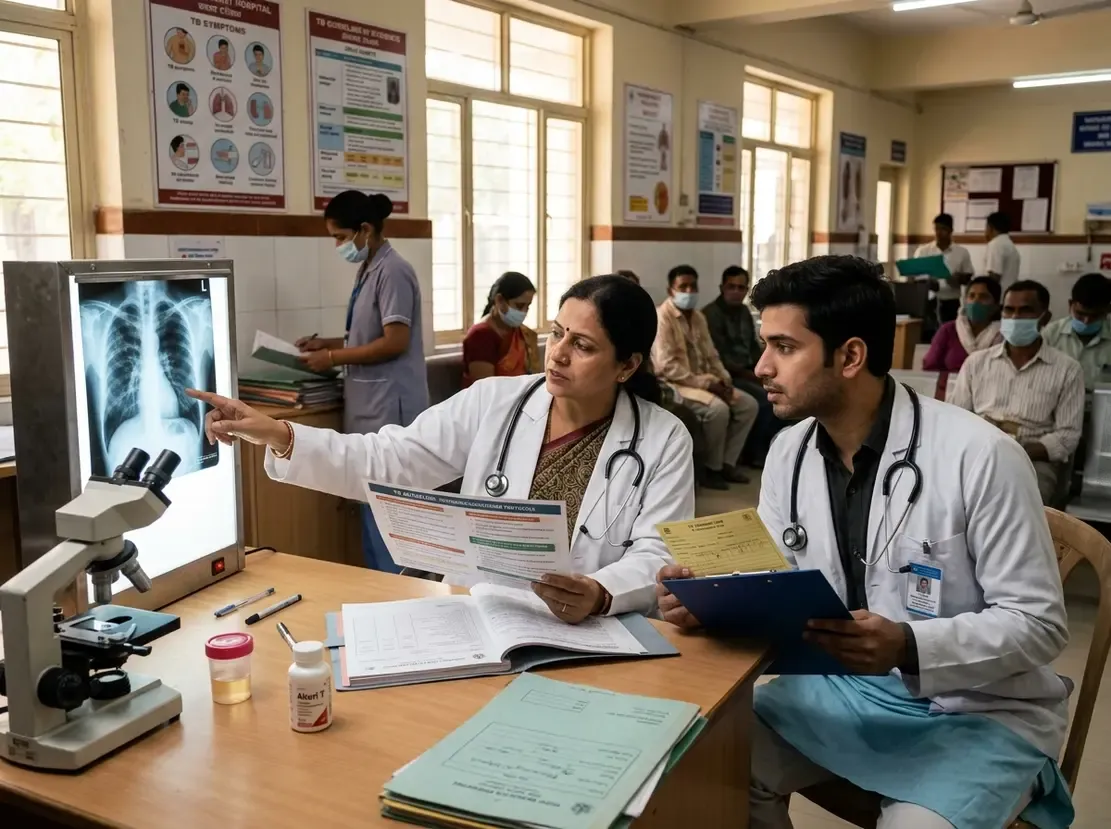
Accurate identification demands clinical suspicion, radiological findings, and microbiological testing. Initially, clinicians obtain a chest radiograph to evaluate parenchymal infiltrates or cavitation. However, microbiological isolation remains the gold standard for definitive confirmation. Therefore, practitioners must collect quality sputum samples for acid-fast bacilli smear examination. Additionally, rapid nucleic acid amplification tests identify bacterial DNA and rifampicin resistance rapidly. Clinicians then order mycobacterial cultures and phenotypical drug susceptibility testing. Consequently, drug sensitivity profiles guide tailored antimicrobial selection.
Standard Therapeutic Regimens and Monitoring
Successful medical management requires multiple bactericidal antibiotics over 4 to 9 months. Typically, the intensive phase combines isoniazid, rifampicin, pyrazinamide, and ethambutol. Subsequently, the continuation phase maintains isoniazid and rifampicin to eradicate persisting bacilli. Clinicians must monitor liver enzymes regularly to detect drug-induced hepatotoxicity. Furthermore, clinicians assess patient compliance and clinical response during every appointment. If molecular tests detect drug resistance, providers modify the regimen promptly. Ultimately, careful pharmacovigilance ensures complete cure and prevents resistant strain emergence. For practitioners looking to deepen their expertise in respiratory conditions, exploring specialized options like the pulmonology speciality courses can be highly beneficial.
Frequently Asked Questions
Q1: What are the primary microbiological tests for tuberculosis diagnosis?
Clinicians confirm active disease using sputum acid-fast bacilli smear, rapid molecular nucleic acid amplification tests, and mycobacterial culture. Molecular assays also detect drug resistance mutations rapidly.
Q2: How long does standard drug-susceptible tuberculosis therapy last?
Standard treatment typically lasts between 6 and 9 months. It comprises an intensive four-drug phase followed by a two-drug continuation phase.
Q3: Why is latent tuberculosis screening crucial?
Screening identifies asymptomatic individuals harboring viable bacilli. Therefore, initiating preventive therapy eliminates the reservoir and prevents progression to infectious active disease. To enhance your overall clinical acumen in managing infectious and systemic diseases, consider enrolling in a comprehensive Certification Course In General Practice.
References
- Pillay T et al. Tuberculosis. Ann Intern Med. 2026 Sep 08. doi: 10.7326/ANNALS-26-03002. PMID: 42704895.
- World Health Organization. WHO consolidated guidelines on tuberculosis. Module 3: Diagnosis - Rapid diagnostics for tuberculosis detection. Geneva: World Health Organization; 2024.
- Central TB Division, Ministry of Health and Family Welfare, Government of India. National Strategic Plan and Guidelines for the Management of Tuberculosis. New Delhi: Central TB Division; 2024.