
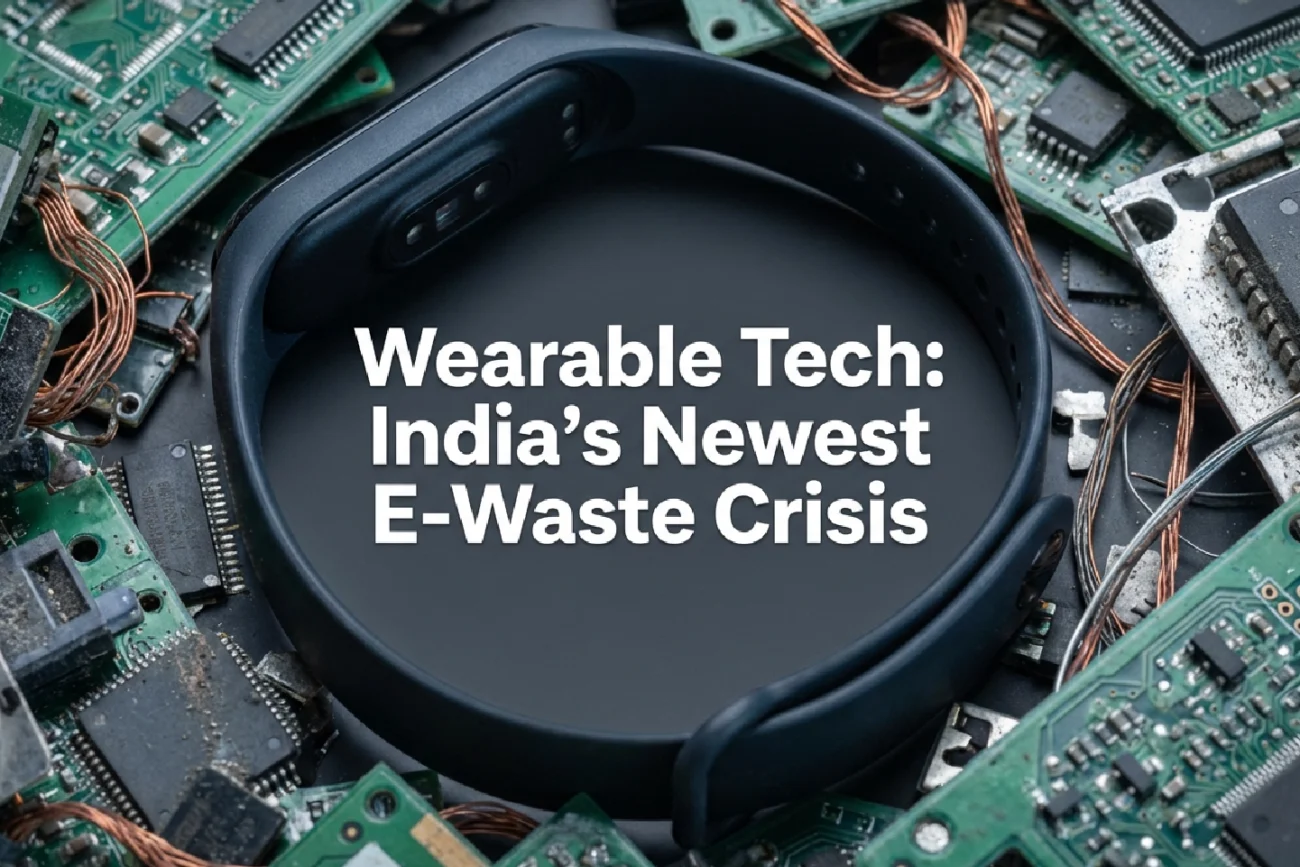
The global consumption of Wearable Health Devices, including continuous glucose monitors (CGM), ECG trackers, and blood pressure monitors (BPM), is projected to increase sharply, potentially reaching two billion units annually by 2050. Consequently, this explosive 42-fold growth from current levels presents a significant environmental and clinical challenge for healthcare systems worldwide. This surge in device usage, while enhancing patient care, carries a massive ecological cost. The burden is estimated to generate 3.4 metric tonnes of carbon dioxide (CO2) equivalent emissions yearly, alongside critical ecotoxicity and e-waste concerns. Doctors and healthcare administrators in India must grasp this dual-edged reality, especially since India is projected to be the second-largest contributor to greenhouse gas emissions from these electronics after China.
The Looming Environmental Cost of Digital Health
The environmental footprint of a single wearable healthcare device, from raw material extraction to final disposal, can be substantial. Researchers from Cornell and Chicago universities conducted a “cradle-to-grave” life cycle assessment (LCA) on four representative devices. Therefore, they estimated that one device could emit between 1.1 and 6.1 kilograms of CO2 equivalent over its entire lifespan. Furthermore, the analysis reveals that non-invasive continuous glucose monitors are expected to become the dominant device type by 2050, comprising 72 per cent of the market share, which will surpass current global smartphone sales. The market is initially dominated by continuous ECG and blood pressure monitors. Ultimately, however, the sheer volume of glucose monitors will drive the majority of the future e-waste and carbon output.
Addressing the Wearable Health Devices’ Footprint
The key to mitigating this escalating environmental impact does not lie primarily in switching to biodegradable or recyclable plastics, which offer only marginal benefits. Conversely, the most effective strategies involve substituting critical-metal conductors and optimising the devices’ circuit architectures. These engineering-based solutions can significantly reduce the overall environmental burden without compromising clinical performance. Consequently, this approach offers a framework for establishing ecologically responsible innovation in the next generation of wearable electronics.
India’s Role in Adoption and E-Waste Management
India’s role in this global phenomenon is critical. The country already ranks among the top three nations globally for the adoption of smart wearables and health trackers, showing a penetration of 32 per cent. Moreover, the National Health Authority reported a 35% increase in the use of wearable health-monitoring devices in Indian hospitals and clinics in 2023. Given this rapid adoption, India’s government introduced the E-Waste (Management) Rules, 2022. These rules implement an Extended Producer Responsibility (EPR) framework, which makes manufacturers and producers legally responsible for the collection and recycling of e-waste from products, including medical devices. Consequently, doctors must recognize that improper disposal of medical e-waste, which can contain hazardous materials like lead and mercury, poses a direct threat to public health and the environment.
Healthcare professionals dealing with chronic conditions monitored by these devices, such as diabetes, must be aware of these environmental implications alongside patient management. Understanding the management of metabolic disorders is crucial for optimizing device use and replacement cycles.
For physicians looking to deepen their expertise in managing chronic metabolic conditions that heavily rely on wearable tech, consider advanced training in this area through the International Post Graduate Program In Diabetes Mellitus Management.
Frequently Asked Questions
Q1: What specific devices were assessed in the environmental impact study?
The researchers conducted a life cycle assessment on four representative devices: a non-invasive continuous glucose monitor, a continuous electrocardiogram (ECG) monitor, a blood pressure monitor (BPM), and a point-of-care ultrasound patch.
Q2: What is the most effective strategy to reduce the environmental impact of these devices?
The study found that substituting critical-metal conductors and optimising circuit architectures significantly reduces the environmental impact. The use of recyclable or biodegradable plastics offers only marginal benefits.
Q3: What regulatory framework governs e-waste from medical devices in India?
In India, the E-Waste (Management) Rules, 2022, govern e-waste, introducing an Extended Producer Responsibility (EPR) framework that mandates producers to manage the collection and recycling of electronic equipment, including medical devices.
Physicians aiming to enhance their general approach to medical practice and understand broader regulatory and sustainability frameworks relevant to modern healthcare might benefit from a foundational course, such as the Certification Course In General Practice.
References
- Use of wearable health tech use can increase 42-fold by 2050 globally: Study – ETHealthworld
- India among top 3 countries in smart wearable and health tracker adoption: BCG report. indiatimes.com.
- India Wearable Device Market, Demand Analysis and Trends to 2030 – Ken Research. kenresearch.com.
- E-Waste Management for Medical Devices in India – Morulaa HealthTech. morulaa.com.
- Optimize Medical Equipment Waste Recycling in India with Virogreen. virogreen.in.
- Global Use of Wearable Health Tech Could Rise 42-Fold by 2050, Study Finds. digitalhealthnews.com.
- Global Health Tech Booms 42x by 2050: Study Warns of Huge Carbon Footprint! whalesbook.com.
Disclaimer: This article was automatically generated from publicly available sources and is provided for informational and educational purposes only. OC Academy does not exercise editorial control or claim authorship over this content. It is not a substitute for professional medical advice, diagnosis, or treatment. Always consult a qualified healthcare provider and refer to current local and national clinical guidelines.