
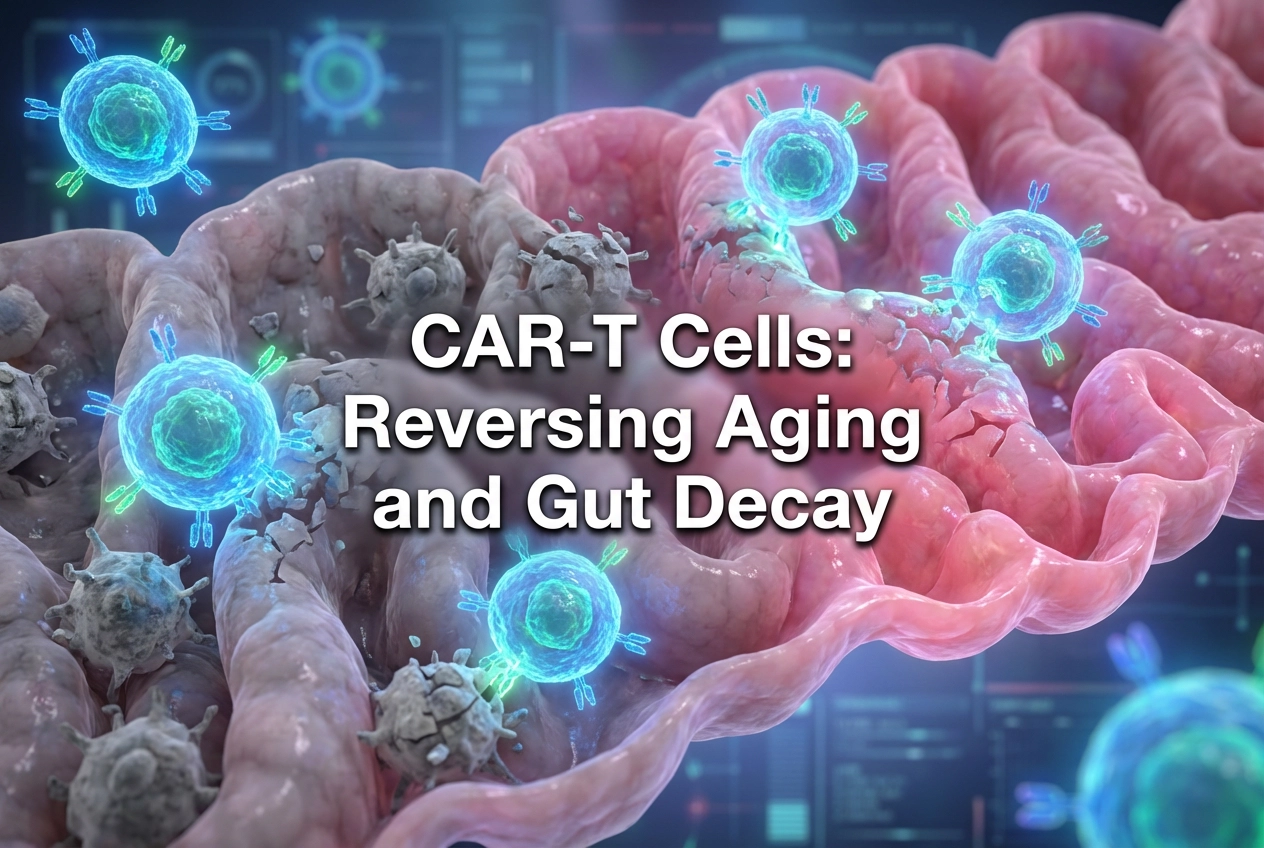
Researchers have identified a novel method to promote healing in aging intestines using an advanced form of immunotherapy. This technique, CAR T-cell therapy, traditionally known for treating certain cancers, targets senescent cells which accumulate over time. Consequently, the therapy significantly boosted gut regeneration, reduced inflammation, and improved nutrient absorption in mice, according to a study published by scientists at Cold Spring Harbor Laboratory (CSHL). Furthermore, it even offered protection against radiation-induced damage, with the positive effects lasting for up to a year. Early findings in human intestinal cells suggest this approach holds strong potential for improving gut health in older adults and cancer patients interested in Clinical Oncology advancements.
The Problem: Senescence and the Compromised Gut
Many people notice that digesting certain foods becomes more difficult as they age. One major reason is damage to the intestinal epithelium, which is a thin, single layer of cells lining the intestine. This lining is crucial for overall gut health and digestion. Typically, the intestinal epithelium renews itself completely every three to five days. However, aging or exposure to cancer radiation can severely disrupt this critical renewal process. When regeneration slows or stops, inflammation often rises, and conditions such as leaky gut syndrome may develop. The CSHL research, building on earlier work by Assistant Professor Corina Amor Vegas, focuses on cellular senescence. You see, senescent cells are old cells that have stopped dividing but refuse to die off. These lingering cells are linked to numerous age-related conditions like diabetes and dementia. Therefore, removing these cells is a key strategy for rejuvenation. Understanding age-related pathology is central to Family Medicine.
CAR T-cell Therapy: A New Tool for Tissue Regeneration
The CSHL team, including Assistant Professor Semir Beyaz and graduate student Onur Eskiocak, applied the CAR T-cell therapy approach to the gut. The engineered immune cells, known as anti-uPAR CAR T cells, are specifically designed to selectively remove senescent cells by targeting the uPAR marker. They delivered these senolytic CAR T cells directly to the intestines of both younger and older mice. The results proved striking in both groups. For example, the treated mice were able to absorb nutrients more effectively. Furthermore, they exhibited far less inflammation. Most importantly, when the epithelial lining was irritated or injured, it regenerated and healed much faster than in the control group. Researchers previously demonstrated that anti-uPAR CAR T cells successfully improved metabolism in aging mice, highlighting their systemic potential. This focus on systemic improvement relates closely to advancements in Postgraduate Diploma in Gastroenterology.
Long-Lasting Protection Against Radiation Damage
Leaky gut syndrome is a frequent complication, especially among cancer patients receiving pelvic or abdominal radiation therapy. To accurately model this issue, the team exposed mice to radiation that damaged their intestinal epithelial cells. Significantly, mice treated with the CAR T cells recovered much more effectively than those who did not receive the therapy. Remarkably, a single dose of the treatment continued to support healthier gut function for at least one year. Scientists also found compelling evidence that these anti-uPAR CAR T cells successfully promote regeneration in human intestinal and colorectal cells. While the exact biological mechanisms behind this regenerative effect are still under investigation, the findings point toward strong therapeutic potential. In essence, this study represents a vital step toward a better understanding of how to heal the elderly, a core focus in Certification Course In General Practice.
Frequently Asked Questions
Q1: What is the primary mechanism behind this CAR T-cell therapy approach?
The therapy uses engineered immune cells, specifically anti-uPAR CAR T cells, to selectively identify and eliminate senescent cells. These are old, non-dividing cells that accumulate with age and cause chronic inflammation, thereby disrupting the natural renewal of the intestinal lining.
Q2: What were the key long-term benefits observed in mice?
Mice treated with a single dose of the CAR T-cell therapy showed significant and long-lasting benefits. These included faster epithelial lining regeneration, reduced inflammation, improved nutrient absorption, and protection against radiation-induced gut damage, with positive effects persisting for up to one year.
Q3: How does this research relate to existing senolytic therapies?
Existing senolytic therapies often involve small-molecule drugs that require frequent administration. In contrast, the CAR T-cell approach is a “living drug” that can persist in the body for extended periods after a single administration, offering a potentially more durable and powerful solution against age-related decline. Professionals in Oncology should monitor these developments.
References
- Scientists found a way to help ageing guts heal themselves: Study – ETHealthworld
- Cold Spring Harbor Laboratory. Scientists found a way to help aging guts heal themselves | ScienceDaily.
- Cold Spring Harbor Laboratory. Gut health à la CAR T.
- NIH National Library of Medicine. Senolytic CAR T cells reverse aging-associated defects in intestinal regeneration and fitness.
Disclaimer: This article was automatically generated from publicly available sources and is provided for informational and educational purposes only. OC Academy does not exercise editorial control or claim authorship over this content. It is not a substitute for professional medical advice, diagnosis, or treatment. Always consult a qualified healthcare provider and refer to current local and national clinical guidelines.