
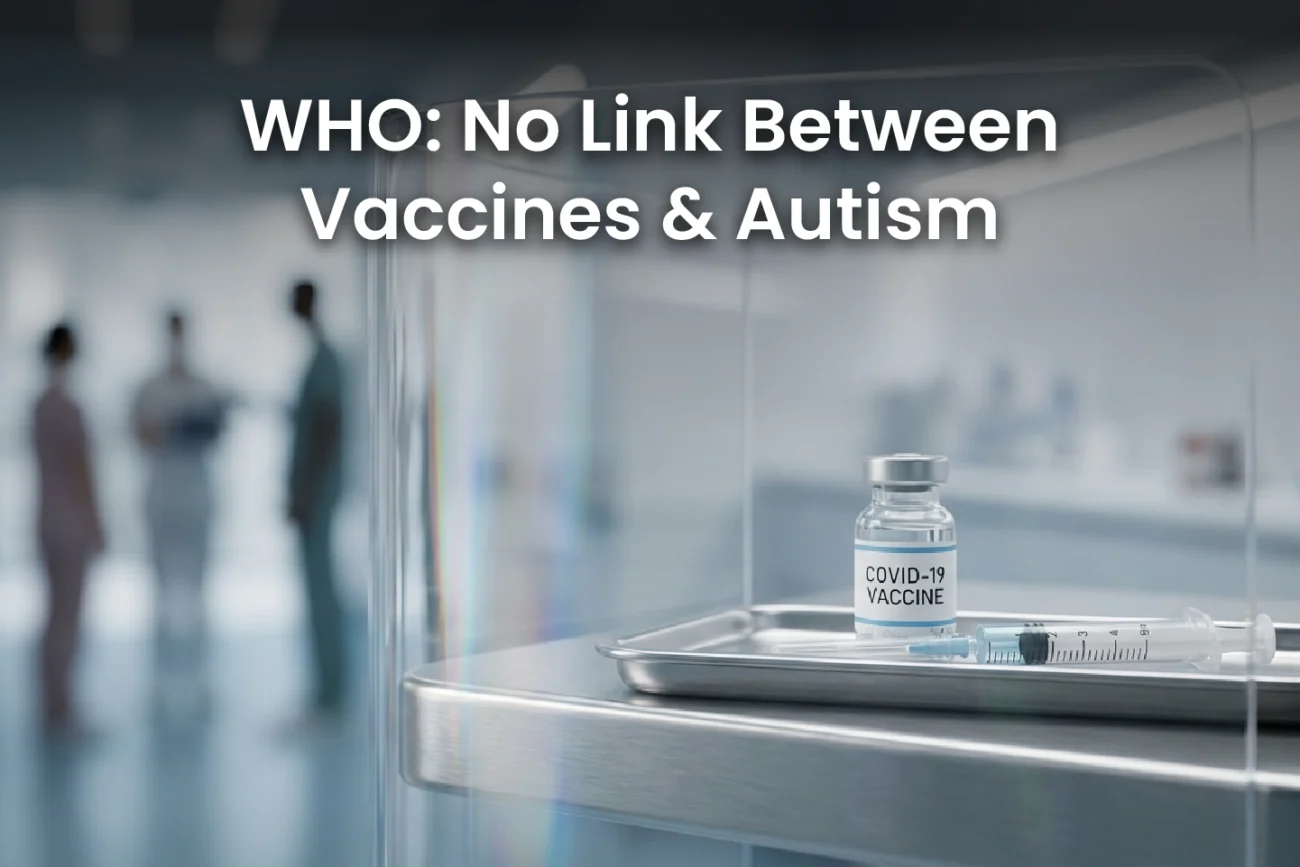
The World Health Organization (WHO) recently published a new analysis which strongly reaffirmed the established scientific consensus: there is absolutely no causal link between vaccines and autism . This definitive stance directly counters anti-vaccine rhetoric and unsubstantiated claims being propagated in the United States . WHO Director-General Tedros Adhanom Ghebreyesus explicitly stated that autism is not a side-effect of vaccines.
New Evidence Reinforces Vaccine Safety Profile
The new analysis comes from the Global Advisory Committee on Vaccine Safety (GACVS) . They meticulously examined 31 studies from multiple countries over 15 years . Furthermore, the committee specifically reviewed vaccines containing thiomersal, a preservative used to prevent contamination, and aluminum adjuvants . Thiomersal, which prevents bacterial and fungal contamination in multidose vials, and aluminum salts, which enhance the immune response, have long been targeted by vaccine critics . However, the committee’s conclusion was clear . The evidence consistently shows no association between these components, or vaccines in general, and autism spectrum disorders (ASD) . This comprehensive review supports the positive safety profile of childhood and pregnancy vaccines . In fact, this latest finding marks the fourth such review since 2002, with all previous reviews in 2004 and 2012 reaching the identical scientific conclusion .
The Flawed Study and Retraction of the MMR-Autism Link
The purported connection between the measles, mumps, and rubella (MMR) vaccine and autism originated from a single, deeply flawed study . Physician Andrew Wakefield was the primary author of this research, which appeared in The Lancet in 1998 . Consequently, the paper falsely claimed a link between the MMR vaccine, a gastrointestinal syndrome, and autism . Subsequent investigations by a journalist exposed that the data was fabricated, the research was unethical, and Wakefield had undisclosed conflicts of interest . The original paper was therefore fully retracted by The Lancet in 2010 . Despite the retraction and the voluminous, refuting research that followed, the idea has persisted among anti-vaccine adherents .
Combating Misinformation on Vaccines and Autism
The WHO urged governments globally to ensure vaccine policies remain firmly rooted in science . This is especially important given recent actions, such as the US Centers for Disease Control and Prevention (CDC) revising its website language . The CDC’s new phrasing, stating that the claim of “no link” is not evidence-based, was met with anger and fear by career scientists and public health officials . Many worry that this kind of messaging from a leading health agency will promote vaccine hesitancy, which in turn could weaken the infrastructure for immunisation . Ultimately, vaccines stand among the most transformative inventions in human history . They significantly reduce under-five mortality and save lives from approximately 30 different diseases, including measles and cervical cancer . For professionals looking to strengthen their foundational knowledge in general medical science and public health safety, consider exploring our Foundation Comprehensive Training For New Doctor.
Frequently Asked Questions
Q1: What did the WHO’s new analysis conclude about vaccines and autism?
The WHO’s Global Advisory Committee on Vaccine Safety reviewed 31 studies and reaffirmed that there is no causal link between vaccines, including those containing thiomersal or aluminum, and autism spectrum disorders (ASD) .
Q2: What was the origin of the controversy linking vaccines to autism?
The controversy originated from a 1998 study published in The Lancet by Andrew Wakefield, which falsely claimed a link between the MMR vaccine and autism. This paper was fully retracted in 2010 due to fraud, data manipulation, and unethical conduct .
Q3: Is autism considered a side effect of vaccines?
No, the WHO chief confirmed that autism is not a side effect of vaccines. While like all medical products, vaccines can cause minor side effects, the extensive scientific evidence confirms no association with neurodevelopmental disorders . If you are involved in areas concerning child health and development, the Certification Course In Healthy Child may be of interest.
References
- Vaccines do not cause autism: WHO – ETHealthworld
- WHO expert group reaffirms no link between vaccines and autism – UN News
- WHO expert panel reaffirms no link between vaccines and autism | CIDRAP
- WHO expert group’s new analysis reaffirms there is no link between vaccines and autism
- Journal Retracts Study Backing Vaccine-Autism Link | PBS News
- Do vaccines cause autism? WHO finally answers – The Times of India
- No link between vaccines and autism, WHO reaffirms | CBC News
- Autism and Vaccines – CDC
- Fraudulent Lancet MMR vaccine-autism study – Wikipedia
- Lancet retracts 12-year-old article linking autism to MMR vaccines – CMAJ
- MMR vaccine and autism – Wikipedia
- After unprecedented autism-vaccine messaging change, scientists, advocates say CDC no longer trustworthy | CIDRAP
- CDC’s new claim that vaccines cannot be ruled out as autism cause leads to confusion, misinformation, public health experts say – Northeastern Global News
- CDC website altered to suggest possible link between vaccines and autism – The BMJ
- CDC ‘vaccine safety’ webpage changed to contradict scientific conclusion that vaccines don’t cause autism – PBS
Disclaimer: This article was automatically generated from publicly available sources and is provided for informational and educational purposes only. OC Academy does not exercise editorial control or claim authorship over this content. It is not a substitute for professional medical advice, diagnosis, or treatment. Always consult a qualified healthcare provider and refer to current local and national clinical guidelines.