
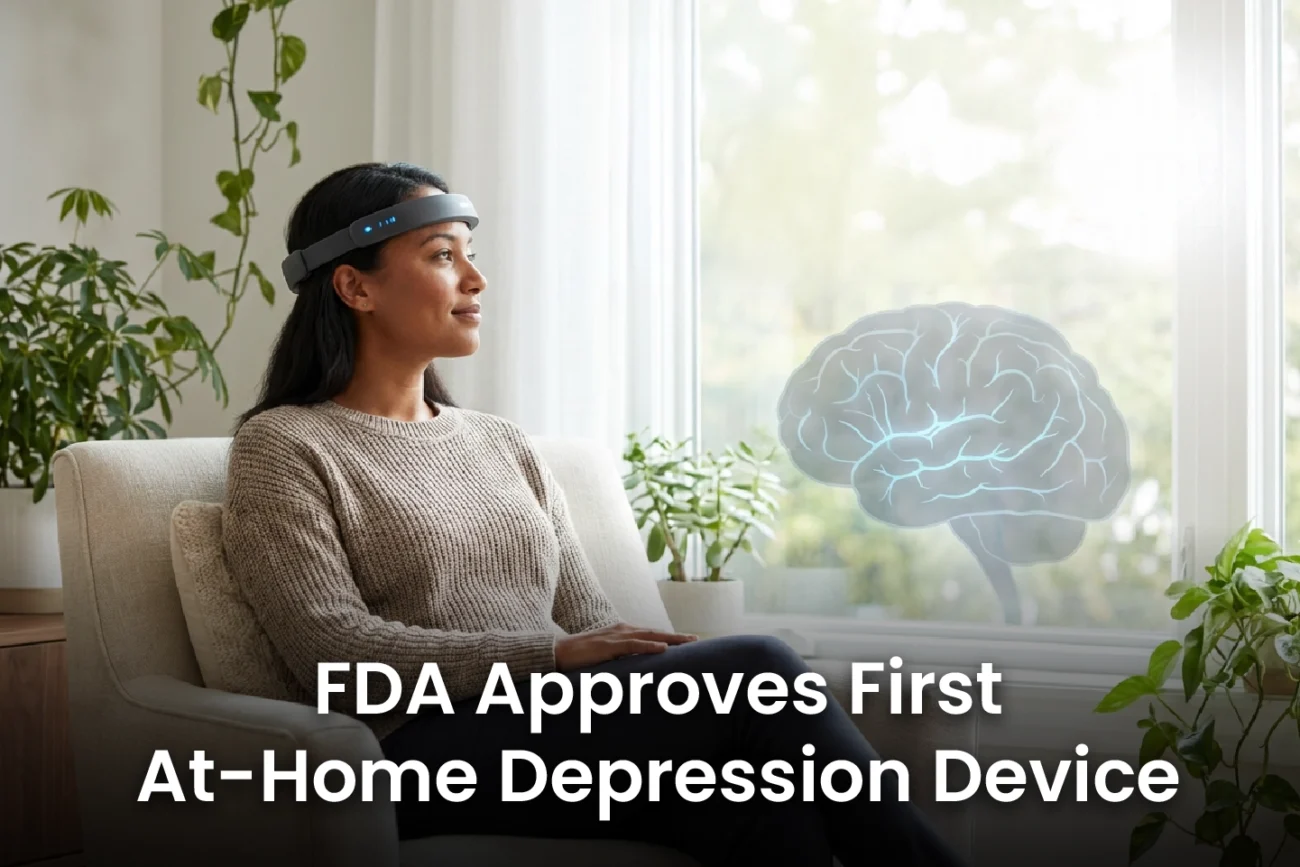
The US Food and Drug Administration (FDA) recently approved Flow Neuroscience’s FL-100 device, making it the first prescription tDCS device for depression cleared for home use. This approval offers a new, non-pharmacological treatment for Major Depressive Disorder (MDD) in adults. Furthermore, this at-home neurostimulation option serves as an important alternative to traditional antidepressants. These drugs often cause long-term side effects. The device targets moderate to severe MDD in patients who are not considered refractory to medication.
Understanding the Flow FL-100 tDCS Device for Depression
The Flow FL-100 uses Transcranial Direct Current Stimulation (tDCS) technology. This method delivers a gentle 2mA electrical current to the brain’s left dorsolateral prefrontal cortex (DLPFC). Since the DLPFC is often hypoactive in individuals experiencing depression, the tDCS aims to enhance neuronal activity. This mechanism works to rebalance the brain’s mood regulation chemicals and electrical patterns. The FDA’s decision was based on a mid-stage study showing high efficacy. Consequently, 58% of patients in the active treatment arm achieved remission after 10 weeks. Moreover, real-world data from global users indicated 77% reported symptom improvement within just three weeks.
Recommended Treatment Protocol and Safety Profile
The treatment typically follows a 12-week course. Patients start with five 30-minute sessions per week for the first three weeks. Following this intensive phase, the frequency tapers to two or three sessions weekly for the remaining nine weeks. The device is intended for home use under remote clinical supervision. Consequently, this allows for expanded access to effective care. Regarding safety, the device’s side effects are generally mild and temporary. These can include skin irritation, headache, and tingling sensations at the electrode sites. However, Flow Neuroscience warns that skin burns may occur if the device’s pads are reused or become dried out. Therefore, patients must follow all usage instructions carefully.
The topic of mood regulation and non-pharmacological treatment options is gaining significant traction in mental healthcare. Professionals looking to expand their expertise in treating mental health conditions can explore dedicated training pathways, such as the Postgraduate Diploma In Clinical Psychiatry.
Future Availability and Market Impact
The company plans to launch the device in the US during the second quarter of 2026. Because it is a medical device, it will be available as a prescription-only treatment. Currently, Flow is targeting a US retail price between $500 and $800. Furthermore, the company is actively negotiating with insurance providers to secure coverage partnerships. They expect to announce these partnerships in early 2026. This development comes as depression rates in the US have surged by 60% over the last decade. This increase affects more than 20 million adults. This rise in prevalence underscores the critical need for accessible, non-pharmacological therapies like the FL-100.
Frequently Asked Questions
Q1: What condition is the Flow FL-100 device cleared to treat?
The device is cleared by the FDA to treat moderate to severe Major Depressive Disorder (MDD) in adults aged 18 and older. It can be used alone or alongside other treatments, but it is not intended for patients considered resistant to medication.
Q2: How long is the typical course of treatment with the Flow FL-100?
Patients typically follow a 12-week course, which begins with five 30-minute sessions per week for three weeks. After this initial period, sessions taper down to two or three times a week for the remaining nine weeks.
Q3: What technology does the Flow FL-100 device use to treat depression?
It uses Transcranial Direct Current Stimulation (tDCS), which delivers a gentle 2mA electrical current to the left dorsolateral prefrontal cortex (DLPFC) to stimulate brain activity and regulate mood. Professionals interested in comprehensive psychiatric training often seek out options like the Post Graduate Program In Child And Adolescent Psychiatry to deepen their understanding of complex mental health interventions.
References
- US FDA approves first at-home device for depression – ETHealthworld
- FDA clears Flow Neuroscience’s at-home depression treatment in US first – medicaldevice-network.com
- Flow Neuroscience wins first FDA approval for at-home brain-stimulation depression treatment – medicaleconomics.com
- FDA Approves First At-Home Treatment Device for Depression | Pharmacy Times
- Flow Clinician Overview – AWS
- First At-Home Device Approved for Depression – MedPage Today
- How does Flow work? – Flow Neuroscience Help Centre
- How Flow Neuroscience Works | Understanding tDCS Therapy
- Premarket Approval (PMA) – FDA
- Wearable headset helps treat symptoms of depression | Our latest updates – NHFT
- Does Flow Neuroscience Work? A Scientific Review of tDCS for Depression Treatment
Disclaimer: This article was automatically generated from publicly available sources and is provided for informational and educational purposes only. OC Academy does not exercise editorial control or claim authorship over this content. It is not a substitute for professional medical advice, diagnosis, or treatment. Always consult a qualified healthcare provider and refer to current local and national clinical guidelines.