Angio-CT vs CBCT: Major Dose Drop in Liver Procedures
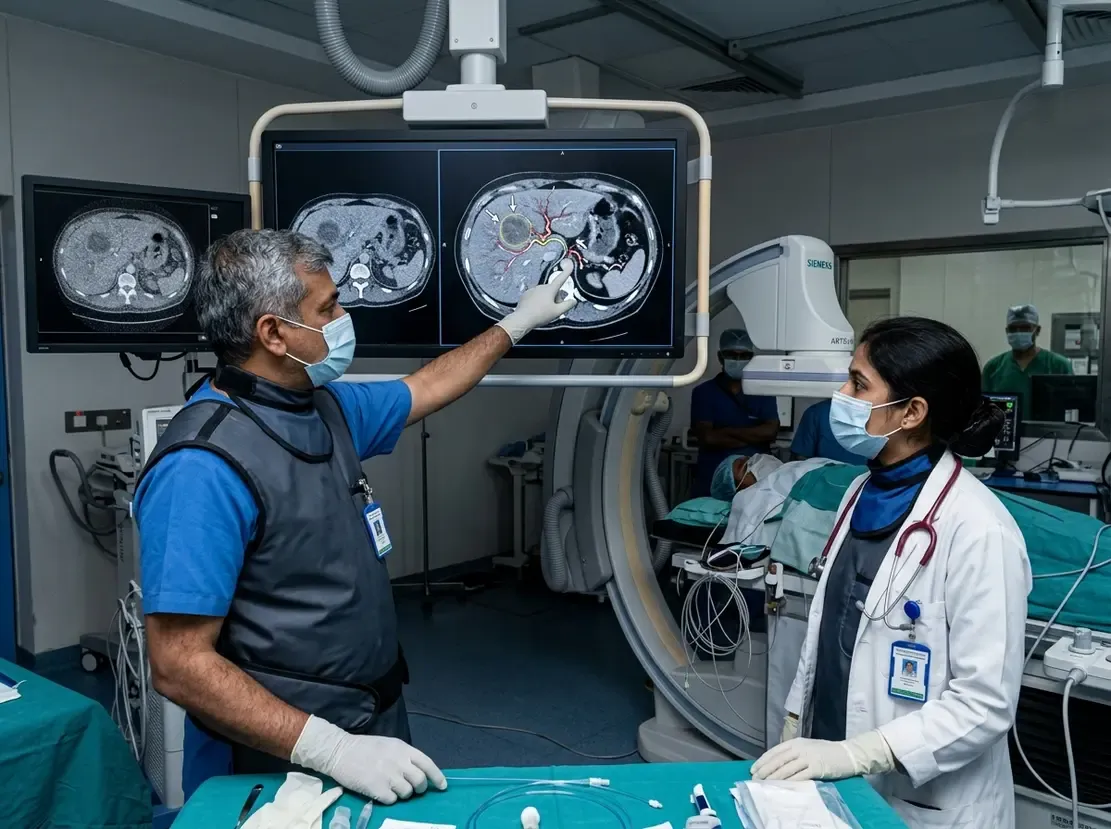
Interventional radiologists frequently evaluate radiation exposure during complex hepatic oncology interventions. Recent research provides critical insights into the angio-CT radiation dose compared to conventional cone-beam computed tomography (CBCT). Specifically, this retrospective study examined patients undergoing bland embolization and radioembolization mapping in a hybrid angiography suite. The investigators found that computed tomography angiography does not increase radiation exposure. In fact, it significantly reduces three-dimensional volumetric dose.
Comparing the Angio-CT Radiation Dose to CBCT
Clinicians often worry that multi-detector CT imaging adds excessive ionizing radiation compared to C-arm CBCT. However, the study results challenge this common clinical concern. Researchers evaluated ninety-two procedures performed between November 2021 and December 2024. Among these, forty-eight patients underwent single-phase CBCT, while forty-four received dual-phase angio-CT.
Notably, the fluoroscopy-only two-dimensional dose remained comparable between both treatment groups. However, the three-dimensional volumetric effective dose showed a dramatic contrast. Patients in the angio-CT group experienced a median dose of 9.85 mSv. In contrast, patients in the CBCT cohort received a median dose of 39.9 mSv. Consequently, angio-CT delivered a 4.1-fold reduction in 3D radiation dose.
Clinical Implications for Hepatic Interventions
Interventional oncologists perform extensive liver-directed therapies, including bland embolization and radioembolization mapping. Therefore, achieving optimal vessel visualization while minimizing cumulative dose remains a paramount clinical goal. Traditional cone-beam CT provides essential intraprocedural guidance. Nevertheless, repeated volumetric acquisitions can accumulate substantial radiation.
Furthermore, advanced statistical modeling, including bootstrap resampling and permutation testing, confirmed these findings. As a result, the total effective dose remained significantly lower in the angio-CT cohort. These outcomes demonstrate that hybrid angio-CT suites deliver superior dose efficiency. Consequently, interventional teams can enhance procedural precision without elevating patient risk.
Impact on Interventional Oncology Practice
Adopting hybrid angio-CT systems provides major practical advantages for interventional radiologists. For example, clinicians gain high-resolution multi-phase cross-sectional imaging directly on the angiography table. Thus, operators avoid transferring patients between separate diagnostic and interventional suites.
In addition, lower volumetric radiation exposure benefits patients requiring multiple hepatic procedures. Many liver cancer patients undergo repeated chemoembolization or staged radioembolization sessions. Hence, minimizing exposure per session significantly lowers lifetime cumulative radiation risk. Interventional departments can therefore adopt hybrid angio-CT workflows with greater confidence in patient safety.
Frequently Asked Questions
Q1: Does angio-CT increase patient radiation exposure during liver embolization?
No, clinical evidence demonstrates that angio-CT does not increase patient radiation exposure. In fact, it provides a 4.1-fold lower 3D effective dose compared to conventional cone-beam CT.
Q2: How does fluoroscopy time compare between angio-CT and cone-beam CT?
The two-dimensional fluoroscopy-only effective radiation dose remains comparable between both imaging modalities during hepatic procedures.
Q3: Why is radiation dose reduction particularly vital in liver oncology patients?
Because liver oncology patients frequently undergo repeat transarterial interventions, cumulative radiation adds up quickly. Therefore, lower dose modalities reduce long-term exposure hazards.
References
- Schneider C et al. Angio-CT does not increase patient radiation exposure compared to conventional cone-beam CT for intra-arterial liver procedures. Eur Radiol. 2026 Oct 02. doi: 10.1007/s00330-026-12906-9. PMID: 42823562.
- Miller DL, Balter S, Dixon AK, et al. Radiation dose during transarterial radioembolization: a dosimetric comparison of cone-beam CT and angio-CT technologies. J Vasc Interv Radiol. 2021;32(4):550-557.
- Kwak BK, Chung JW, et al. Radiation dose during transarterial chemoembolization and associated factors. Abdom Radiol. 2024;49(11):3880-3888.