Delayed MRI Phase Boosts Accurate Bile Leak Detection
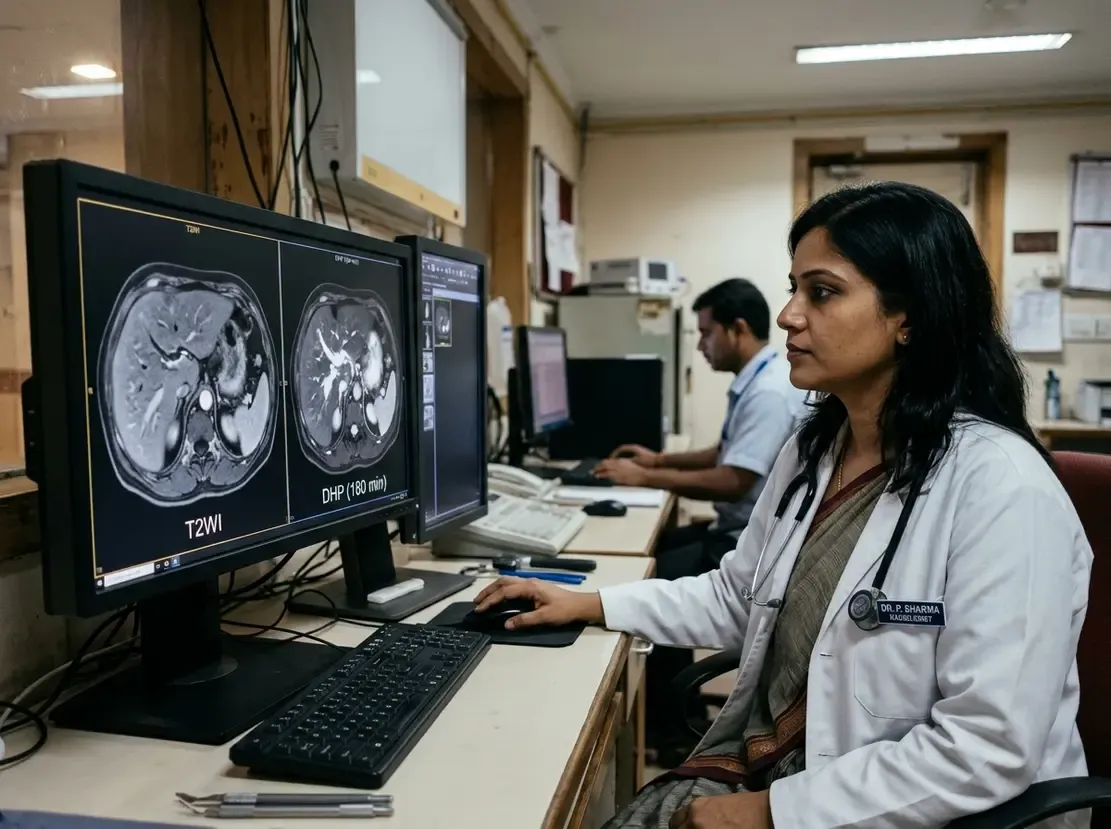
Postoperative biliary disruptions present substantial diagnostic challenges for clinicians and surgeons. Accurate bile leak detection is essential to prevent peritonitis, sepsis, and prolonged hospitalization. While conventional gadoxetate-enhanced magnetic resonance imaging remains standard, routine scan timings often miss subtle active leaks. Recent clinical evidence demonstrates that extended delayed acquisitions significantly improve diagnostic confidence.
Limitations of Standard Postoperative Imaging
Specifically, conventional hepatobiliary phase scans occur roughly twenty minutes after contrast injection. However, this timeframe frequently proves insufficient in patients who have acute surgical injury. Impaired hepatocyte clearance or slow bile flow can delay contrast excretion. Consequently, conventional acquisitions produce high false-negative rates in post-cholecystectomy and liver transplant settings. In fact, routine protocols detect fewer than thirty percent of true biliary disruptions.
Delayed Imaging Protocol for Bile Leak Detection
To address these limitations, researchers investigated delayed hepatobiliary acquisitions taken at roughly sixty-five minutes. Furthermore, the investigators compared these delayed scans directly against conventional twenty-minute sequences. The study included thirty-five postoperative patients undergoing thirty-six examinations at a referral center. Most cases involved complications after liver transplantation or laparoscopic cholecystectomy. Importantly, delayed imaging dramatically increased diagnostic sensitivity from twenty-seven percent to eighty-two percent. Overall diagnostic accuracy also improved significantly, rising from fifty-six percent to eighty-nine percent.
Clinical Impact on Post-Surgical Patient Care
Moreover, negative predictive values increased substantially from forty-seven percent to seventy-eight percent. Both imaging timepoints maintained perfect one hundred percent diagnostic specificity. Additionally, inter-reader agreement between reviewing abdominal radiologists remained exceptionally high. Therefore, delayed sequences eliminate ambiguity when standard hepatobiliary phase images show normal anatomy. Surgeons can confidently avoid unnecessary exploratory interventions when delayed scans rule out leakage. Ultimately, extending protocol acquisition times provides a noninvasive pathway to optimize clinical outcomes.
Frequently Asked Questions
Q1: Why does standard 20-minute imaging fail to reveal all bile leaks?
Postoperative hepatic inflammation or transient dysfunction frequently slows gadoxetate excretion into bile ducts. Consequently, twenty minutes is often too short for contrast extravasation to become visible.
Q2: What is the optimal delay time for detecting bile leaks on MRI?
Acquisitions performed at or after thirty minutes, particularly around sixty-five minutes, yield superior sensitivity. Thus, delaying image acquisition allows adequate biliary contrast accumulation.
Q3: Does delayed imaging increase false positive findings?
No, delayed hepatobiliary phase imaging maintains perfect specificity. Furthermore, it improves diagnostic accuracy without introducing false positive results.
References
- Vanzulli A et al. Delayed hepatobiliary phase imaging improves bile leak detection on gadoxetate-enhanced MRI. Eur Radiol. 2026 Nov 15. doi: 10.1007/s00330-026-13017-1. PMID: 43034939.
- Kantarcı M, Pirimoğlu B, Karabulut N, et al. Dynamic MR Imaging of the Biliary System Using Hepatocyte-Specific Contrast Agents. AJR Am J Roentgenol. 2013;201(4):W544-W559.
- Kozaka K, Matsui O, Gabata T, et al. Super delayed phase imaging in gadoxetic acid-enhanced MRI: investigating factors contributing to improved liver contrast. Eur Radiol. 2024;34(11):7321-7330.