
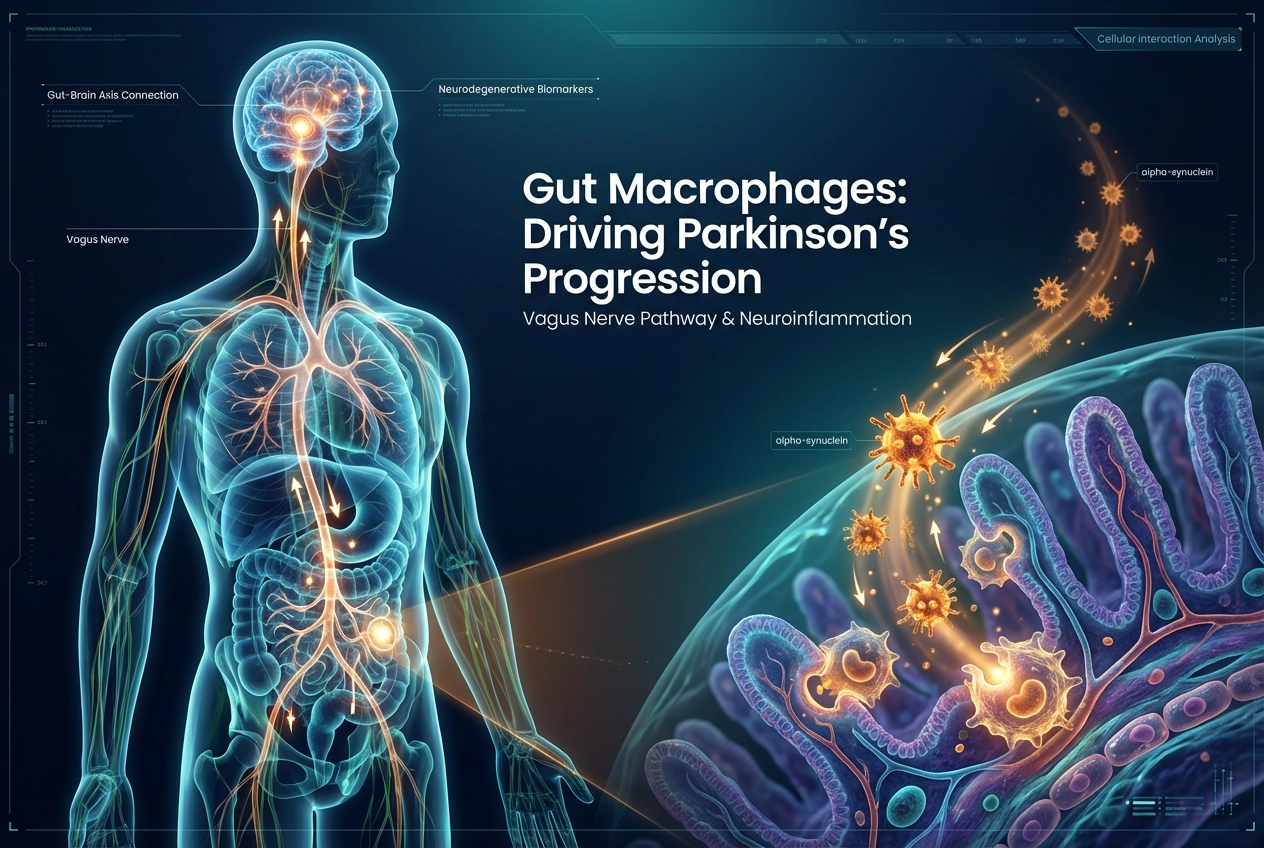
A recent landmark study demonstrates how immune cells in the gut actively facilitate the spread of Parkinson’s disease (PD) to the brain. Researchers from University College London (UCL) identified a previously unknown neurological pathway. The central finding revolves around Gut Macrophages Parkinson’s pathology employs to propagate the neurodegenerative condition. This crucial discovery points toward a potential new target for preventative or disease-modifying therapy.
The Gut-Brain Axis and Alpha-Synuclein Transfer
Parkinson’s disease, a neurodegenerative disorder marked by characteristic motor symptoms like tremors and stiffness, often originates in the gastrointestinal tract. Consequently, many patients report chronic constipation and other gut-related issues decades before their motor symptoms fully manifest. The dorsal motor nucleus of the vagus nerve, which directly connects the gut and brain, is one of the first cranial regions to show pathology. However, the precise mechanisms allowing the toxic proteins to travel to the brain remained unclear until this study. The UCL team conducted experiments in mice, introducing patient-derived alpha-synuclein protein—the toxic aggregate found in PD—into their small intestines. They meticulously tracked the spread of these toxic proteins from the periphery to the central nervous system.
The Dysfunctional Role of Gut Macrophages Parkinson’s Pathology
The study, published in the Nature journal, assigned a key role to gut macrophages. Macrophages are specialized immune cells that normally engulf and destroy pathogens; therefore, they act as the immune system’s first responders. In the mice model, these Gut Macrophages Parkinson’s pathology uses were observed consuming the alpha-synuclein protein. Following consumption, the cells showed signs of dysfunction in their lysosomal systems, which are normally responsible for breaking down cellular waste. Furthermore, the dysfunctional macrophages initiated an inflammatory cascade. They signaled T-cells, which are also part of the body’s immune response, to migrate from the gut and travel toward the brain. This sequence demonstrates a clear mechanism for the disease’s propagation. Understanding the underlying mechanisms of neurodegeneration is crucial for developing effective treatments, such as those related to Neurology Speciality Courses.
A New Therapeutic and Diagnostic Strategy
This newfound understanding immediately suggests novel therapeutic avenues. Researchers found a significant reduction in the spread of toxic proteins to the brain when they depleted the number of gut macrophages before injecting alpha-synuclein into the small intestine of mice. Similarly, the mice showed improved motor symptoms as the protein spread lessened. Therefore, targeting these immune cells to prevent them from reaching the brain offers a promising strategy to slow or halt disease progression. Dr. Soyon Hong noted that immune cells are not passive bystanders in PD; rather, these gut macrophages are responding in a dysfunctional manner. Consequently, researchers now aim to find ways to boost the immune system’s function, enabling these cells to respond correctly and stop the disease spread. Co-lead author Tim Bartels also highlighted the long-term potential. He suggested that understanding the disease’s beginning in the body could lead to simple blood tests for early screening, enabling diagnosis decades before brain damage occurs. For professionals looking to stay at the forefront of diagnostic and treatment advancements in complex conditions, specialized training is essential, such as the Postgraduate Diploma In Acute Medicine.
Frequently Asked Questions
Q1: What specific cells were identified as spreading Parkinson’s disease?
The study identified gut macrophages, a type of specialized immune cell, as the key facilitators in transferring the toxic alpha-synuclein protein from the gut to the brain.
Q2: Why is the gut considered the origin of Parkinson’s disease?
Parkinson’s is often thought to originate in the gut because one of the first affected brain regions is the dorsal motor nucleus of the vagus nerve, which directly connects to the gastrointestinal tract. Furthermore, many patients experience chronic gut symptoms, like constipation, years before motor symptoms begin. A deeper dive into gut pathology can inform care, making courses in Gastroenterology Speciality Courses highly relevant.
Q3: What is the potential therapeutic strategy suggested by this research?
The research suggests a strategy of targeting or depleting the number of dysfunctional gut macrophages to prevent them from transporting toxic alpha-synuclein to the brain, thereby potentially slowing or stopping disease progression.
References
- Study shows how immune cells in gut spread Parkinson’s disease to brain – ETHealthworld
- Study identifies gut immune cells as potential early target for Parkinson’s – Perplexity
- Understanding Gut Inflammation May Hold Clues to Mitigating Parkinson’s Onset – Neuroscience News
- Targeting the gut’s immune system could tackle early stages of Parkinson’s – UK Dementia Research Institute (UKDRI)
Disclaimer: This article was automatically generated from publicly available sources and is provided for informational and educational purposes only. OC Academy does not exercise editorial control or claim authorship over this content. It is not a substitute for professional medical advice, diagnosis, or treatment. Always consult a qualified healthcare provider and refer to current local and national clinical guidelines.