
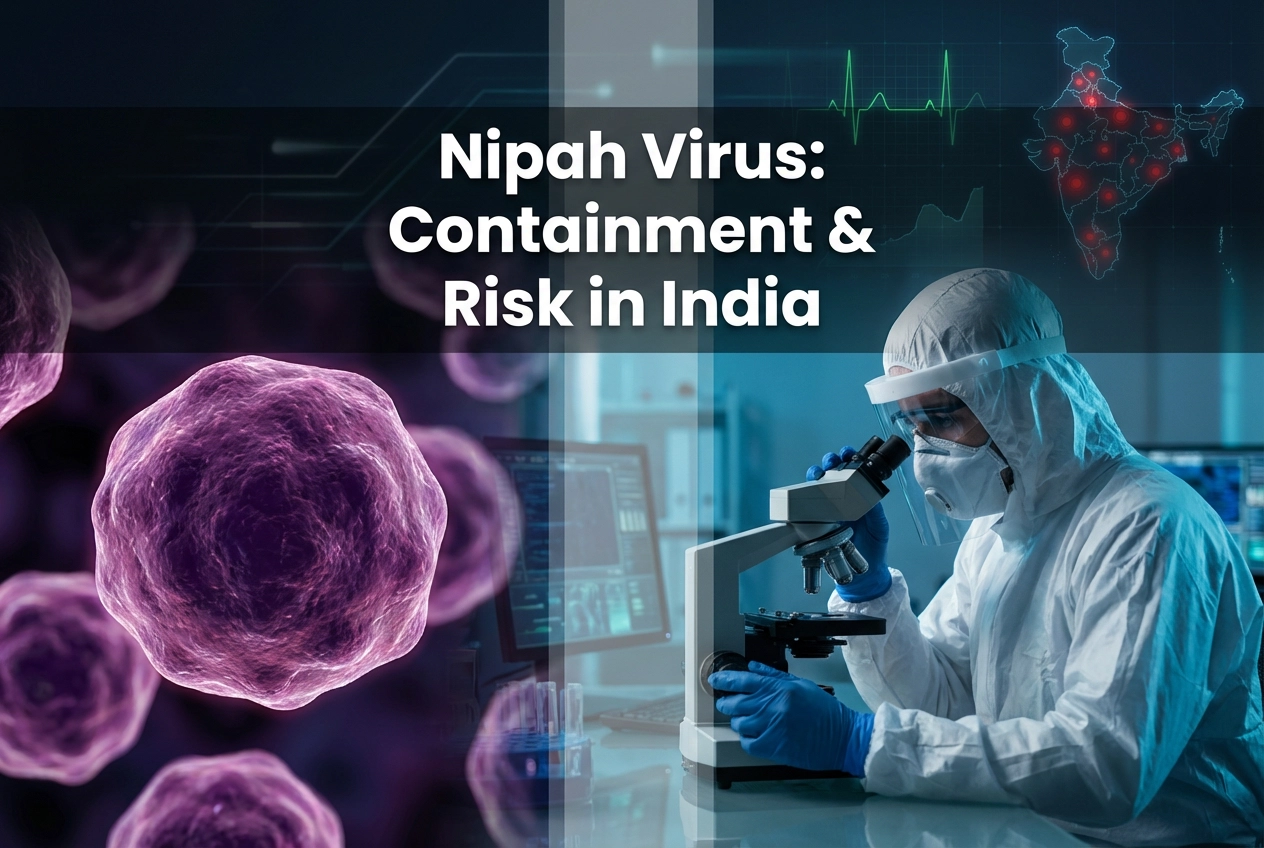
The World Health Organization (WHO) currently assesses the risk of widespread Nipah Virus Infection beyond India as low, despite recent confirmed cases in West Bengal. Nonetheless, many Asian countries like Singapore and Malaysia immediately tightened airport screening to guard against potential spread. Consequently, medical professionals must remain vigilant, focusing on comprehensive infection prevention and control (IPC) protocols. The WHO confirms India’s capability to contain such localized outbreaks.
Clinical Profile and High Case Fatality
Nipah virus (NiV), a zoonotic virus carried by fruit bats, causes a severe disease presentation. Infected people often initially develop flu-like symptoms, including fever, headache, vomiting, and sore throat. This can rapidly progress to acute encephalitis (brain inflammation), seizures, and coma within 24 to 48 hours. The infection also causes atypical pneumonia and severe respiratory distress in some patients. Significantly, the case fatality rate (CFR) is alarmingly high, ranging from 40% to 75% across documented outbreaks. Furthermore, licensed treatments or vaccines are currently unavailable. Therefore, early intensive supportive care remains the only recommended management for respiratory and neurological complications. The antiviral Ribavirin may have a role in reducing mortality, but its efficacy remains unproven.
Preventing Nipah Virus Infection: IPC Protocols
Transmission pathways for NiV include exposure to infected animals (like bats and pigs) or contaminated food. Human-to-human spread occurs through close, prolonged contact with bodily secretions. Although human-to-human transmission is less common, healthcare workers must adhere to strict IPC measures to prevent healthcare-associated infections. Consequently, suspected or confirmed NiV cases must be isolated promptly in a single-patient room, ideally an Airborne Infection Isolation Room (AIIR). When delivering patient care, staff should use contact and droplet precautions. This includes a medical mask, eye protection, a fluid-resistant gown, and examination gloves. Moreover, airborne precautions and a fit-tested filtering facepiece respirator are required during aerosol-generating procedures. All clinical waste should be handled as biohazard waste. For those involved in managing severe respiratory distress associated with viral infections, knowledge of critical care fundamentals is essential, and professionals might benefit from exploring the Certification Course In Intensive Care Medicine.
Nipah Outbreaks in India: Containment and Risk
India has documented seven Nipah outbreaks, with recurring cases noted in the southern state of Kerala since 2018. Kerala is considered one of the world’s highest-risk regions for NiV. However, the current event involves two healthcare workers in West Bengal, marking the state’s third reported NiV outbreak. Previous outbreaks in West Bengal occurred in 2001 and 2007 in districts bordering Bangladesh. Following the recent confirmed cases, Indian health authorities promptly identified and tested over 190 contacts. The National Centre for Disease Control reported that all contacts tested negative for NiV. This suggests the current event remains geographically contained. The WHO maintains that while the risk is moderate at the sub-national level, strong surveillance, contact tracing, and RRT deployment help mitigate the national risk.
Frequently Asked Questions
Q1: What is the primary method of Nipah virus transmission in India?
Transmission often occurs through spillover from fruit bats, the natural reservoir. In India and Bangladesh, this is typically linked to the consumption of raw date palm sap or fruits contaminated by bat saliva, urine, or feces. Human-to-human spread is possible but requires close, prolonged contact with an infected person’s bodily fluids. Understanding robust infection control strategies is paramount for general practitioners during these events, making the Certification Course In General Practice highly relevant.
Q2: Is there a vaccine or specific treatment for Nipah Virus Infection?
Currently, no licensed vaccines or specific antiviral treatments are available for Nipah virus infection. Patient management focuses entirely on early detection and intensive supportive care to manage severe respiratory and neurological complications. Training in managing acute respiratory issues is critical when dealing with severe viral loads.
Q3: What is the current risk of the Nipah virus spreading beyond the affected region?
The WHO assesses the risk of further national, regional, and global spread from the current cases to be low. This assessment is based on the localized nature of the outbreak, the lack of symptoms/positive tests in over 190 contacts, and India’s strong capacity to contain NiV outbreaks.
References
- WHO sees low risk of Nipah virus spreading beyond India – ETHealthworld
- Disease Outbreak News: Nipah virus infection in India. World Health Organization (WHO).
- Nipah virus fact sheet. World Health Organization (WHO).
- NIPAH Virus Guidelines – National Centre for Disease Control (NCDC).
Disclaimer: This article was automatically generated from publicly available sources and is provided for informational and educational purposes only. OC Academy does not exercise editorial control or claim authorship over this content. It is not a substitute for professional medical advice, diagnosis, or treatment. Always consult a qualified healthcare provider and refer to current local and national clinical guidelines.