Modern Gynecologic Cancer Screening: A Complete Guide
Early detection plays a decisive role in reducing cancer mortality across the globe. Therefore, effective gynecologic cancer screening remains a cornerstone of comprehensive preventative health care. Clinicians target malignant lesions before significant symptoms emerge. In addition, early detection directly improves long-term patient survival outcomes.
Cervical Cancer in Gynecologic Cancer Screening
Cervical cancer represents the primary reproductive tumor suitable for routine population-level screening. Specifically, primary high-risk HPV testing and cervical cytology drive early detection efforts. Clinicians recommend regular testing starting in early adulthood for individuals at average risk. However, patients with HIV infection or chronic immunosuppression require more frequent clinical evaluations. In utero diethylstilbestrol exposure also prompts strict clinical surveillance protocols. Consequently, clinicians can identify and treat precancerous cervical intraepithelial neoplasia promptly.
Endometrial Cancer Evaluation and Risk Assessment
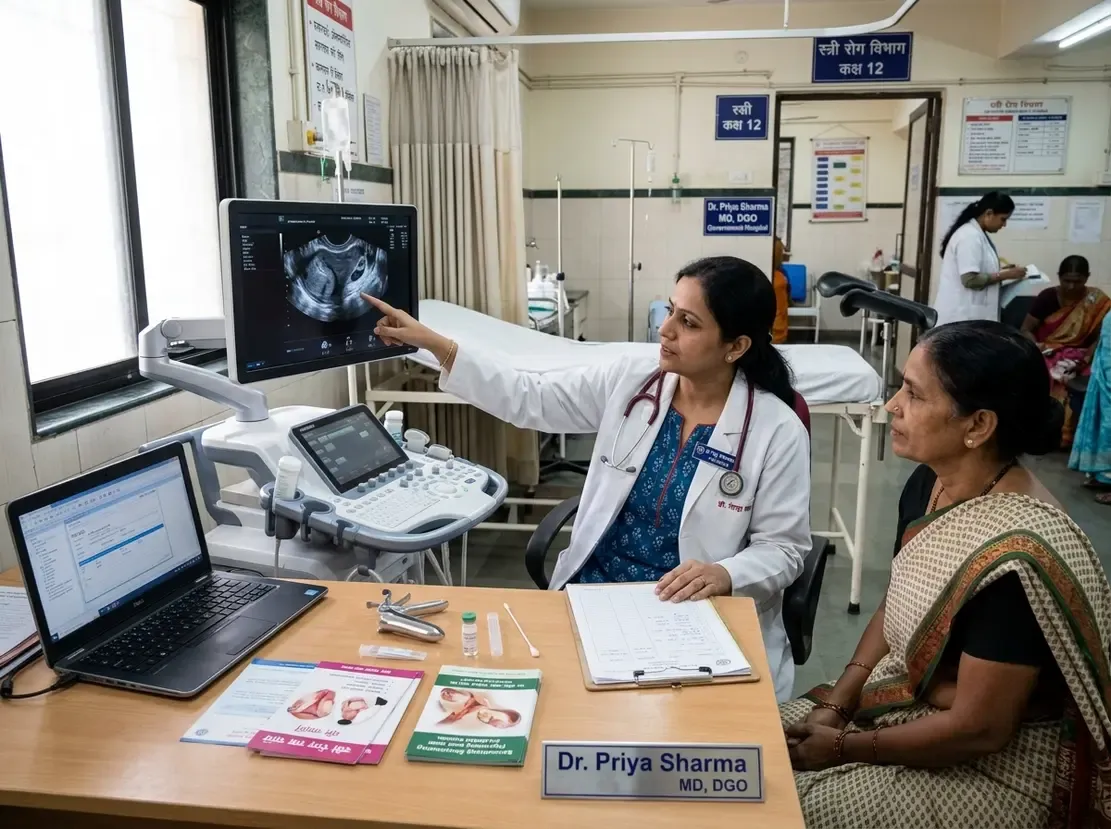
Endometrial cancer ranks among the most common gynecologic malignancies today. Nevertheless, major guidelines do not advise routine population-level screening for average-risk women. Instead, clinicians initiate targeted evaluations when patients report abnormal uterine bleeding. Postmenopausal bleeding serves as a critical clinical red flag demanding diagnostic investigation. Furthermore, individuals with genetic predispositions such as Lynch syndrome face elevated cancer risks. For these high-risk patients, specialists perform transvaginal ultrasound alongside clinical assessment to gauge endometrial thickness. As a result, prompt endometrial biopsy confirms or rules out tissue atypia.
Ovarian Cancer Screening in High-Risk Populations
Routine ovarian cancer screening lacks sufficient specificity for asymptomatic individuals at average risk. Thus, widespread clinical trials show no overall survival benefit from universal pelvic imaging. However, high-risk individuals carrying BRCA gene mutations demand specialized clinical vigilance. Risk-reducing bilateral salpingo-oophorectomy provides definitive protection for these patients. Meanwhile, patients who choose to defer preventive surgery undergo tailored ovarian surveillance. Physicians combine semiannual transvaginal ultrasound examinations with serum CA-125 biomarker measurements. This combined approach helps detect suspicious adnexal masses at earlier stages.
Role of Diagnostic Imaging Across Gynecologic Malignancies
Medical imaging enters the clinical workflow immediately following abnormal laboratory tests or physical findings. Transvaginal ultrasound delivers initial characterization of adnexal masses and uterine wall architecture. Additionally, magnetic resonance imaging provides superior soft tissue resolution for precise local staging. Staging classifications from FIGO actively incorporate modern radiologic findings. Consequently, radiologists directly inform multidisciplinary surgical and oncologic treatment plans. Ultimately, integrated imaging streamlines posttreatment surveillance and recurrence monitoring.
Frequently Asked Questions
Q1: Why is routine population screening not recommended for ovarian cancer?
Universal ovarian screening yields high false-positive rates without reducing overall mortality in average-risk individuals. Therefore, physicians reserve transvaginal ultrasound and CA-125 testing exclusively for patients carrying high-risk genetic mutations.
Q2: What is the primary method for cervical cancer screening?
Clinicians primarily utilize high-risk HPV testing alone or alongside cervical cytology. Furthermore, this approach effectively identifies premalignant epithelial dysplasias before invasive carcinoma develops.
Q3: How does pelvic imaging assist in endometrial cancer management?
Although imaging cannot serve as universal screening, transvaginal ultrasound accurately measures endometrial thickness in symptomatic patients. Subsequently, pelvic magnetic resonance imaging defines myometrial invasion depth and informs FIGO tumor staging.
References
- Jha P et al. Screening for Common Gynecologic Malignancies. Radiographics. 2026 Oct undefined. doi: 10.1148/rg.260031. PMID: 42821448.
- American College of Obstetricians and Gynecologists. Clinical Updates in Women's Health Care: Screening for Cervical Cancer. Obstet Gynecol. 2023;141(4):e1-e12.
- National Comprehensive Cancer Network. NCCN Clinical Practice Guidelines in Oncology: Genetic/Familial High-Risk Assessment: Breast, Ovarian, and Pancreatic. Version 2.2024.