Microwave Ablation: A New Era for Relapsed Graves' Disease
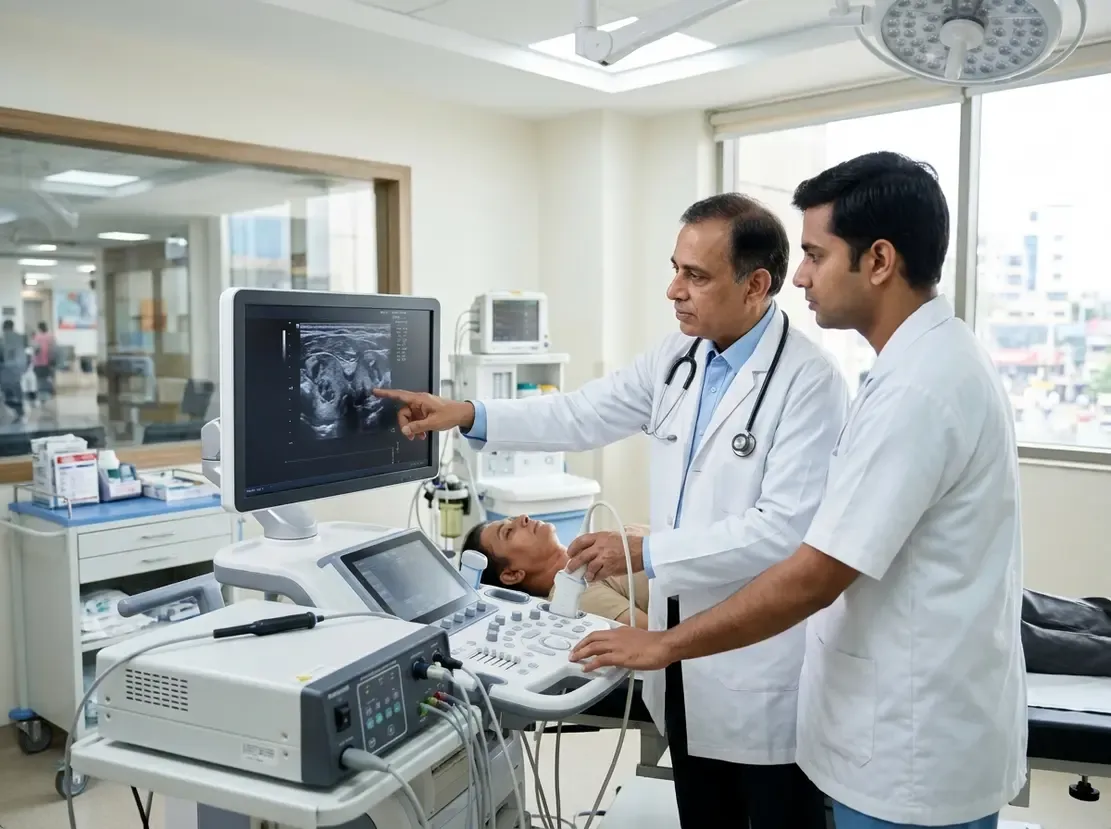
Managing recurrent hyperthyroidism remains a significant challenge for endocrinologists across India. Many patients experience persistent disease despite undergoing prolonged antithyroid drug therapy. In addition, patients frequently decline radioactive iodine or thyroidectomy due to fear of radiation and permanent hypothyroidism. Consequently, ultrasound-guided microwave ablation for Graves' disease has emerged as a promising, nonradiative therapeutic strategy. A recent 24-month study provides valuable clinical and hemodynamic evidence on this minimally invasive intervention, relevant to professionals pursuing advanced management of metabolic disorders.
Key Clinical Findings at 24-Month Follow-Up
The study evaluated 24 consecutive patients with persistent or relapsed hyperthyroidism after at least 18 months of medical therapy. Notably, 20 patients (83.3%) achieved complete clinical remission at 24 months without needing antithyroid drugs. Among these individuals, 18 patients maintained stable euthyroid status throughout the follow-up period. Meanwhile, only two patients developed subclinical hypothyroidism that required no immediate hormone replacement. Furthermore, ultrasound evaluations demonstrated a median thyroid volume reduction of 41.5%. Color Doppler imaging also revealed marked improvement in thyroid vascularity and intrathyroidal blood flow velocity.
Predictors of Recurrence and Safety Profile
Univariable Cox regression analysis revealed that higher baseline free thyroxine (FT4) levels significantly correlated with disease recurrence. Specifically, each unit increase in baseline FT4 increased the hazard of recurrence by 7 percent. The authors identified a preliminary FT4 threshold of 39.11 pmol/L to predict recurrence risk. However, clinicians must interpret this threshold cautiously because only four patients experienced relapse in this cohort. Importantly, the procedure demonstrated an exceptional safety profile across all treated patients. Surgeons documented no transient or permanent recurrent laryngeal nerve palsy throughout the 24 months. Similarly, no patient suffered from hypoparathyroidism or major thermal injury to adjacent cervical structures.
Clinical Impact of Microwave Ablation for Graves' Disease
In Indian clinical practice, patients often express strong hesitation regarding lifelong levothyroxine dependence after surgery or radioactive iodine. Therefore, thermal ablation offers an attractive middle ground that preserves functioning thyroid parenchyma. Moreover, the technique produces no visible surgical scarring on the anterior neck, improving cosmetic satisfaction. Nevertheless, physicians should select candidates carefully based on baseline glandular volume and biochemical severity. Large randomized clinical trials are currently underway to confirm these long-term results against conventional modalities, expanding options available in endocrinology specialty training.
Frequently Asked Questions
Q1: How does microwave ablation treat Graves' disease?
Microwave ablation delivers localized thermal energy through an ultrasound-guided needle antenna into hyperfunctioning thyroid tissue. Consequently, thermal coagulation destroys excessive follicular cells, reducing hormone hypersecretion while preserving adjacent healthy parenchyma.
Q2: What was the primary remission rate observed at two years?
Overall, 83.3% of treated patients achieved complete remission at 24 months. Most of these individuals achieved durable euthyroidism without requiring antithyroid medications or hormone replacement.
Q3: Which baseline factor was associated with hyperthyroidism recurrence?
Higher baseline free thyroxine (FT4) levels significantly predicted post-ablation relapse. Therefore, endocrinologists should monitor patients with markedly elevated initial FT4 concentrations more vigilantly after the procedure.
References
- Zhao Y et al. Ultrasound-guided microwave ablation for persistent or recurrent Graves' disease: long-term clinical and hemodynamic outcomes. Eur Radiol. 2026 Nov 19. doi: 10.1007/s00330-026-13047-9. PMID: 43055778.
- Liu X et al. Association between microwave ablation and remission in patients with Graves' hyperthyroidism receiving continuous antithyroid drug treatment. Quant Imaging Med Surg. 2026;16(10):815.
- Cesareo R et al. Ultrasound-guided thermal ablation in patients affected by Graves' disease: a systematic review and meta-analysis. Endocrine. 2026. doi: 10.1007/s12020-026-04142-8.