Can Smart Workflows Double Breast MRI Screening Capacity?
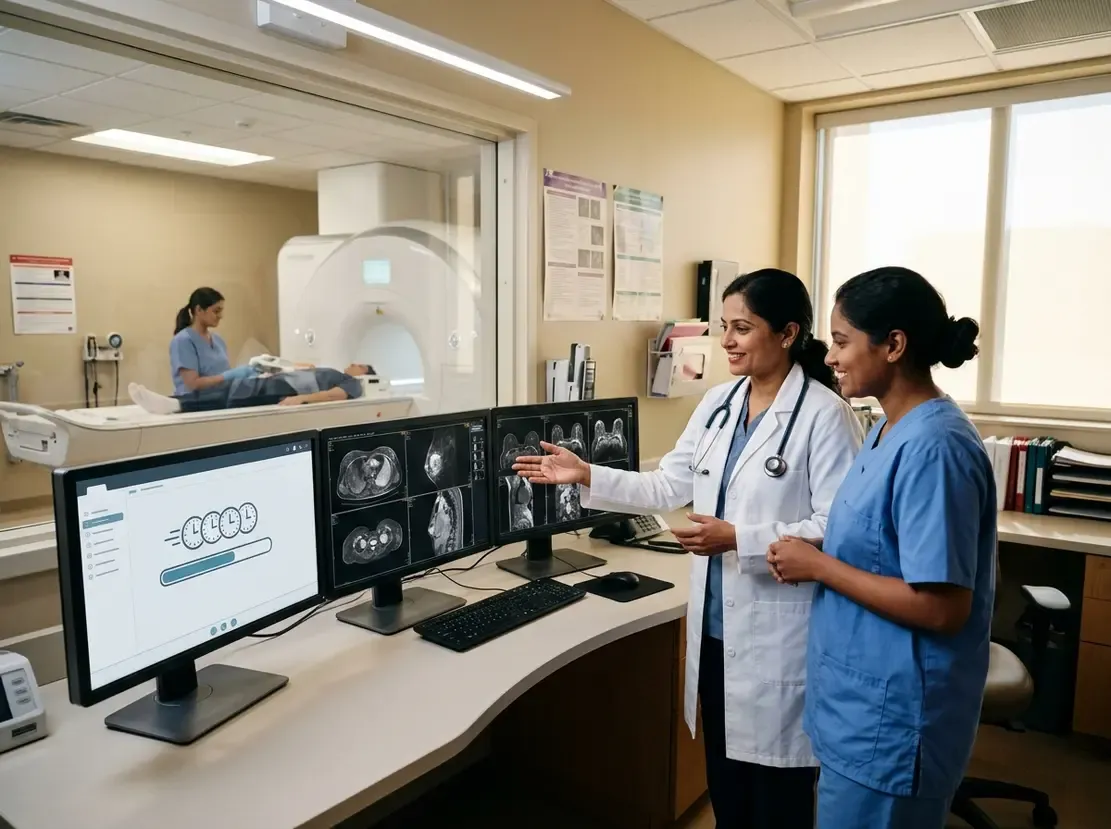
Magnetic resonance imaging provides superior sensitivity for detecting breast malignancy, especially in women with dense tissue. However, high operational expenses and limited scanner availability frequently restrict wide access to breast MRI screening. A recent calculation modeling study evaluated practical interventions to resolve these operational bottlenecks without buying expensive new equipment.
Examining Workflow Bottlenecks in Breast MRI Screening
Standard MRI protocols typically require lengthy scan times. Consequently, imaging centers struggle to accommodate high patient volumes. Furthermore, patient preparation within the scanner room prolongs magnet idle time. To address this, investigators developed a comprehensive calculation model simulating 5,500 annual screening examinations. The model compared seven distinct operational strategies against standard institutional care.
Specifically, the study evaluated three primary interventions: shortened acquisition sequences, dockable tables equipped with breast coils, and expanded staffing models. By testing these variables alone and in combination, the researchers analyzed overall capacity, unit costs, and technician workloads.
Impact of Abbreviated Protocols and Dockable Tables
Transitioning from a 13-minute full scan protocol to a 6-minute abbreviated scan yielded immediate clinical dividends. Specifically, this reduction expanded daily capacity from 30 to 47 scans. In addition, the shortened protocol generated annual savings of €147,505, representing an 8.4% cost reduction. Technicians also gained 1,320 fewer work hours over the course of the year.
Moreover, combining all three interventions delivered the highest efficiency gains. When centers paired abbreviated scans with dockable tables and three technicians, daily screening capacity rose dramatically from 30 to 67 scans. Furthermore, this combined workflow reduced overall operational costs by 9.2%, saving up to €160,557 annually. Dockable tables allowed staff to position patients outside the examination room, thereby cutting magnet turnover times substantially.
Clinical Relevance for Radiology Centers
These findings provide actionable guidance for high-volume imaging centers and resource-constrained healthcare systems. By optimizing existing equipment, radiology suites can double screening volumes without capital investments in additional scanners. Therefore, abbreviated protocols combined with dockable prep tables offer a practical blueprint to expand cancer surveillance programs safely and sustainably.
Frequently Asked Questions
Q1: How does an abbreviated protocol change daily screening capacity?
Shortening scan acquisition from 13 to 6 minutes increases daily capacity from 30 to 47 scans. Furthermore, this adjustment saves significant technician hours and lowers operational costs.
Q2: What benefit do dockable tables provide during breast MRI?
Dockable tables allow technicians to position the patient and place breast coils outside the scanner room. Consequently, this intervention drastically reduces magnet downtime between successive patients.
Q3: Does workflow optimization require purchasing additional MRI scanners?
No, these operational adjustments optimize throughput on existing machines. Thus, facilities expand patient access without major capital investments in new MRI systems.
References
- van Well EB et al. Evaluating strategies to optimize breast MRI screening: a modeling study of abbreviated protocols, dockable tables, and staffing scenarios. Eur Radiol. 2026 Nov 02. doi: 10.1007/s00330-026-13013-5. PMID: 42970136.
- Grimm LJ et al. Abbreviated screening protocol for breast MRI: a feasibility study. Acad Radiol. 2015;22(9):1156-1162.
- Mann RM et al. Breast MRI: guidelines from the European Society of Breast Imaging. Eur Radiol. 2024;34(6):3845-3860.