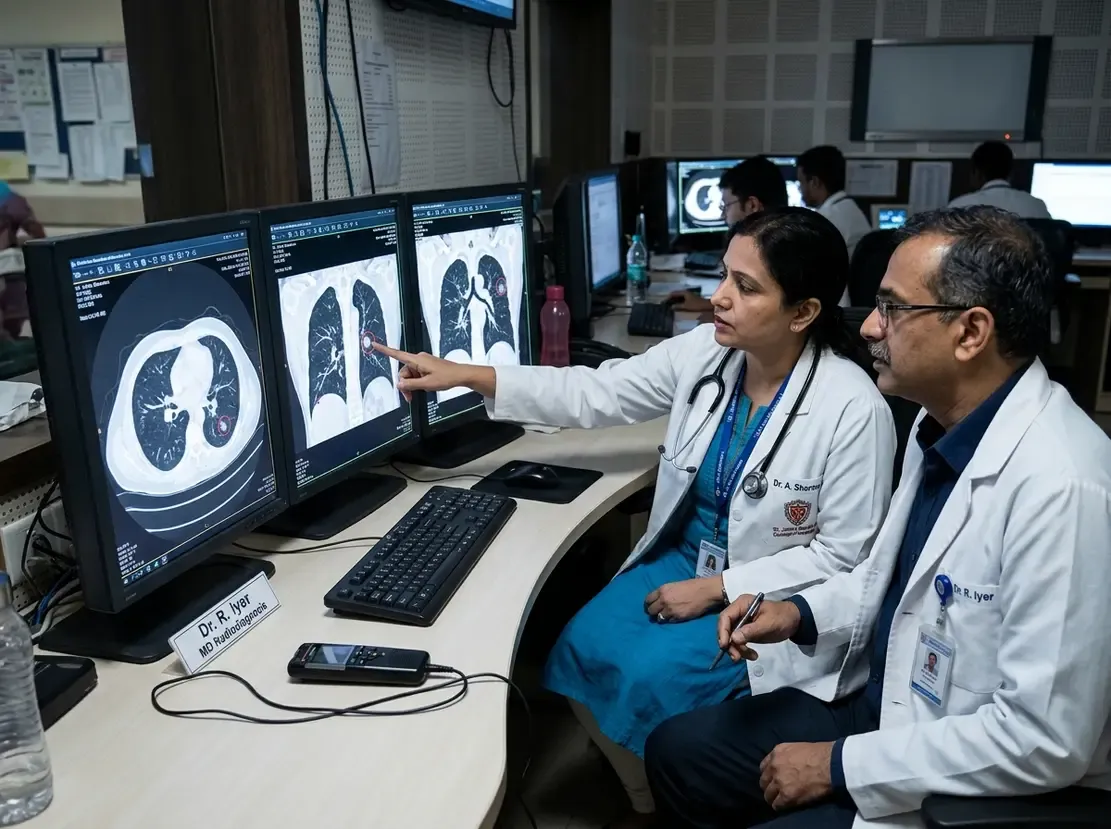
Can AI Transform Prostate MRI? What the Evidence Shows

Clinicians increasingly look to artificial intelligence to improve prostate cancer detection. Currently, prostate MRI AI tools promise to reduce diagnostic delays and assist radiologists. Software developers design these algorithms to segment the prostate gland and identify suspicious focal lesions. However, clinical adoption requires solid evidence demonstrating tangible patient benefits. A recent scoping review examined commercially available systems to assess their actual clinical validity.
Current Evidence for Prostate MRI AI
Researchers analyzed twenty-one clinical studies evaluating seven commercially available platforms. Importantly, most published studies relied on retrospective single-center data. Standalone artificial intelligence algorithms demonstrated high diagnostic discrimination in isolated cohorts. In addition, these systems often performed comparably to expert radiologists in specific test environments. Nevertheless, standalone evaluations frequently tested algorithms outside their approved regulatory indications. When radiologists used artificial intelligence as an assistive reader, results varied considerably. For instance, AI assistance provided noticeable performance gains for less-experienced radiologists. Conversely, experienced readers achieved minimal improvements in diagnostic accuracy. Furthermore, several studies observed that higher diagnostic specificity came at the expense of lower sensitivity. Consequently, clinicians must interpret these initial findings with appropriate caution.
Key Barriers to Routine Clinical Implementation
The scoping review identified three significant gaps that limit immediate clinical integration. First, current literature demonstrates incomplete verification strategies across diverse patient populations. Most investigations do not evaluate algorithms across different scanner vendors or imaging protocols. Second, researchers have not convincingly demonstrated practical workflow benefits. While software promises faster reporting, actual reading times often remain unchanged. In some settings, reviewing artificial intelligence overlays even increased total reporting duration. Third, existing studies lack analyses of cost-effectiveness and long-term patient outcomes. Specifically, investigators have not evaluated critical endpoints such as treatment timelines or cancer-free survival. Healthcare systems cannot justify widespread adoption without clear evidence of improved health outcomes. Therefore, prospective health technology evaluations remain essential before standardizing these tools in hospital pathways.
Opportunities and Clinical Pathway Optimization
Despite existing limitations, automated imaging tools offer meaningful opportunities for modern radiology departments. In high-volume screening settings, these systems could assist with triage and case prioritization. For example, algorithms can highlight highly suspicious cases to expedite urgent clinical review. In addition, automated volumetry and prostate segmentation provide consistent measurements that save valuable manual labor. Healthcare organizations are now establishing prospective clinical trials to collect real-world performance metrics. Regulatory bodies like the UK National Institute for Health and Care Excellence recently recommended phased clinical data collection. Similarly, Indian tertiary imaging centers can implement prospective registries to assess multi-vendor generalizability. Ultimately, robust prospective trials will clarify whether digital assistance truly improves prostate cancer management.
Frequently Asked Questions
Q1: What are the main benefits of using AI in prostate MRI?
Artificial intelligence assists less-experienced radiologists by standardizing lesion identification and estimating prostate volume. Furthermore, automated tools can help prioritize urgent scans in high-volume clinical workflows.
Q2: Why is routine adoption of prostate AI still limited?
Most existing studies are retrospective and single-center, with limited real-world workflow validation. In addition, researchers have not yet demonstrated long-term cost-effectiveness or improved patient survival.
Q3: Does AI improve diagnostic accuracy for expert radiologists?
Current evidence shows minimal performance gains for subspecialist radiologists when using AI assistance. However, these tools consistently provide greater diagnostic support for junior or general radiologists.
References
- Pakpoor J et al. Commercially available AI medical devices for prostate MRI: current evidence and opportunities for implementation. Eur Radiol. 2026 Nov 11. doi: 10.1007/s00330-026-13044-y. PMID: 43013093.
- National Institute for Health and Care Excellence (NICE). Artificial intelligence technologies for detecting prostate cancer on MRI scans: Early Value Assessment. NICE Health Technology Evaluation; 2026.
- van Leeuwen KG, Schalekamp S, Rutten MJCM, van Ginneken B, de Rooij M. Artificial intelligence in radiology: 100 commercially available products and their scientific evidence. Eur Radiol. 2021;31(6):3797-3804.