
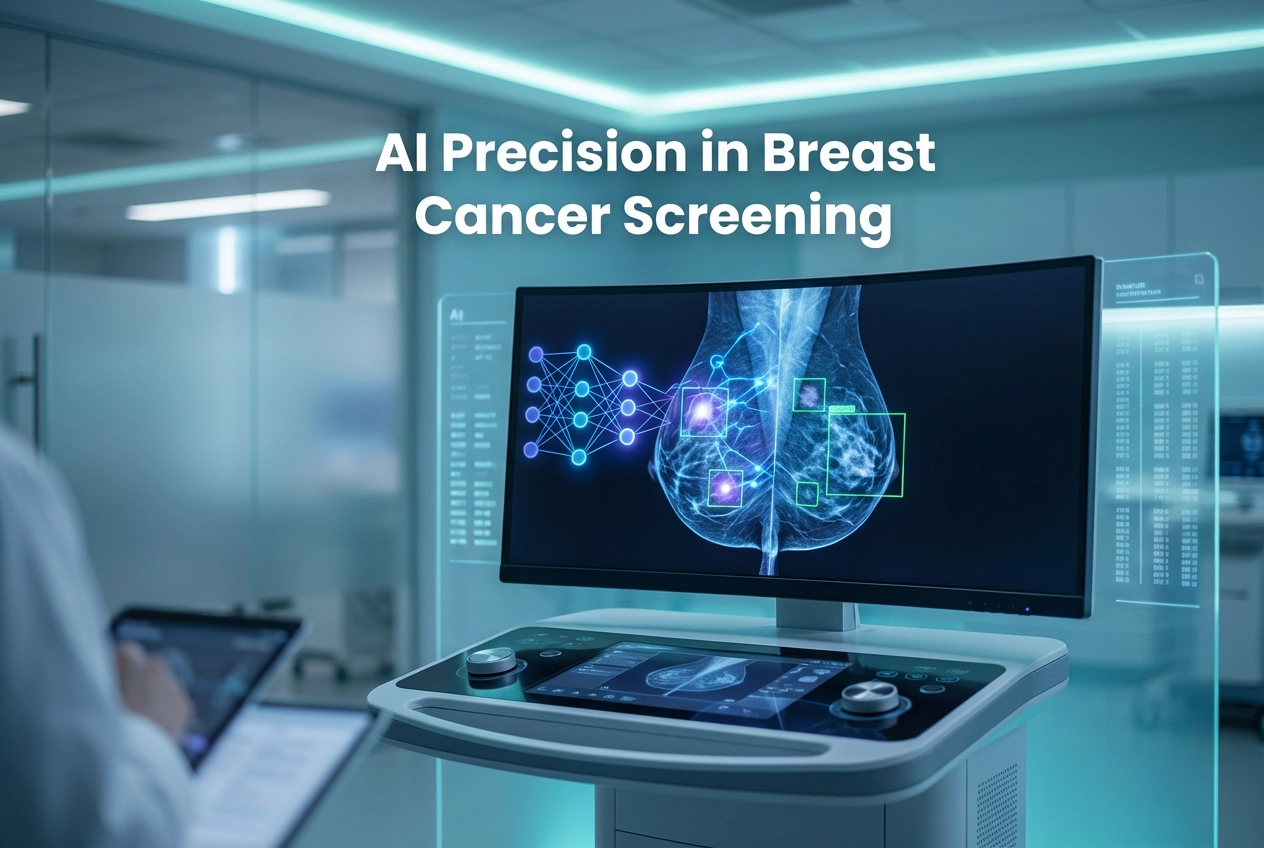
The Radiological Society of North America (RSNA) has released a significant open-source dataset from its Screening Mammography Cancer Detection Challenge. This resource contains vast data on mammograms, corresponding patient metadata, and definitive pathological outcomes. The dataset is critically important for advancing AI breast cancer detection models, potentially saving countless lives through earlier diagnosis. It provides researchers and clinicians with a diverse, well-curated foundation for developing new artificial intelligence tools.
Advancing AI breast cancer detection in Clinical Practice
Early detection significantly reduces breast cancer mortality worldwide. For example, high-income countries have seen a 40% drop in mortality since the 1980s, primarily due to regular mammography screening programs. However, a shortage of radiologists to interpret screening mammograms remains a global concern. Consequently, machine learning and AI tools offer a powerful solution to streamline evaluation processes and enhance diagnostic accuracy. The RSNA dataset facilitates the creation of robust algorithms capable of differentiating malignant cases from false positives. Furthermore, using this standardized, high-quality data allows for rigorous testing, ensuring new models perform reliably in diverse patient populations.
Detailed Composition of the RSNA Dataset
The RSNA Screening Mammography Cancer Detection Challenge dataset comprises comprehensive imaging and clinical data. Specifically, the data includes DICOM-format mammograms from approximately 20,000 imaging studies, sourced from multiple sites, including programs in Australia and the U.S. This diversity is essential for ensuring that trained AI models are generalizable across different healthcare settings and equipment. Moreover, the metadata offers key clinical variables such as patient age, breast density (BI-RADS A-D), laterality, and implant status. The pathological results serve as the critical ground truth, including confirmed cancer status, biopsy details, and whether the cancer was invasive or noninvasive. Researchers need these detailed labels to accurately train and evaluate model performance.
Frequently Asked Questions
Q1: What types of data does the RSNA dataset include?
The dataset includes mammography images in DICOM format along with detailed metadata, such as patient age, breast density, implant status, and clinical outcomes like confirmed cancer status and biopsy results.
Q2: Why is this open-source dataset important for clinicians?
The open-source availability allows researchers worldwide to collaborate on developing robust AI algorithms. This helps address the global shortage of radiologists and improves the speed and accuracy of breast cancer detection in screening programs, directly impacting patient care.
References
- Trivedi HM et al. Open-Source Dataset for the RSNA Screening Mammography Cancer Detection Challenge. Radiol Artif Intell. 2026 Jan 21. doi: 10.1148/ryai.250375. PMID: 41563075.
- RSNA. RSNA Screening Mammography Breast Cancer Detection AI Challenge. Available from: https://www.rsna.org/education/ai-challenges/rsna-screening-mammography-breast-cancer-detection-ai-challenge. Accessed January 22, 2026.
- Kaggle. RSNA Screening Mammography Breast Cancer Detection. Available from: https://www.kaggle.com/competitions/rsna-breast-cancer-detection. Accessed January 22, 2026.
- ASC Post. RSNA Challenge AI Models Enhance Mammography Detection of Invasive Breast Cancer. Available from: https://ascopost.com/news/august-2025/rsna-challenge-ai-models-enhance-mammography-detection-of-invasive-breast-cancer/. Accessed January 22, 2026.
- Amazon Web Services. RSNA Screening Mammography Breast Cancer Detection (RSNA-SMBC) Dataset. Available from: https://registry.opendata.aws/rsna-screening-mammography-breast-cancer-detection/. Accessed January 22, 2026.