
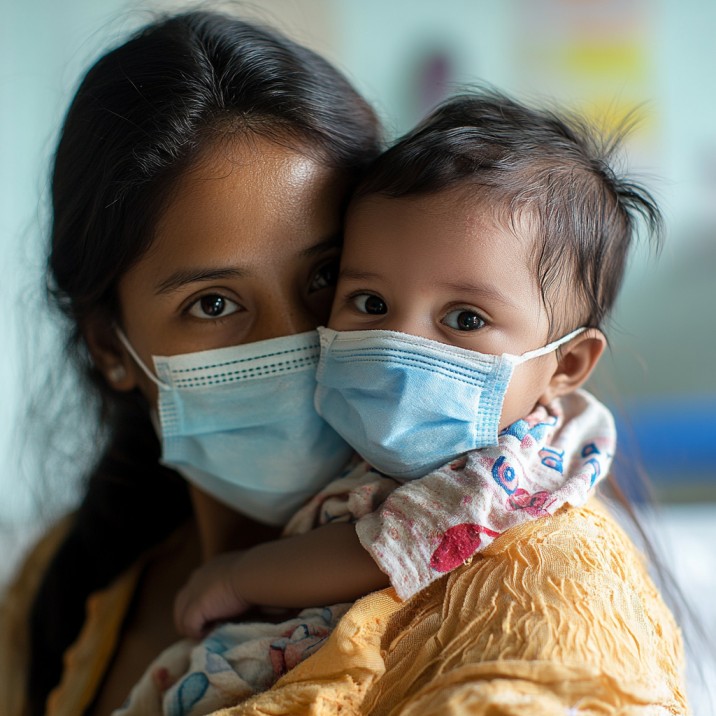
Understanding Neonatal Sepsis for Better Paediatric Care
Neonatal sepsis (NS) remains a significant challenge in paediatric care, particularly in neonatal intensive care units (NICUs). For paediatric specialists, a deep understanding of the risk factors for NS is crucial for early diagnosis, timely intervention, and ultimately, better patient outcomes. This blog post delves into a recent study conducted in Ethiopia, highlighting key predictors of neonatal sepsis, and what these findings mean for paediatric practice.
The Significance of Neonatal Sepsis for Paediatricians
Neonatal sepsis is a serious bloodstream infection that affects newborns up to 28 days old [1, 2]. It’s a leading cause of admission and mortality in developing countries, making it a critical area of focus for paediatricians [3]. Early diagnosis and intervention are vital to reduce the morbidity and mortality associated with this condition [4].
Key Predictors of Neonatal Sepsis: Insights from the Ethiopian Study
The study, conducted at Hawassa University Comprehensive Specialized Hospital and Adare General Hospital in Ethiopia, identified several independent risk factors for neonatal sepsis [5]. These include:
- Prolonged Rupture of Membranes (PROM)
- What it means: PROM refers to the rupture of the amniotic sac more than 18 hours before the onset of labor [5, 6].
- Study Findings: The study found that neonates born to mothers with PROM had nearly five times higher odds of developing sepsis [5].
- Implications for Paediatricians: This indicates a need for closer monitoring of newborns whose mothers had PROM, highlighting the potential for ascending infections [7].
- History of Urinary Tract or Sexually Transmitted Infections (UTI/STI)
- What it means: Maternal history of UTI or STI during pregnancy [5].
- Study Findings: The study found a 2.5 times higher risk of neonatal sepsis among infants whose mothers had such infections during pregnancy [5].
- Implications for Paediatricians: Routine screening and management of maternal UTIs and STIs during prenatal care is crucial to prevent the transmission of infections to newborns [8].
- Intrapartum Fever
- What it means: Fever occurring during labor [5].
- Study Findings: Neonates born to mothers who had a fever during labor had approximately 3.5 times higher risk of developing sepsis [5].
- Implications for Paediatricians: Maternal fever during labor is a crucial sign that warrants further monitoring of the neonate for sepsis [4].
- Foul-Smelling Liquor
- What it means: A foul odor in the amniotic fluid [5].
- Study Findings: The study indicated that neonates born to mothers with foul-smelling liquor had over 3.5 times higher odds of developing sepsis [5].
- Implications for Paediatricians: This finding suggests that infections within the amniotic fluid can significantly increase the risk of neonatal sepsis, and paediatricians should be vigilant in observing for this factor [9].
- Low APGAR Score at the Fifth Minute
- What it means: APGAR score is a standardized assessment of a newborn’s condition shortly after birth. A low score at 5 minutes indicates a need for intervention [5, 10].
- Study Findings: The study found that a low APGAR score at the fifth minute is associated with increased risk of neonatal sepsis [5].
- Implications for Paediatricians: This emphasizes the need for careful monitoring and timely intervention of newborns with low APGAR scores [11].
Applying These Insights in Paediatric Practice
For pediatric specialists, these study findings emphasize several crucial areas:
- Enhanced Vigilance in the NICU
- Risk Factor Assessment: Actively assess newborns for these specific risk factors during admission to the NICU [5].
- Clinical Monitoring: Be vigilant in observing newborns for early signs of sepsis, particularly those with identified risk factors [12].
- Timely Intervention: Initiate prompt diagnostic tests and treatment protocols for neonates at risk [13].
- Pre and Post-natal Care
- Maternal Health Education: Educate expecting mothers on the importance of prenatal care, including screening and managing UTIs and STIs [14].
- Early Detection of PROM: Implement protocols for early detection and management of prolonged rupture of membranes [6].
- Fever Management: Encourage timely management of fever during labor [4].
- Continuous Education and Training
- Professional Development: Encourage pediatricians and healthcare professionals involved in neonatal care to continuously update their knowledge on risk factors for neonatal sepsis [15].
- Evidence-Based Practices: Promote the use of evidence-based guidelines for the prevention, diagnosis, and management of neonatal sepsis [16].
Implications for Paediatric Training
For those in training to be pediatric specialists:
- Focus on Risk Factors: Pay close attention to the risk factors discussed in this study during your clinical rotations and training [5].
- Develop Clinical Reasoning Skills: Enhance your clinical reasoning skills by connecting the maternal and neonatal histories to risk factors for neonatal sepsis [4].
- Practical Experience: Seek opportunities for hands-on experience in the NICU to become proficient in recognizing and managing neonatal sepsis [13].
Conclusion
This study highlights the crucial role of specific risk factors in the development of neonatal sepsis. For paediatricians, understanding these predictors is essential to provide the best care to newborns. By focusing on enhanced vigilance, improving prenatal and postnatal care, and promoting evidence-based practices, paediatric specialists can play a key role in reducing the burden of neonatal sepsis.
To further enhance your skills and knowledge in handling critical paediatric situations, consider exploring the courses at OC Academy:
Clinical Fellowship in Paediatrics with MRCPCH Training
International Post Graduate Program in Paediatrics
Post Graduate Program in Paediatric Neurology
Certification Course In Healthy Child
Certification Course in Paediatrics
These specialised training can complement your paediatric specialization and better prepare you to manage paediatric emergencies effectively.
References
[1] Mohamed, E. Y., Eldirdiri, S., Ali Gurashi, H., Ahmed, M. A., Elimam, G., & Abdalla, S. M., et al. (2015). Neonatal sepsis in a general Sudanese Teaching hospital, Sudan. Int J Pharm Med Res, 3(1), 177-179.
[2] Ogunleye, V., Ogunleye, A., Ajuwape, A., Olawole, O., & Adetosoye, A. (2006). Childhood septicaemia due to Salmonella species in Ibadan, Nigeria. African J Biomed Res, 8(3), 2003-2006.
[3] You, D., Hug, L., Ejdemyr, S., Beise, J., Idele, P., Gerland, P., et al. (1944). Trends in child mortality. Lancet, 243(6288), 317.
[4] Gebremedhin, D., Berhe, H., & Gebrekirstos, K. (2016). Risk factors for neonatal sepsis in public hospitals of Mekelle city, North Ethiopia, 2015: unmatched case control study. PloS One, 11(5), 1-10.
[5] Shifera, N., Dejenie, F., Mesafint, G., & Yosef, T. (2023). Risk factors for neonatal sepsis among neonates in the neonatal intensive care unit at Hawassa University Comprehensive Specialized Hospital and Adare General Hospital in Hawassa City, Ethiopia. Frontiers in Pediatrics, 11, 1092671.
[6] Al-lawama, M., AlZaatreh, A., Elrajabi, R., Abdelhamid, S., & Badran, E. (2019). Prolonged rupture of membranes, neonatal outcomes and management guidelines. Journal of Clinical Medicine Research, 11(5), 360-366.
[7] Sands, K., Spiller, O. B., Thomson, K., Portal, E. A. R., Iregbu, K. C., & Walsh, T. R. (2022). Early-onset neonatal sepsis in low-and middle-income countries: current challenges and future opportunities. Infectious Diseases and Therapy, 15(February), 933–946.
[8] Kayange, N., Kamugisha, E., Mwizamholya, D. L., Jeremiah, S., & Mshana, S. E. (2010). Predictors of positive blood culture and deaths among neonates with suspected neonatal sepsis in a tertiary hospital, Mwanza-Tanzania. BMC pediatrics, 10, 10.
[9] Mahmood, C. B. (2011). Predictive values of risk factors in neonatal sepsis. J Bangladesh Coll Physicians Surg, 29(4), 187-195.
[10] Hayun, M. (2015). The risk factors of early onset neonatal sepsis. Am J Clin Exp Med, 3(3), 78.
[11] Jabiri, A., Wella, H. L., Semiono, A., Sariah, A., & Protas, J. (2016). Prevalence and factors associated with neonatal sepsis among neonates in Temeke and Mwananyamala hospitals in Dar es Salaam. Tanzania. Tanzania Journal of Health Research, 18(4), 1-7.
[12] Satar, M., & Özlü, F. (2012). Neonatal sepsis: a continuing disease burden. Turk J Pediatr, 54(5), 449-457.
[13] Sreenivas, T., Nataraj, A. R., Kumar, A., & Menon, J. (2016). Neonatal septic arthritis in a tertiary care hospital: a descriptive study. European Journal of Orthopaedic Surgery & Traumatology, 26(5), 477-481.
[14] Wubetu, A. D., Amare, Y. E., Haile, A. B., & Degu, M. W. (2021). Newborn birth weight and associated factors among mother-neonate pairs in public hospitals, North Wollo, Ethiopia. Pediatric Health, Medicine and Therapeutics, 12, 111–118.
[15] Chiabi, A., Djoupomb, M., Mah, E., Nguefack, S., Mbuagbaw, L., Zafack, J., et al. (2011). The clinical and bacteriogical spectrum of neonatal sepsis in a tertiary hospital in Yaounde, Cameroon. Iranian Journal of Pediatrics, 21(4), 441-448.
[16] You, T., Zhou, Y. R., Liu, X. C., & Li, L. Q. (2022). Risk factors and clinical characteristics of neonatal acute respiratory distress syndrome caused by early onset sepsis. Frontiers in Pediatrics, 10, 1-8.