
The Expanding World of Gut Microbes and Autism
Autism spectrum disorder (ASD) is a complex neurodevelopmental condition, and while its causes are still not fully understood, there’s growing evidence pointing to a potential role of the gut microbiome [1]. Recent research has expanded this view to the gut virome—the community of viruses residing in the gut. For paediatric specialists, staying updated on these findings is crucial as they could impact how we diagnose and manage ASD in the future. This blog post will explore the relationship between the gut virome and ASD, drawing insights from a recent study.
The Gut Microbiome and ASD: An Established Connection
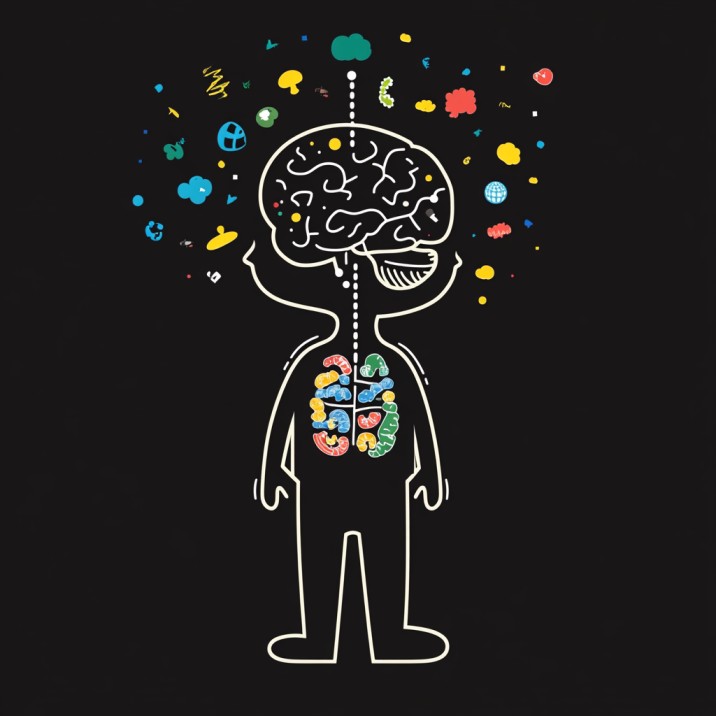
The connection between the gut microbiome (which includes bacteria, archaea, fungi, and viruses) and ASD has been increasingly recognized [2]. Imbalances in the gut microbiota, often referred to as dysbiosis, have been observed in children with ASD, and this imbalance is thought to potentially affect brain development and function through the microbiota-gut-brain axis [3]. This axis includes bidirectional communication between the gut and the brain via various pathways such as the vagus nerve, immune molecules, and microbial metabolites.
Shifting Focus to the Gut Virome: A New Perspective
While most research has focused on bacteria within the gut, recent investigations have turned their attention to the virome—specifically, the DNA virome, as viruses that have DNA as their genetic material make up the majority of the gut virome [4]. The gut virome includes a vast number of phages (viruses that infect bacteria) and it’s a dynamic community that impacts the overall gut ecosystem [5]. The study we’ll discuss aimed to uncover how the gut DNA virome might be implicated in ASD.
Key Findings from the Study
The study examined the gut DNA virome in children with ASD compared to their neurotypical siblings [6]. Here’s what they found:
- Dominance of Siphoviridae Phages
- What it means: The gut virome in children, both with and without ASD, was predominantly composed of viruses from the Siphoviridae family, a group of tailed phages [6].
- Implications for Paediatricians: This highlights the importance of these phages in the gut, even in the context of neurodevelopmental disorders. These phages are believed to impact bacterial populations within the gut [7].
- Negative Correlation Between
- What it means: The study showed a negative correlation in the abundance of Caudovirales (a larger order of tailed phages that includes Siphoviridae, Podoviridae, and Myoviridae) and Petitvirales in children, both with and without ASD [6].
- Implications for Pediatricians: This suggests an interaction between these two major orders of viruses, indicating a potential balancing act within the gut virome that might be disrupted in ASD [6].
- Skunavirus Abundance is Altered
- What it means: Researchers discovered that children with ASD had a statistically significant difference in the relative abundance of Skunavirus (a specific genus of phages belonging to Siphoviridae) compared to their healthy siblings [6].
- Implications for Paediatricians: This pinpointed a specific viral genus that seems to be associated with ASD and warrants further investigation to understand its role in the development of the condition [6]. Skunaviruses have previously been shown to cause slow milk fermentation, but their role in the gut is currently unknown [8].
- Decreased Alpha Diversity (but not statistically significant)
- What it means: The study found a trend toward lower alpha diversity (a measure of richness and evenness of viral species within a sample) in the gut virome of children with ASD. However, it was not statistically significant compared to their neurotypical siblings [6].
- Implications for Paediatricians: A trend of reduced diversity suggests that some children with ASD might have a less diverse gut virome, which could disrupt normal gut function. However, it is not a definitive finding [6].
- Similar Beta Diversity
- What it means: The study found that both children with and without ASD had similar beta diversity (a measure of differences in virome composition between samples) [6].
- Implications for Paediatricians: This indicates that the overall pattern of viral communities between children with ASD and their neurotypical siblings are similar, but specific viruses, like Skunavirus, may play a larger role [6].
Implications for Paediatric Practice
For pediatric specialists, these findings offer both insights and avenues for further investigation:
- Understanding the Gut-Brain Connection in ASD
- Microbiome Awareness: Pediatricians should be aware of the potential role of the gut microbiome and, more recently, the virome in ASD [2, 3].
- Gut Health Evaluation: Consider assessing gastrointestinal symptoms in children with ASD and exploring potential dietary interventions [3].
- Personalized Medicine Approaches
- Targeted Interventions: Future research may uncover specific viral targets for interventions in ASD [6].
- Dietary Management: Understand the role of diet on the gut microbiome and explore interventions to create a more diverse and beneficial community [9].
- Early Detection and Risk Assessment
- Family History: Be aware of the importance of the family history as the virome of children within the same family seem to have more similarity, which could indicate a need for more frequent screening of siblings of children with ASD [6].
Implications for Paediatric Training
For pediatricians in training:
- Focus on the Microbiome: Familiarize yourself with the basics of the gut microbiome and its significance in human health and disease, including ASD [3].
- Stay Updated: Keep abreast of new research in this rapidly evolving area to provide evidence-based care to your patients [6].
Conclusion: The Gut Virome – A Promising Area for Future Research
The study sheds light on a new facet of ASD, emphasizing the potential role of the gut virome. By understanding that the gut is a complex environment where bacteria and viruses may be interacting and impacting each other, pediatric specialists can better address this complex disease in the future. This new research area opens a window for new ways to diagnose and treat ASD in the future. As the field evolves, further research will be vital to translate these findings into clinical applications, offering new hope for children and families affected by ASD.
To further enhance your skills and knowledge in handling various pediatric conditions, consider exploring the pediatrician courses at OC Academy.
Clinical Fellowship in Paediatrics with MRCPCH Training
International Post Graduate Program in Paediatrics
Post Graduate Program in Paediatric Neurology
Certification Course In Healthy Child
Certification Course in Paediatrics
These courses offer specialized training that can complement your understanding of paediatric conditions and prepare you for complex challenges.
References
[1] Lord, C., Elsabbagh, M., Baird, G., & Veenstra-Vanderweele, J. (2018). Autism spectrum disorder. Lancet, 392(10146), 508-520.
[2] Yu, Y., & Zhao, F. (2021). Microbiota-gut-brain axis in autism spectrum disorder. Journal of Genetics and Genomics, 48(9), 755–762.
[3] Averina, O. V., Kovtun, A. S., Polyakova, S. I., Savilova, A. M., Rebrikov, D. V., & Danilenko, V. N. (2020). The bacterial neurometabolic signature of the gut microbiota of young children with autism spectrum disorders. Journal of Medical Microbiology, 69(4), 558-571.
[4] Yan, Q., Wang, Y., Chen, X., Jin, H., Wang, G., Guan, K., Zhang, Y., Zhang, P., Ayaz, T., & Liang, Y., et al. (2021). Characterization of the gut DNA and RNA Viromes in a Cohort of Chinese Residents and Visiting Pakistanis. Virus Evolution, 7(1), veab022.
[5] Shkoporov, A. N., & Hill, C. (2019). Bacteriophages of the human gut: the “Known Unknown” of the Microbiome. Cell Host & Microbe, 25(2), 195–209.
[6] Qu, A., Duan, B., Wang, Y., Cui, Z., Zhang, N., & Wu, D. (2023). Children with autism show differences in the gut DNA virome compared to non-autistic children: a case control study. BMC Pediatrics, 23(1), 174.
[7] Ly, M., Jones, M. B., Abeles, S. R., Santiago-Rodriguez, T. M., Gao, J., Chan, I. C., & Ghose, C., Pride, D. T. (2016). Transmission of viruses via our microbiomes. Microbiome, 4(1), 64.
[8] Lemay, M. L., Maaß, S., Otto, A., Hamel, J., Plante, P. L., Rousseau, G. M., & al, (2020). A lactococcal phage protein promotes viral propagation and alters the host proteomic response during infection. Viruses, 12(8), 797.
[9] Berding, K., & Donovan, S. M. (2018). Diet can impact microbiota composition in children with autism spectrum disorder. Frontiers in Neuroscience, 12, 515.