Pulsed Electric Field Ablation Safety for Liver Tumors

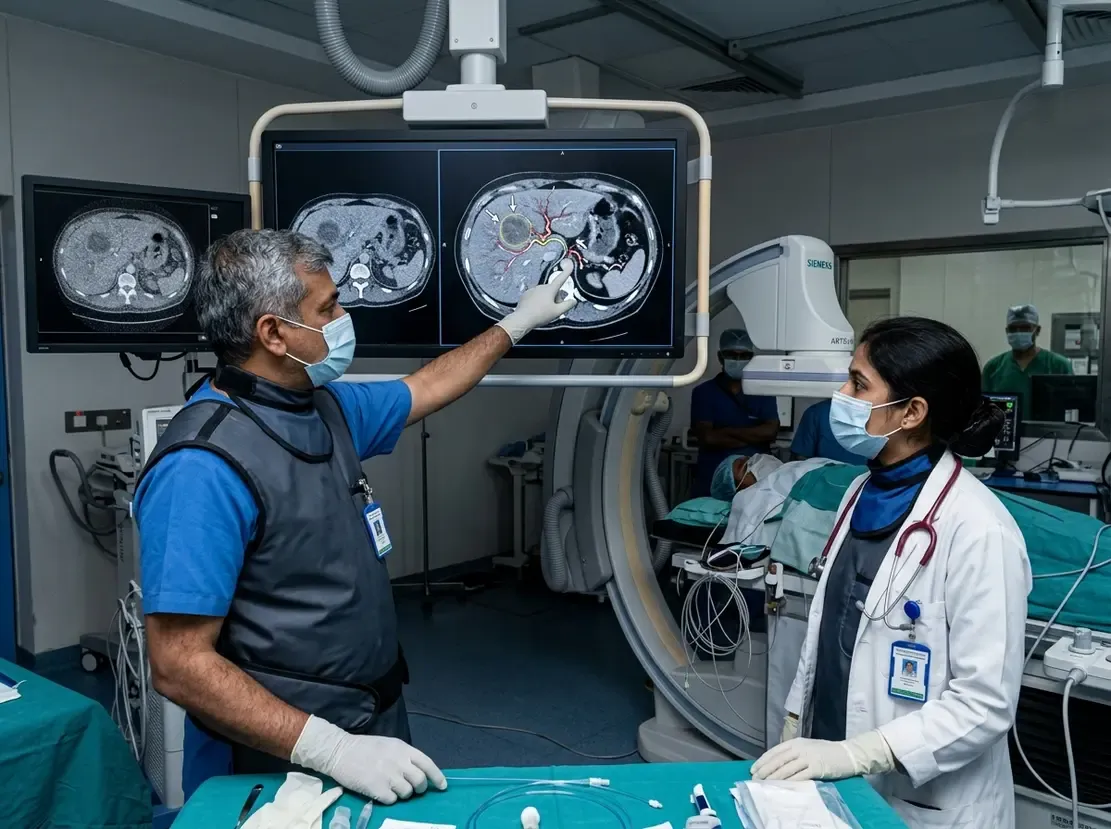
Percutaneous pulsed electric field ablation provides a vital non-thermal treatment option for hepatocellular carcinoma (HCC). Clinicians often face challenges when treating tumors located near major blood vessels, bile ducts, or the diaphragm. Traditional thermal ablation methods risk damaging adjacent vital structures through heat dissipation or the heat-sink effect. Therefore, non-thermal pulsed electric field technology has emerged as a promising alternative for challenging hepatic malignancies.
Safety Profile of Pulsed Electric Field Ablation
A recent 10-year multicenter cohort study evaluated the complication profile of this modality in high-risk anatomical locations. The researchers analyzed data from 304 patients with 338 hepatocellular carcinoma tumors across seven medical centers. Overall, the total complication rate reached 7.6 percent. More importantly, major complications occurred in only 3.3 percent of the treated patients. In addition, post-ablation syndrome developed in 18.8 percent of cases, presenting with mild, transient constitutional symptoms.
Microsecond Versus Nanosecond Protocols
The study compared microsecond pulsed electric field (μsPEF) and nanosecond pulsed electric field (nsPEF) protocols. Nanosecond pulses penetrate deeper into cellular organelles while preserving cellular membranes. After propensity score matching, investigators found no significant difference in major complications between the cohorts. Specifically, the major complication rate was 1.9 percent in the microsecond group versus 4.7 percent in the nanosecond group. Consequently, both energy delivery modalities demonstrate an equivalent safety profile.
Risk Factors and Clinical Surveillance
Multivariate analysis identified lower baseline platelet counts as a significant independent risk factor for major adverse events. Major complications primarily included perioperative systemic events, needle tract complications, and thoracic injuries in subphrenic tumors. Therefore, interventional radiologists specializing through a Certification Course In Vascular & Interventional Radiology must perform meticulous pre-procedural coagulation screening. Furthermore, vigilant needle tract surveillance and proactive post-ablation monitoring remain essential to minimize procedural risks in vulnerable patients.
Frequently Asked Questions
Q1: What is the primary benefit of pulsed electric field ablation in hepatocellular carcinoma?
Pulsed electric field ablation destroys tumor cells non-thermally via irreversible electroporation. Consequently, it spares critical bile ducts and blood vessels near high-risk tumors.
Q2: Did nanosecond pulsed electric fields increase complication rates compared to microsecond pulses?
No, the 10-year multicenter study demonstrated comparable major complication rates between both modalities after propensity score matching.
Q3: Which patient characteristic was identified as a risk factor for major complications?
A lower pre-procedural platelet count was significantly associated with an increased incidence of major complications. Practitioners can also explore advanced training options via Radiology Speciality Courses to further hone their expertise in image-guided procedures.
References
- Xu D et al. Incidence and risk factors of complications following microsecond and nanosecond pulsed electric field ablation for hepatocellular carcinoma: a 10-year multicenter cohort study. Eur Radiol. 2026 Aug 21. doi: 10.1007/s00330-026-12826-8. PMID: 42627535.
- Lee DH. Recent progress in pulsed electric field ablation for liver cancer. World J Gastrointest Oncol. 2020 Jun 15;12(6):619-629.
- Sutcliffe R, et al. Irreversible electroporation of hepatocellular carcinoma: patient selection and perspectives. J Hepatocell Carcinoma. 2017 Mar 13;4:53-61.